
Table of Contents
- Oil vs Propane Heating Cost Comparison: The Financial Picture
- Efficiency and Heating Performance: Why Propane Wins
- Environmental Impact of Switching from Heating Oil to Propane
- Maintenance and Equipment Longevity: Propane vs Oil Systems
- The Conversion Process: What to Expect Step-by-Step
- How to Remove Underground Oil Tanks: Safety and Regulations
- Hidden Costs and Incentives: What Most Guides Miss
- Is Converting to Propane Worth It for Your Home?
- Frequently Asked Questions
Last Updated: September 7, 2026
Homeowners across the country are weighing the benefits of converting oil to propane as heating oil prices remain volatile and older systems approach the end of their service life. Converting oil to propane is the process of replacing a heating oil furnace or boiler with a propane-fueled system, typically including the removal or abandonment of the oil storage tank. In this guide from Discount Propane, we break down the financial, technical, and environmental realities of making the switch, including the hidden costs most marketing-focused guides ignore.
The decision usually comes down to more than just fuel prices. It involves equipment age, tank liability, maintenance routines, and how long you plan to stay in the home. Below, we’ll walk through the full picture so you can decide with confidence rather than guesswork.
Oil vs Propane Heating Cost Comparison: The Financial Picture
The cost comparison between oil and propane heating depends heavily on regional fuel prices, which fluctuate with global markets. While oil contains more BTUs per gallon than propane, propane burners typically achieve higher combustion efficiency, which narrows the gap in delivered heat per dollar.
A practical way to compare fuels is by cost per BTU rather than cost per gallon. Propane systems often require less annual maintenance and suffer fewer breakdowns, which lowers the total cost of ownership over the system’s lifetime. Many homeowners find that the efficiency gains partially offset any per-gallon price difference.
Compare fuels by cost per BTU, not cost per gallon. Higher combustion efficiency in propane systems often narrows or eliminates the apparent price gap.
Efficiency and Heating Performance: Why Propane Wins
Propane furnaces typically achieve efficiency ratings between 90% and 98% AFUE, meaning nearly all the fuel becomes usable heat (energy.gov). Older oil systems often operate in the 80% to 85% range, with some aging units performing even worse.
That efficiency gap translates directly into energy consumption and utility bills. A propane system delivers consistent heating performance even in very cold climates, and it heats water faster than most oil-based systems. For whole-home heating, propane’s higher combustion efficiency means less fuel burned for the same comfort level.
The U.S. Department of Energy’s heating system guidance notes that high-efficiency furnaces can significantly reduce fuel consumption compared to older models, regardless of fuel type. The key is matching the right equipment to your home’s heating load.
Environmental Impact of Switching from Heating Oil to Propane
Propane is a cleaner-burning fossil fuel than heating oil, producing fewer carbon emissions per unit of heat delivered. It also does not contaminate soil or groundwater if released, which is a critical advantage over oil.
Heating oil tanks leak over time, and even small leaks can create expensive environmental cleanup obligations. Propane is stored as a gas in sealed tanks, so there is no risk of soil contamination from spills. For homeowners concerned about their environmental footprint, propane offers a meaningful reduction in particulate emissions and a lower risk profile for the surrounding property.
Maintenance and Equipment Longevity: Propane vs Oil Systems
Propane systems generally require less frequent maintenance than oil systems. Oil burners produce soot and carbon buildup that must be cleaned regularly, while propane burns clean and keeps heat exchangers clear.
Annual maintenance for propane equipment typically involves inspecting the burner, checking gas pressure, and verifying safety controls. Oil systems need more involved service, including nozzle replacement, filter changes, and chimney cleaning. This difference in maintenance costs adds up over the life of the system.
System longevity also favors propane. Because propane burns cleanly without leaving residue, the heat exchanger and internal components experience less stress. Many propane furnaces operate reliably for 20 years or more with proper care, while oil systems often need replacement sooner due to soot-related wear.
The Conversion Process: What to Expect Step-by-Step
Most articles treat conversion as a single transaction: remove oil, add propane. The reality is a multi-stage mechanical project with distinct decision points, failure risks, and code requirements. Here is what actually happens on-site, based on standard industry practice.
Phase 1: System Assessment and Load Calculation
Before any equipment is touched, a contractor must perform a heat load calculation (Manual J) on your home. This determines the required BTU output of the new propane furnace or boiler. Skipping this step leads to oversizing, which causes short-cycling and premature wear, or undersizing, which leaves you cold in January. The calculation accounts for square footage, insulation levels, window efficiency, and local climate data.
Phase 2: Oil Tank Abatement
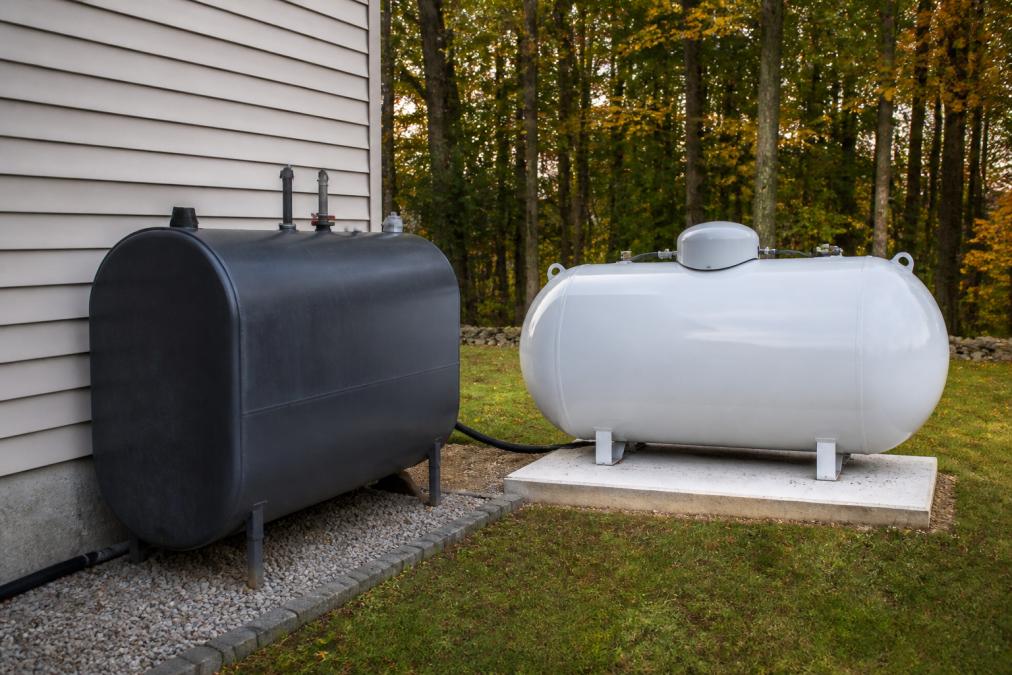
Your existing oil tank must be dealt with before any propane equipment is installed. Above-ground tanks are typically pumped dry, cleaned, and physically removed from the basement or garage. Underground tanks are a larger project. The tank must be excavated, drained, and either removed entirely or filled in place with sand or foam after cleaning. Many state environmental agencies require soil testing around the tank to check for historical leaks. If contamination is found, remediation is a separate, potentially costly project that must be resolved before you can proceed.
Phase 3: Propane Tank Sizing and Placement
Propane tanks are sized by gallon capacity, not physical dimensions. A typical single-family home uses a 120-gallon above-ground tank or a 500-gallon underground tank. The choice depends on your home’s heating load, the number of appliances you plan to run, and how often you want deliveries. Above-ground tanks must be placed at least 10 feet from building openings and ignition sources per NFPA 58 (nfpa.org). Underground tanks require excavation, cathodic protection to prevent corrosion, and specific burial depth requirements. Your propane supplier handles tank installation, but the placement decision affects future delivery access and property aesthetics.
Phase 4: Gas Piping and Venting
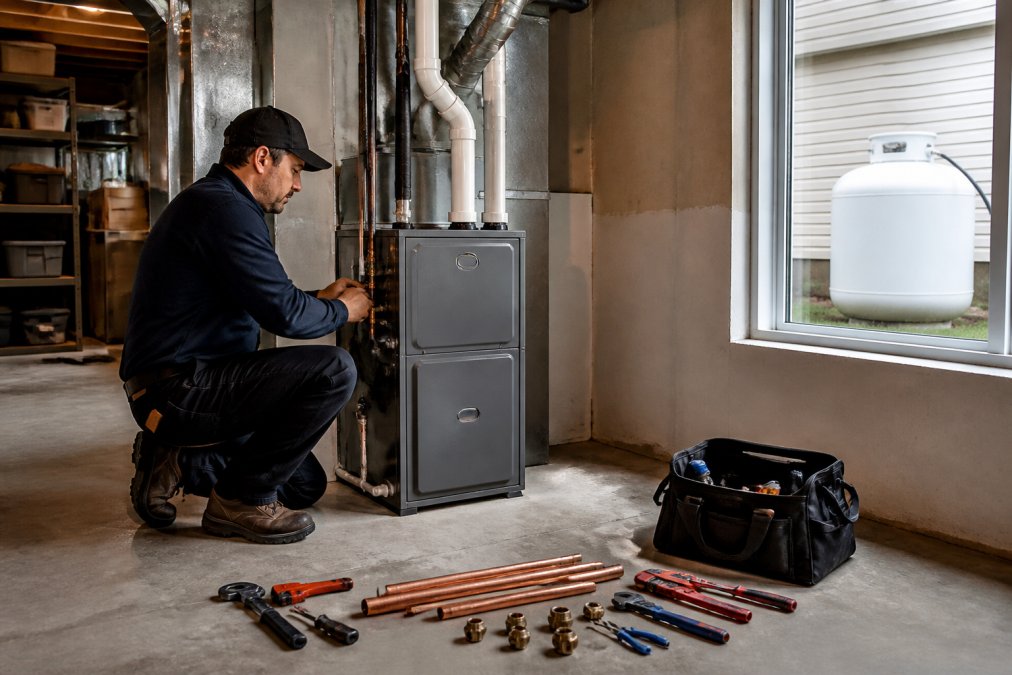
The new propane furnace requires a dedicated gas line from the tank to the appliance. This is black iron pipe or corrugated stainless steel tubing (CSST), sized by a pressure drop calculation. The old oil furnace’s chimney or flue is almost never compatible with propane exhaust. Propane produces water vapor as a combustion byproduct, so the new system typically uses a high-efficiency condensing furnace with PVC venting routed horizontally through an exterior wall. This is a significant difference from oil systems, which rely on masonry chimneys or metal flues.
Phase 5: Electrical and Controls
Propane furnaces require a 120V electrical connection for the blower motor, ignition system, and safety controls. Your existing electrical panel may need a new dedicated circuit. The old oil system’s thermostat wiring is usually reusable, but the thermostat itself may need replacement if it is not compatible with the new system’s control voltage.
Phase 6: Commissioning and Inspection
After installation, the contractor must perform a combustion analysis to verify proper air-to-fuel ratio, check carbon monoxide levels, and confirm the system achieves its rated efficiency. A local building inspector typically signs off on the gas line and venting work. Your propane supplier will also perform a leak check on the tank and regulator before the system is placed into service.
Do not accept a quote that skips the heat load calculation or the combustion analysis. These steps are not optional extras; they are the difference between a system that works reliably for 20 years and one that fails within five.
::: gas versus electric appliances.
The entire process typically takes 3 to 5 days for a straightforward above-ground tank replacement, but underground tank removal and soil testing can extend the timeline to several weeks. Get a written project schedule from your contractor before signing.
How to Remove Underground Oil Tanks: Safety and Regulations
Understanding how to remove underground oil tanks is essential for any homeowner considering this conversion. Buried tanks present the highest environmental risk because leaks can go undetected for years, contaminating soil and groundwater.
Regulations regarding underground tank removal vary by state and locality. Most jurisdictions require a permit before excavation, and many mandate soil testing around the tank to check for contamination. If contamination is found, remediation costs can escalate quickly.
The removal process involves excavating the tank, draining and cleaning it, and either hauling it away or filling it in place with an inert material. Some states require tank abandonment to be documented and filed with the local environmental agency. A professional tank removal contractor will handle permits, soil testing, and proper disposal.
Hidden Costs and Incentives: What Most Guides Miss
The headline equipment cost is only half the financial picture. A realistic conversion budget has at least five line items beyond the furnace itself. Here is what a typical project actually costs, based on current market ranges across the United States.
The Real Cost Breakdown
- Oil tank removal: $500 to $1,500 for an above-ground tank. Underground tanks run $1,500 to $5,000 depending on excavation depth, soil conditions, and whether the tank is removed or abandoned in place. Soil testing adds $500 to $1,500 per sample site.
- Propane tank installation: Most suppliers lease tanks for an annual fee or include them free with a minimum purchase agreement. Purchasing an above-ground tank outright runs $800 to $2,000. Underground tanks cost $1,500 to $3,500 installed.
- Gas line and venting: Running a gas line from the tank to the furnace typically costs $500 to $1,500 depending on distance and whether the line must be trenched. PVC venting for a condensing furnace adds $300 to $800.
- Electrical work: A dedicated circuit and any panel upgrades run $300 to $1,000.
- Permits and inspections: Local building permits typically cost $100 to $500. Some jurisdictions require separate mechanical, electrical, and gas permits.
Incentives That Actually Exist
Federal tax credits under the Inflation Reduction Act cover qualifying high-efficiency propane furnaces and boilers. Equipment must meet specific AFUE thresholds to qualify, and the credit applies to the equipment cost, not installation labor. State-level programs vary widely. Massachusetts, New York, and Minnesota have active programs offering rebates for propane conversions, while other states have none. Your local propane supplier or state energy office can confirm what applies to your address.
Ask your contractor for a line-item quote that separates equipment, labor, tank work, venting, electrical, and permits. If they only give you a single lump sum, you have no way to compare bids or identify where costs can be trimmed.
The Cost Nobody Quotes
Temporary heating during the installation window is an out-of-pocket expense most homeowners overlook. If the conversion happens in November and your old oil system is already removed, you may need space heaters or a temporary heating solution for several days. Budget $200 to $500 for this contingency.
When the Math Works
The financial case for conversion strengthens when your oil system is over 15 years old, your oil tank is showing signs of corrosion, or your state offers meaningful rebates. If your oil system is under 10 years old and running efficiently, the payback period on conversion typically exceeds 10 years, making it hard to justify on economics alone.
Is Converting to Propane Worth It for Your Home?
Converting to propane is most worthwhile for homes with aging oil systems that are nearing replacement anyway. If your oil furnace is under 10 years old and running well, the economics of an early conversion rarely justify the expense.
The decision also depends on fuel supply reliability in your area and the availability of propane delivery services. For homeowners who plan to stay in their home for more than five years, the efficiency gains and lower maintenance costs of propane typically deliver a strong return. For those planning to sell soon, a modern propane system can be a selling point, though the upfront cost may not be fully recovered.
Many utilities and fuel suppliers offer budget plans that smooth out seasonal price swings. Discount Propane provides upfront, real-time online pricing so you can see propane prices before ordering, with no commitment required just to check rates. Fast, flexible delivery scheduling and secure account management make the ongoing fuel supply simple to handle from your PC or phone.
| Consideration | Oil System | Propane System |
|---|---|---|
| Typical efficiency | 80-85% AFUE | 90-98% AFUE |
| Maintenance frequency | Annual, more involved | Annual, lighter service |
| Environmental risk | Tank leaks contaminate soil | Sealed gas, no soil risk |
| Equipment lifespan | Shorter due to soot wear | 20+ years with care |
The benefits of converting oil to propane go beyond fuel prices. Cleaner combustion, lower maintenance, reduced environmental liability, and longer equipment life all factor into the total value. If your oil system is approaching the end of its service life, converting oil to propane is worth serious consideration.
Frequently Asked Questions
Is it worth converting from oil to propane?
For most homeowners, yes. Propane furnaces operate at higher efficiency ratings, often 90-98% AFUE, compared to older oil systems at 80-85%. This means more heat from every fuel dollar. You also avoid the mess and smell of oil, and propane equipment typically lasts longer with less maintenance. While the upfront cost is significant, the combination of lower fuel consumption, reduced service calls, and potential tax incentives makes it a financially sound long-term investment in home heating.
Is it cheaper to heat your house with oil or propane?
A fair oil vs propane heating cost comparison depends on current fuel prices and equipment efficiency. Propane burns cleaner and modern propane furnaces achieve higher efficiency, often requiring less fuel to produce the same heat. While the price per BTU can fluctuate, propane’s efficiency advantage frequently results in lower annual utility bills. Check current prices for both fuels in your area and factor in the higher efficiency of a new propane system to estimate your potential savings.
What is the typical process for decommissioning an old oil tank during conversion?
The process depends on whether the tank is above or below ground. Above-ground tanks are often pumped clean and removed. Underground tanks are more complex; they must be professionally excavated, drained, cleaned, and either removed or filled with an inert material. This job requires permits from your local municipality and must follow state environmental regulations. A licensed contractor will handle the paperwork and ensure the soil is tested for any leaks before the project is closed.
How does the maintenance of a propane furnace compare to an oil burner?
Propane systems require less frequent and less costly maintenance. Oil burners produce soot and sludge that require annual cleaning of the combustion chamber and nozzle replacement. Propane burns clean, so the primary tasks are checking the heat exchanger, verifying gas pressure, and testing safety controls. This typically translates to lower annual maintenance costs and fewer emergency service calls compared to oil-fired equipment.
Does converting to propane increase home resale value?
Yes, converting to propane can increase your home’s resale value. Buyers often view propane as a cleaner, more modern, and more efficient heating option than oil. The removal of an underground oil tank, a common source of environmental liability, is a significant selling point. A newer, high-efficiency propane furnace is also a strong selling feature that can make your property more attractive in a competitive real estate market.
Deciding whether to convert your heating system is a significant financial and practical choice. The team at Discount Propane can help you understand your options, with transparent pricing and no-pressure guidance on fuel supply for your new system. Check current propane prices online and get started with a simple quote request.