Table of Contents
- Why Propane Heating System Maintenance Matters
- How to Read Propane Tank Gauge and Monitor Levels
- Annual Professional Inspection and Tune-Up
- Propane Furnace Maintenance Checklist for Homeowners
- Signs of Propane Leak and Emergency Response
- DIY vs. Professional Maintenance: Where to Draw the Line
- Energy Efficiency and Seasonal Winterization
- Conclusion
Last Updated: August 26, 2026
Why Propane Heating System Maintenance Matters
Propane heating system maintenance is the difference between reliable warmth and a mid-winter breakdown. A well-maintained propane furnace operates efficiently, heats consistently, and keeps your household safe from gas leaks and carbon monoxide exposure.
Most homeowners ignore their systems until something breaks, then face emergency service calls at premium rates during freezing weather. Regular maintenance catches problems early: a small gas piping issue before it becomes dangerous, a clogged burner before efficiency drops, a worn ignition system before it fails completely.
According to the National Fire Protection Association’s guidance on propane safety, proper maintenance and inspection reduce the risk of propane-related incidents significantly. Your routine should cover tank monitoring, annual professional inspections, filter replacements, and safety control testing.
At Discount Propane, we work with homeowners who understand that consistent, transparent fuel delivery starts with a system that’s actually working. A maintained furnace means predictable energy use, accurate fuel consumption tracking, and confidence that your heating will perform when you need it most.
Regular propane heating system maintenance prevents emergency breakdowns, improves efficiency, and ensures safety. Most problems are preventable with basic monitoring and annual professional service.
How to Read Propane Tank Gauge and Monitor Levels
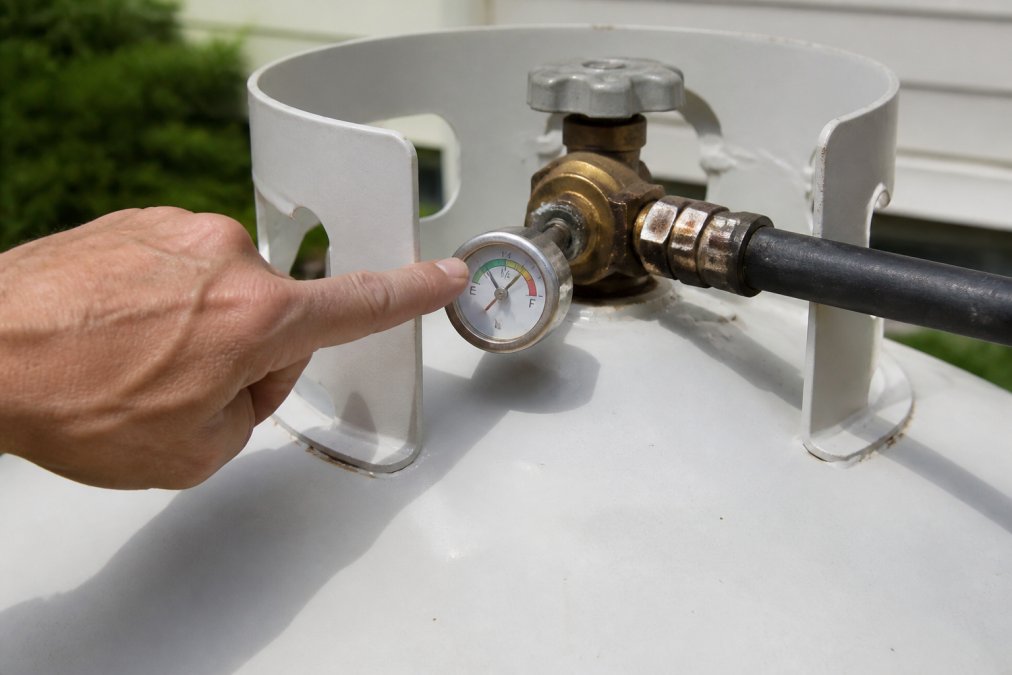
The propane tank gauge is your first line of defense against running empty. Most residential tanks have a dial gauge displaying a percentage: 0% means empty, 100% means full. Professional fills typically stop at 80% to allow for expansion in warm weather.
Here’s what the gauge tells you:
- 75-100%: Full tank, no immediate action needed
- 50-75%: Monitor usage; order soon if winter approaches
- 25-50%: Schedule delivery within 1-2 weeks
- Below 25%: Order propane immediately
Check your tank gauge weekly during heating season. A sudden drop without increased usage signals a potential leak in your gas piping or furnace connections, contact a service technician immediately.
Order propane at 30-40%, not when empty. During cold snaps, delivery wait times can stretch to days. This buffer prevents emergency calls and ensures your heating never stops.
Discount Propane’s online account management lets you check tank levels and order propane in real time. You’ll see current prices before ordering, schedule delivery on your timeline, and avoid uncertainty.
:::pro-tip
Install a propane tank gauge alarm (under $50) that alerts you when the tank drops below a set level, eliminating guesswork entirely.
:::
Annual Professional Inspection and Tune-Up
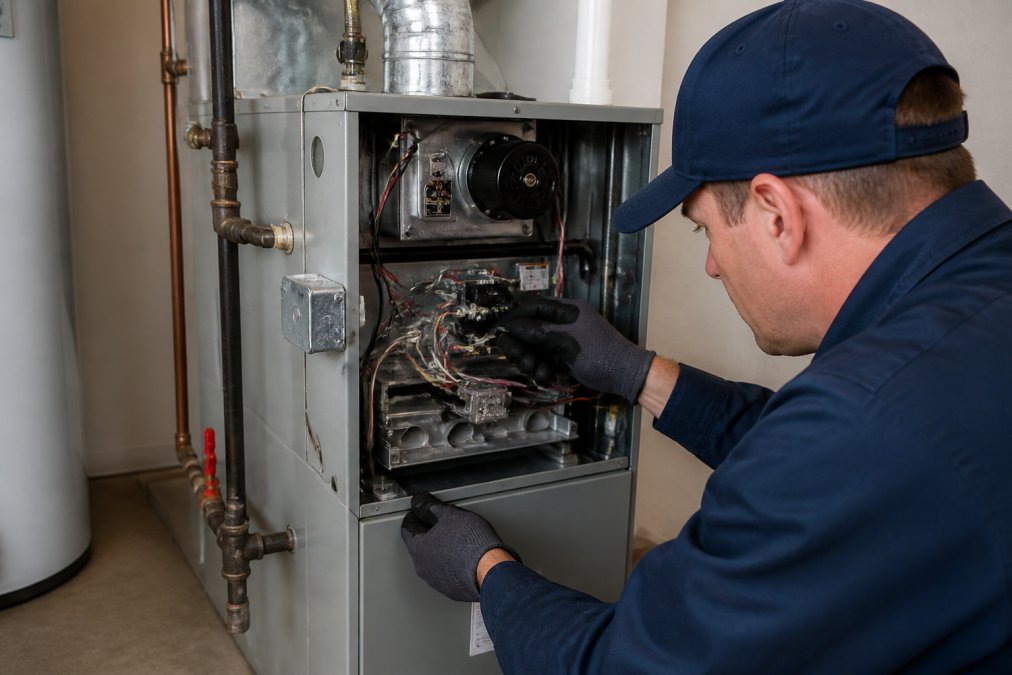
Your propane heating system maintenance routine must include an annual professional inspection. Schedule it in early fall, before heating season, ensuring your furnace is ready before the first cold snap.
During a professional inspection, the technician will:
- Check the heat exchanger for cracks or corrosion
- Test the ignition system and flame sensor
- Inspect all gas piping connections for leaks
- Verify thermostat calibration
- Clean or replace the burner assembly
- Test safety controls and emergency shut-off valves
- Check the condensate drain for clogs
- Inspect ventilation and exhaust flue
- Verify proper combustion air flow
A comprehensive inspection typically takes 1-2 hours and costs less than a single emergency service call (nfpa.org). Think of it as insurance against a $500+ emergency repair in winter.
Never skip the annual inspection to save money. A small problem caught during routine maintenance might cost $150 to fix. That same problem left unchecked can cause a furnace failure costing $500-$1,500 to repair or replace.
Propane Furnace Maintenance Checklist for Homeowners
Between professional inspections, handle basic maintenance yourself. These tasks take minimal time and catch problems early.
Cleaning and Replacing Air Filters
The air filter prevents dust and debris from entering your furnace. A clogged filter forces your system to work harder, reduces efficiency, and can cause overheating and shutdown.
Check your air filter monthly during heating season. Most filters need replacement every 1-3 months, depending on dust levels and pet hair. Replace in five minutes:
- Turn off your furnace at the thermostat
- Locate the filter (usually in a return air duct or blower compartment)
- Note the filter size (typically 16x25x1 or 20x25x1)
- Slide out the old filter and dispose of it
- Insert the new filter with the arrow pointing toward the furnace
- Turn the furnace back on
Use a MERV 8 or MERV 11 filter for standard residential use. Higher MERV ratings restrict airflow more and can strain your furnace.
Testing Safety Controls and Ignition System
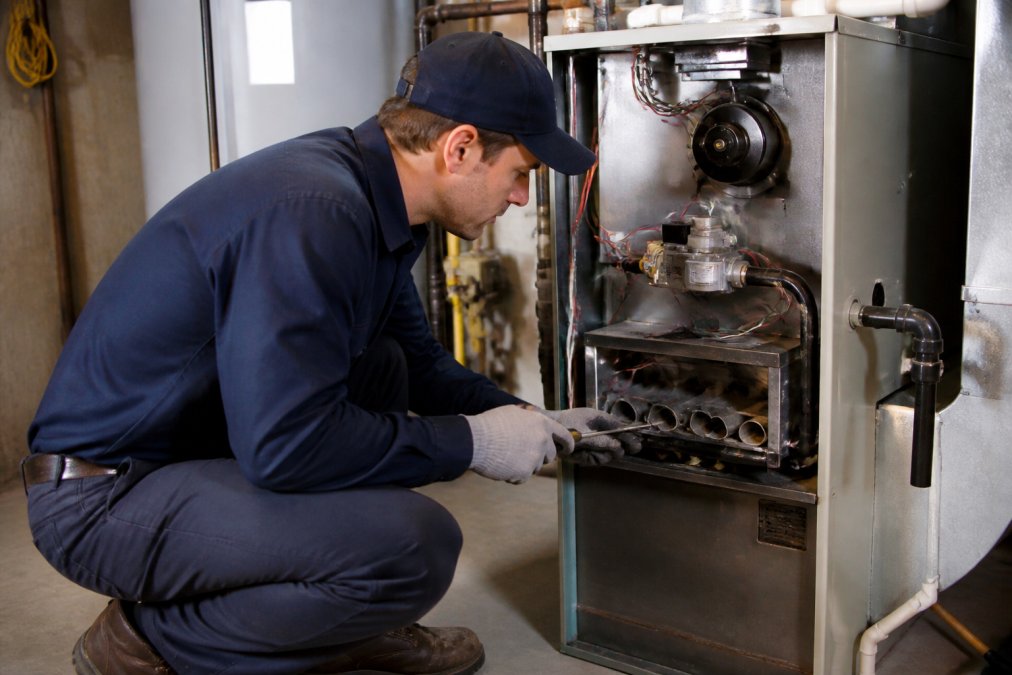
Your furnace has multiple safety controls designed to shut the system down if something goes wrong. The most critical is the flame sensor, which detects whether the burner is actually igniting. If it fails, the furnace won’t light. Watch for the warning sign: the furnace tries to light, fails, and shuts down repeatedly, call a technician.
Test your ignition system by setting the thermostat 5 degrees above the current room temperature. Listen for the ignition sequence: a clicking sound as the spark ignitor fires, then the hum of the blower motor. If you hear clicking but no hum, call a professional.
Inspecting Gas Piping for Leaks
Check for leaks using the soap bubble method. Mix dish soap with water in a spray bottle and spray all visible gas piping connections, where pipes join the furnace, connect to the tank, and at any visible joints. If bubbles appear, you have a leak. Do not attempt to fix it yourself. Turn off the furnace, leave the area, and call a service technician immediately. boiler maintenance tips.
Common leak locations include connections at the furnace inlet, tank shutoff valve, regulator connections, flexible connector lines, and threaded joints in rigid piping. Never use an open flame to check for leaks.
Signs of Propane Leak and Emergency Response
A propane leak is a serious safety hazard. Propane is odorless naturally, so distributors add a distinctive rotten-egg or sulfur smell to make leaks detectable. If you smell this odor, act immediately.
Signs of a propane leak:
- Strong rotten-egg or sulfur smell near the tank or furnace
- Hissing sound from gas piping
- Dead vegetation around the tank area
- Bubbles when you apply soapy water to connections
- Furnace won’t light or keeps shutting down repeatedly
If you suspect a leak:
- Do not use any electrical switches, lighters, or open flames
- Leave the area immediately
- Call your propane supplier or the fire department from outside the building
- Do not re-enter until a professional has inspected the system
According to the Propane Safety Council’s emergency response guidelines, prompt action prevents property damage and injury. Propane is heavier than air and accumulates in low areas, creating explosion risk if ignited.
Never ignore a propane smell or assume it will go away. A small leak can become catastrophic within hours. Treat every suspected leak as an emergency.
DIY vs. Professional Maintenance: Where to Draw the Line
Knowing what you can handle and what requires a professional is critical for both safety and system longevity.
DIY Tasks (Safe for homeowners):
- Checking and replacing air filters
- Reading tank gauges and monitoring propane levels
- Visual inspection of gas piping for obvious damage
- Soap bubble leak testing (detection only, not repair)
- Cleaning furnace exterior and vents
- Checking thermostat batteries and settings
Professional-Only Tasks (Requires certification and tools):
- Repairing gas piping leaks
- Replacing or repairing the furnace
- Testing and adjusting safety controls
- Cleaning internal burner assemblies
- Servicing the ignition system
- Testing heat exchanger integrity
- Adjusting fuel pressure
- Any work involving opening the furnace cabinet
If it involves opening the furnace, working with gas connections, or testing safety systems, call a professional. These tasks require specialized equipment, training, and certification. A mistake can create a gas leak, carbon monoxide hazard, or system failure.
Energy Efficiency and Seasonal Winterization
A well-maintained propane heating system runs more efficiently, reducing fuel consumption and costs. Winterization prepares your system for cold months ahead.
Pre-Winter Winterization Checklist:
- Schedule annual professional inspection (September or October)
- Replace air filters
- Verify thermostat accuracy with a separate thermometer
- Inspect and seal air leaks around doors, windows, and ducts
- Check attic insulation levels (R-38 minimum recommended)
- Inspect basement or crawlspace for air leaks
- Verify furnace clearance (at least 3 feet of space around the unit)
- Test the furnace blower motor
- Check propane tank level and plan delivery schedule
Energy efficiency improvements reduce heating costs without sacrificing comfort. Proper insulation, weatherstripping, and ductwork sealing can reduce propane consumption by 10-20%, paying for themselves within years through lower fuel bills.
A furnace running at peak efficiency heats your home faster, maintains consistent temperatures, and uses less fuel. An unmaintained furnace works harder, consumes more propane, and fails when you need it most.
Discount Propane helps you manage the fuel side with transparent, real-time online pricing and flexible delivery scheduling. Combined with a well-maintained furnace, you’ll know your heating costs in advance and avoid surprises.
Winterization isn’t just about the furnace, it’s about the entire system. A maintained furnace plus proper insulation and weatherproofing creates an efficient heating environment that uses less propane and costs less to operate.
Conclusion
Propane heating system maintenance is straightforward: monitor your tank, replace filters, test your system, and schedule annual professional inspections. These tasks prevent emergencies, improve efficiency, and protect your family’s safety.
The difference between reliable heating and a January breakdown comes down to consistency. Check your propane tank gauge monthly. Replace air filters on schedule. Have a professional inspect your furnace annually. Respond immediately to any signs of gas leaks.
When you’re ready to order propane, Discount Propane makes it simple. Check real-time pricing online, schedule delivery without commitment, and manage your account securely from your phone or computer. A maintained furnace paired with reliable fuel delivery means your heating works when you need it, no surprises, no emergencies, no guesswork.
Get propane price and schedule delivery with Discount Propane. See transparent pricing, order online, and enjoy fast, flexible delivery with secure payment options including credit card, cash on delivery, and Zelle.
| Maintenance Task | Frequency | DIY or Professional | Impact |
|---|---|---|---|
| Check tank gauge | Weekly (heating season) | DIY | Prevents running out of propane |
| Replace air filter | Every 1-3 months | DIY | Improves efficiency and airflow |
| Inspect gas piping | Monthly visual check | DIY (detection only) | Catches leaks early |
| Annual professional inspection | Once per year (fall) | Professional | Tests safety controls and identifies problems |
| Clean burner assembly | As needed (annually typical) | Professional | Maintains combustion efficiency |
| Test ignition system | During annual inspection | Professional | Ensures reliable startup |
| Winterization check | Before heating season | Mixed (mostly DIY) | Prepares system for winter use |
Frequently Asked Questions
How often should my propane furnace be serviced?
Schedule a professional propane furnace inspection and tune-up annually, ideally before the heating season begins in fall. Annual service checks the ignition system, safety controls, burner assembly, and heat exchanger for proper operation. If your system runs year-round or you notice performance issues, more frequent inspections may be necessary. Regular maintenance extends the lifespan of your furnace and prevents costly breakdowns during winter.
How do I read a propane tank gauge accurately?
Propane tank gauges typically show a percentage from 0 to 100 percent, indicating how full your tank is. The gauge measures the liquid propane level inside the tank. Check your gauge monthly during heating season and weekly in winter if you rely heavily on propane. When the gauge reads 20 percent or lower, schedule a delivery to avoid running out of fuel. Never attempt to refill or tamper with the gauge itself, contact your propane supplier for service.
What are the main signs of a propane leak?
Propane is naturally odorless, but suppliers add mercaptan, a chemical that smells like rotten eggs or sulfur. If you detect this smell near your furnace, tank, or gas piping, leave the area immediately and call your propane supplier and emergency services. Other signs include hissing sounds near connections, dead vegetation around the tank, or visible corrosion on piping. Never use matches, lighters, or electrical switches if you suspect a leak. Shut off the emergency shut-off valve if you can do so safely, then evacuate and call for help.
What is the average lifespan of a residential propane furnace?
A well-maintained propane furnace typically lasts 15 to 20 years. Factors affecting lifespan include frequency of use, maintenance history, local climate, and system design. Annual professional inspections and timely repairs extend the life of your furnace. If your system is approaching 15 years and requires frequent repairs, consult a technician about replacement options. Newer furnaces often have higher efficiency ratings, which can reduce your fuel costs over time.
Can I perform propane heating system maintenance myself, or do I need a professional?
You can handle basic tasks like checking the tank gauge, replacing air filters, and visually inspecting piping for obvious corrosion. However, testing safety controls, inspecting gas piping for leaks, servicing the ignition system, and checking fuel pressure require specialized tools and training. A certified service technician should perform the annual tune-up and handle any repairs. Improper maintenance of pressurized gas systems poses serious safety risks, so professional inspection is essential for safety and system longevity.
What should I do if my propane furnace won't ignite?
First, check that your propane tank has fuel by reading the gauge. Ensure the emergency shut-off valve on the tank is open and that the furnace's power switch is on. If the thermostat is set to heat and the system still won't ignite, the ignition system may need cleaning or repair. A clogged burner assembly or electrical connection issue can also prevent ignition. Do not attempt to force the system to start. Contact a service technician to diagnose and repair the problem safely.
How do I winterize my propane heating system?
Before winter, schedule a professional inspection and tune-up to ensure all components work properly. Replace air filters with clean ones to maintain airflow. Check that the thermostat is calibrated correctly and responding to temperature changes. Inspect gas piping, electrical connections, and the condensate drain for blockages. Ensure your propane tank is accessible for delivery and that the gauge is visible. If you use a tank you own, have it inspected for rust and corrosion. Stock up on propane before the coldest months to avoid supply shortages.
This article was written using GrandRanker