
Table of Contents
- Why Home Propane System Safety Starts With the Smell Test
- Propane Leak Detection: Know the Signs Beyond the Rotten Egg Smell
- What to Do If You Smell Gas: A Step-by-Step Evacuation Plan
- The Propane Tank Maintenance Schedule That Prevents Corrosion
- Ventilation, Pilot Lights, and the Blue Flame Rule
- Carbon Monoxide Detectors: Placement and Requirements
- Seasonal Safety Checklists for Home Propane Systems
- Conclusion: Build a Safer Routine With These Propane Safety Tips
- Frequently Asked Questions
Last Updated: September 6, 2026
Propane is one of the most efficient heating fuels available, but it demands respect. A home propane system safety review starts with one simple fact: the odor you associate with a gas leak isn’t natural. Propane suppliers add mercaptan specifically so you can detect leaks before they become dangerous. This guide from Discount Propane covers the practical steps every homeowner should take to prevent leaks and respond correctly when something feels off. Below, we’ll walk through detection methods, emergency procedures, and a maintenance schedule that keeps your system running safely for years.
Propane system safety is not complicated, but it is unforgiving of shortcuts. The good news is that most serious incidents are preventable with routine visual checks and a clear understanding of what to do when you smell gas. We’ll show you exactly how to build that routine.
Why Home Propane System Safety Starts With the Smell Test
Your nose is your first line of defense. Propane is naturally odorless, so distributors add mercaptan to give it that distinctive rotten egg smell. If you notice it inside your home, you likely have a leak that needs immediate attention.
The smell test works only if everyone in the household knows what to recognize. That includes that faint, skunk-like odor you might notice near the tank outdoors, which often indicates a small leak at a fitting or valve. Many homeowners dismiss weak odors as “just the neighbor’s grill” or a sewer issue. That assumption is a dangerous one.
Every member of your household should know the smell and understand that it warrants action. If you have children, teach them to alert an adult immediately rather than investigating on their own. A quick family briefing takes five minutes and could prevent a serious accident.
Never rely on smell alone in a large or drafty space. A slow leak can be diluted by air movement and go unnoticed. That’s why routine visual inspections and detector placement matter just as much as your nose.
Propane Leak Detection: Know the Signs Beyond the Rotten Egg Smell
Beyond the odor, several physical signs point to a propane leak. A hissing sound near the tank, regulator, or piping suggests escaping gas. Dead grass or vegetation around an underground tank or line can indicate a leak below the surface. You might also notice bubbles forming on connections when moisture is present.
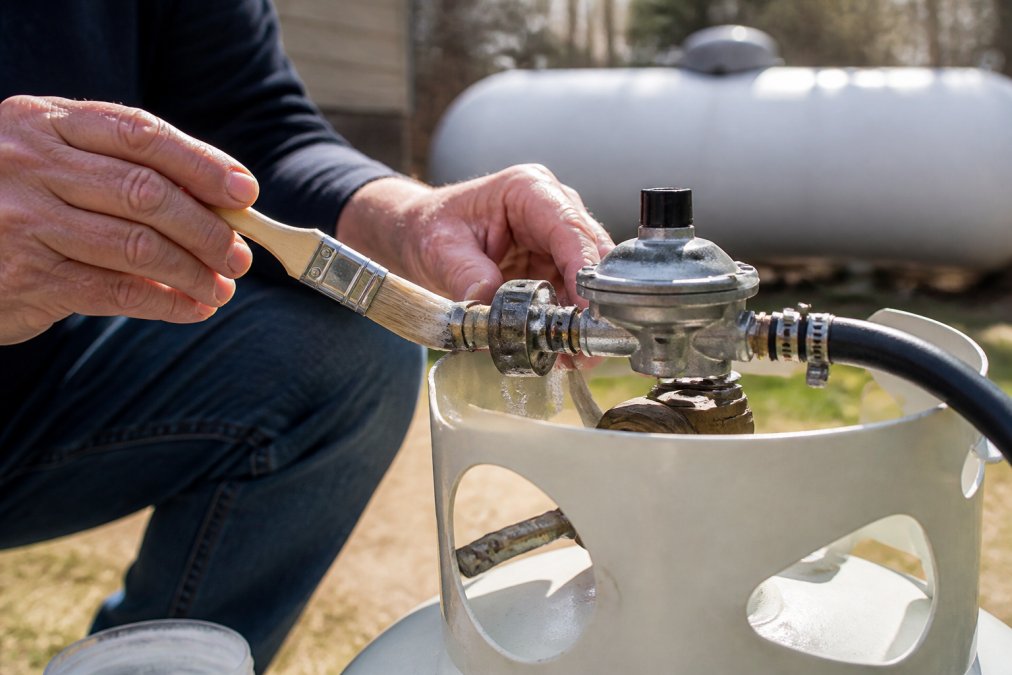
The most common leak points are the connections between the tank, regulator, hoses, and your appliances. Over time, rubber hoses can crack, and brass fittings can loosen from temperature changes and vibration. A simple visual inspection catches most of these issues before they become emergencies.
Visual Checks: Regulators, Hoses, and Fittings
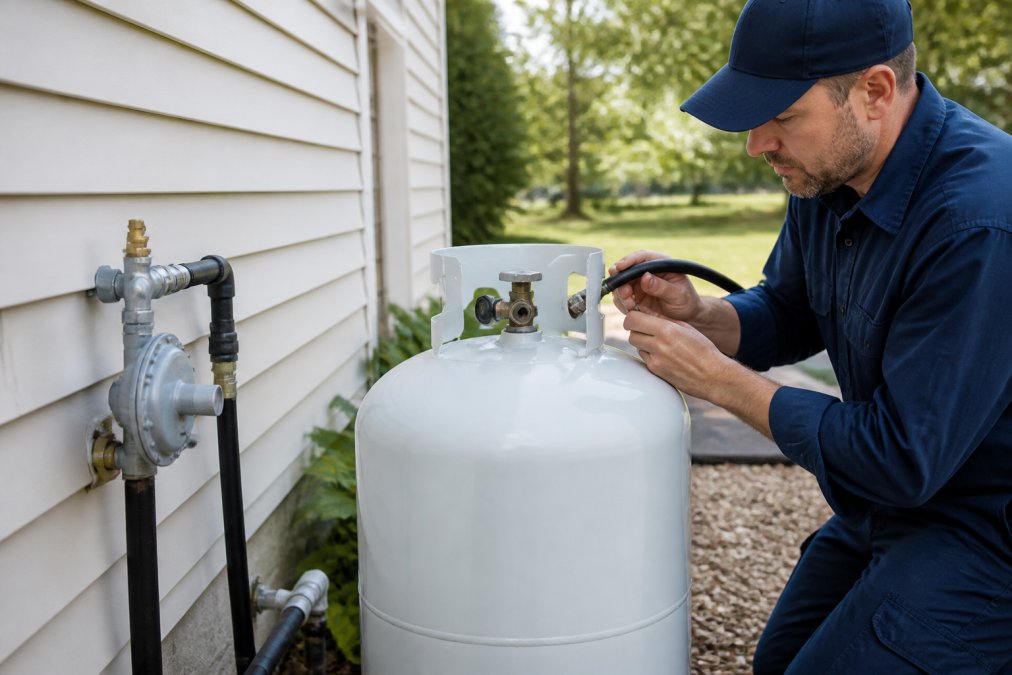
Start at the tank and work your way toward the house. Look for corrosion and rust on the tank itself, which can weaken the metal over time. Check the regulator for signs of damage or excessive wear. Examine every hose for cracks, bulges, or brittle spots, and confirm that all fittings are snug.
A common mistake is overtightening fittings, which can strip threads and create a worse leak. Hand-tighten plus a quarter turn with a wrench is usually sufficient for most connections. If you see rust on any fitting, that’s a sign moisture has been sitting there, which accelerates corrosion.
Using a Tank Gauge and Leak Detection Solution
A tank gauge tells you how much propane remains, which matters for safety as well as convenience. Running a tank completely empty can allow air and moisture to enter the system, leading to corrosion and potential regulator failure. Keep your tank above 20 percent to avoid this risk.
For leak checking, you don’t need expensive equipment. Mix a solution of dish soap and water, then apply it to connections with a brush or spray bottle. If bubbles form, you have a leak. This method is reliable, inexpensive, and something every homeowner can do in under ten minutes. outdoor fireplace safety.
What to Do If You Smell Gas: A Step-by-Step Evacuation Plan
Smelling gas demands immediate action. Do not flip light switches, use your phone inside the house, or start a vehicle. Any spark could ignite the gas.
- Extinguish all flames immediately, including pilot lights, candles, and cigarettes.
- Leave the house right away. Don’t stop to open windows or gather belongings.
- Get everyone to a safe location a good distance from the home.
- Turn off the gas at the tank only if the tank is safely accessible from outside and you can do so without risk. The shut-off valve is typically on top of the tank; turn it clockwise to close.
- Call your propane supplier or the fire department from a neighbor’s home or a cell phone well away from the property.
- Stay away until a professional confirms it’s safe to return.
The Propane Education & Research Council’s safety guidelines emphasize that evacuation comes before any attempt to diagnose the problem. Your safety and your family’s safety take priority over protecting equipment or property. Once you’re out, let trained professionals handle the leak detection and repair.
The Propane Tank Maintenance Schedule That Prevents Corrosion
A propane tank maintenance schedule isn’t complicated, but it needs to be consistent. Corrosion is the leading cause of tank failure, and it’s entirely preventable with routine care.
Rust typically starts where moisture collects: at the base of the tank, around valves, and under any debris that sits on the surface. Keeping the tank area clear of leaves, snow, and vegetation reduces moisture contact. If you spot surface rust, address it early with a wire brush and rust-inhibiting paint designed for metal surfaces.
Your tank should sit on a stable, level surface, raised slightly off the ground to allow air circulation underneath. This prevents moisture from pooling at the bottom where corrosion does the most damage. Guidance from the National Fire Protection Association on propane tank placement recommends keeping tanks at least ten feet from building openings and ignition sources.
Annual Professional Inspections vs. Monthly DIY Checks
Professional inspections are non-negotiable. Schedule one annually, and your technician will check the regulator, pressure relief valve, hoses, and fittings for wear. They’ll also verify that the tank itself meets current safety standards.
| Check Type | Frequency | What To Look For | Who Performs It |
|---|---|---|---|
| Visual inspection | Monthly | Rust, dents, loose fittings, cracked hoses | Homeowner |
| Leak test | Monthly | Bubbles at connections with soapy solution | Homeowner |
| Full system check | Annually | Regulator function, valve operation, overall integrity | Certified technician |
| Tank gauge check | Weekly during heating season | Keep above 20 percent | Homeowner |
Between professional visits, do your own monthly walk-around. It takes five minutes and catches small problems before they compound. If you’re unsure what to look for, ask your technician to walk you through the process during the annual inspection.
Ventilation, Pilot Lights, and the Blue Flame Rule
Proper ventilation is essential for any propane appliance. Gas ranges, water heaters, and furnaces need adequate air supply for complete combustion. When combustion is incomplete, it produces carbon monoxide instead of harmless carbon dioxide and water vapor.
The blue flame rule is a simple diagnostic tool. A healthy propane flame burns blue with a clean, sharp inner cone. A yellow or orange flame indicates incomplete combustion, which means the appliance needs servicing. Soot buildup around burners is another warning sign.
Your pilot light should also burn blue. If it repeatedly goes out or burns yellow, there’s likely a problem with the thermocouple or gas flow. Don’t keep relighting a problematic pilot light; call a technician to diagnose the underlying issue.
Keep vents and air intakes clear of dust, pet hair, and debris. Blocked airflow starves the burner of oxygen and leads to incomplete combustion. This is especially important in newer, tightly sealed homes where natural air infiltration is minimal.
Take a photo of your appliance flames during the annual inspection when everything is running correctly. When something seems off later, compare the current flame to the photo. Color changes are easier to spot side by side.
Carbon Monoxide Detectors: Placement and Requirements
Carbon monoxide is odorless, colorless, and lethal. Propane itself doesn’t produce it, but incomplete combustion does. Every home with propane appliances needs working CO detectors on every level.
Place detectors within ten feet of each sleeping area and near attached garages. Mount them at knee height or higher, since CO mixes with air rather than rising like natural gas. Test detectors monthly and replace batteries twice a year, or whenever you change your clocks.
The U.S. Consumer Product Safety Commission’s carbon monoxide detector recommendations advise replacing CO detectors every five to seven years, depending on the manufacturer’s specifications. Check the date on your detector and mark your calendar for replacement. An outdated detector is worse than none, because it creates a false sense of security.
Carbon monoxide detectors are not a substitute for leak detection. CO detectors don’t detect propane itself. You need both: CO detectors for combustion safety and your nose or a gas detector for propane leaks.
Seasonal Safety Checklists for Home Propane Systems
Propane safety isn’t a one-time event. It changes with the seasons, and each brings its own risks.
Spring: After the heating season ends, inspect hoses and fittings for damage from winter weather. Clear debris from around the tank. Schedule your annual professional inspection before the next heating season begins.
Summer: If you use propane for grilling, check the connection between the tank and grill each time you connect. Store spare cylinders outdoors in a well-ventilated area, away from direct sun and ignition sources. Keep cylinders in the upright position at all times.
Fall: Before the first cold snap, test your heating system and verify the pilot light burns blue. Check the tank gauge and schedule a fill before demand peaks. Confirm CO detectors have fresh batteries.
Winter: Keep the tank gauge above 20 percent to prevent freezing and regulator issues. Clear snow and ice from the regulator and piping. Ensure vents and exhausts remain unobstructed.
Renters face an additional challenge: you may not control the tank or appliance maintenance. If you rent a home with propane heat, ask the landlord for the most recent inspection records. If they can’t provide them, contact your local propane supplier about a safety check. The U.S. Department of Energy’s home heating safety overview notes that renters should document any safety concerns in writing and follow up if issues aren’t addressed.
Conclusion: Build a Safer Routine With These Propane Safety Tips
Propane system safety comes down to consistency rather than complexity. A monthly five-minute visual check, working CO detectors, and a clear evacuation plan cover most of the risk. When you need propane delivery, Discount Propane offers upfront, real-time online pricing so you can see costs before you order, with no commitment required. Schedule fast, flexible delivery through easy online ordering, and manage your account securely from your phone or computer with PCI-compliant payment options including credit card, cash on delivery, or Zelle. Get started with Discount Propane and keep your home safe and warm all year.
Frequently Asked Questions
What should I do if I smell propane in my home?
Act immediately. Extinguish any flames or pilot lights, leave the house right away, and do not use light switches, phones, or appliances. Once you are safely outside, call your propane supplier and the fire department from a neighbor’s phone. Do not return inside until a qualified professional confirms it is safe. This is the most critical part of home propane system safety.
How often should a home propane system be inspected?
Have a qualified technician perform a full system inspection at least once a year. This is the core of a solid propane tank maintenance schedule. Between professional visits, do a monthly visual check of your regulator, hoses, and fittings for rust, corrosion, or damage. Always inspect the system immediately after severe weather like heavy snow or flooding.
What are the signs of a propane leak?
The strongest sign is the distinct rotten egg smell added to propane. You might also hear a hissing sound near a tank or line, see dying vegetation around the tank, or notice your propane tank gauge dropping faster than expected. Propane leak detection also includes feeling for bubbles when applying soapy water to connections. Never rely on smell alone if you suspect an issue.
Is it safe to store propane tanks inside the house or garage?
No. Never store a propane cylinder indoors, including in a basement, garage, or shed attached to your home. Propane is heavier than air and a leak could pool in a confined space, creating a serious fire or explosion hazard. Keep cylinders outside, upright, and at least 10 feet away from building openings, ignition sources, and in a well-ventilated area.
Why is my propane appliance flame yellow instead of blue?
A healthy propane appliance burns with a crisp blue flame. A yellow or orange flame indicates incomplete combustion, which can produce dangerous carbon monoxide. This is often caused by a blocked burner, improper air mixture, or a problem with the regulator. Turn off the appliance and contact a technician for propane leak detection and repair before using it again.
Can I leave my propane tank valve open all the time?
For large stationary tanks, the main service valve should stay open to supply your appliances. However, you should close the valve on any cylinder or tank when it is not in use for an extended period. For outdoor cooking cylinders, always turn off the valve at the tank after each use. This prevents pressure buildup in the hose and reduces the risk of a leak from a faulty fitting.