
Table of Contents
- What Is a Propane Tank Monitor and How Does It Work?
- How to Read Your Propane Tank Gauge
- Choosing the Best Wireless Propane Tank Monitor
- Installation Steps for Remote Tank Monitoring
- Propane Run-Out Prevention Tips
- Monitoring Consumption Patterns and Usage Trends
- Troubleshooting Connectivity and Common Issues
- Conclusion
Last Updated: August 18, 2026
What Is a Propane Tank Monitor and How Does It Work?
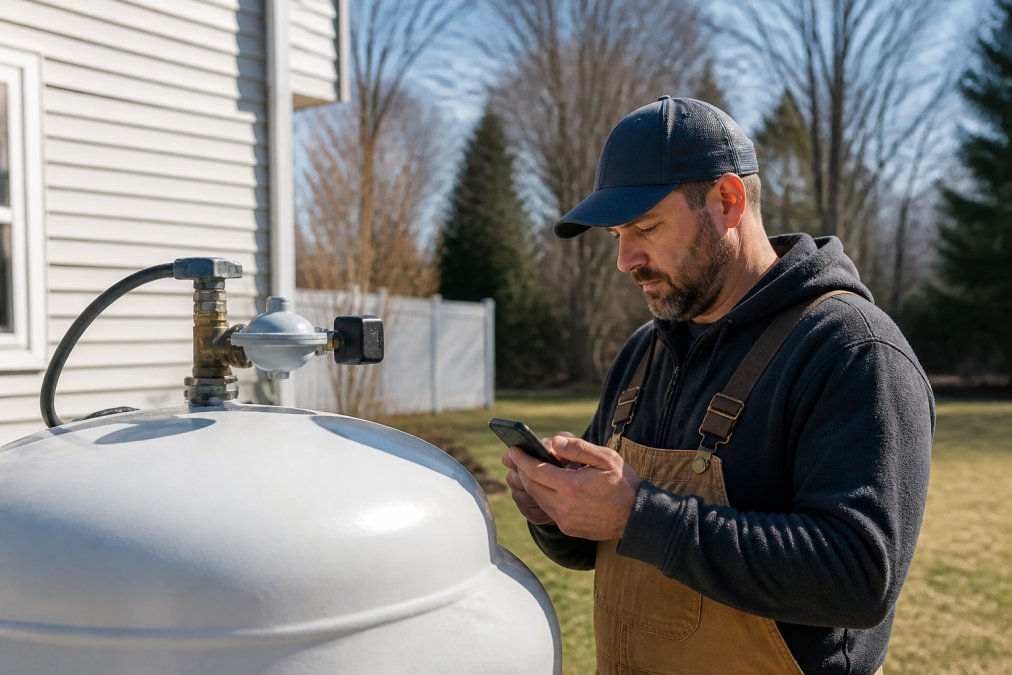
A propane tank monitor is a device that tracks fuel level inside your propane tank and transmits data to your phone or computer in real time. Instead of walking outside to check a dial gauge or waiting until your tank runs empty, you get instant visibility into remaining fuel and can plan refills before running out.
A sensor attaches to your propane tank and measures the liquid propane level, then sends data wirelessly through cellular networks or home WiFi to a mobile app or online dashboard. You receive push notifications when fuel drops below your set threshold, and many systems can schedule automatic delivery so you never have to think about it.
Most systems check your tank level multiple times per day continuously. Some pair with your propane supplier’s delivery network, while others work independently and alert you to order fuel whenever you want.
The National Propane Gas Association emphasizes that real-time monitoring prevents emergency run-outs and helps homeowners maintain consistent heating during winter months.
How to Read Your Propane Tank Gauge
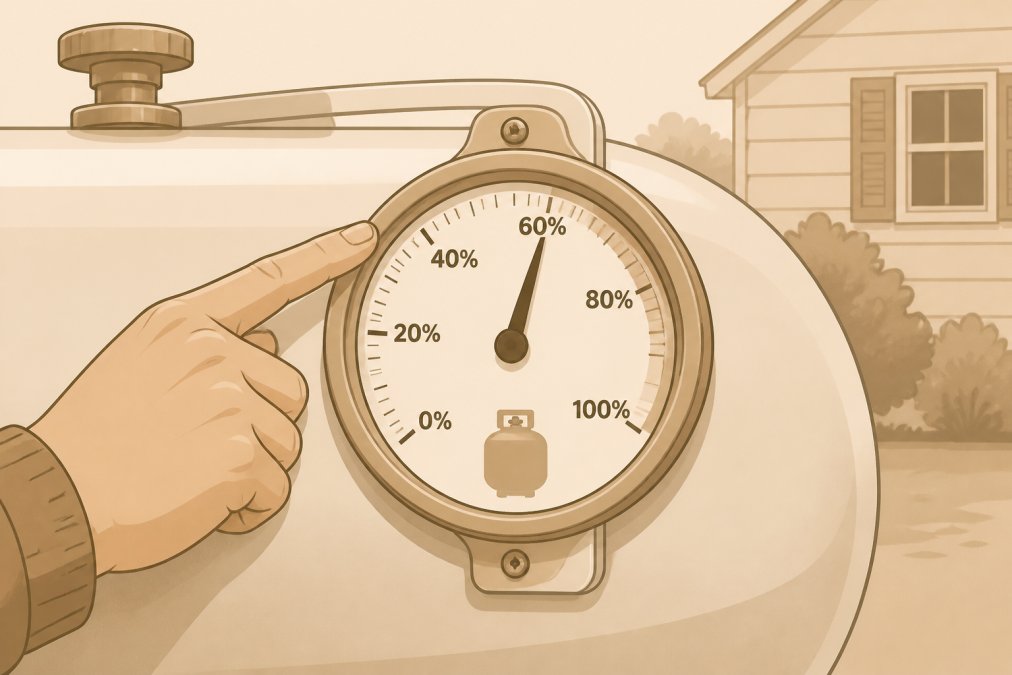
Most residential and commercial propane tanks have a dial gauge mounted on top or the side. The gauge displays a needle pointing to a percentage or full/empty range.
Understanding Tank Capacity and Percentage
Your propane tank gauge typically shows the percentage of fuel remaining, not actual gallons. A full tank reads 100%, empty reads 0%. Tank capacity varies widely: a typical residential heating tank holds 500 to 1,000 gallons, while smaller cylinders hold 20 to 100 gallons. Industrial facilities often use tanks ranging from 1,000 to 10,000 gallons or larger. If your gauge shows 50% on a 500-gallon tank, you have approximately 250 gallons left.
The gauge needle can stick or become inaccurate over time, especially in cold weather or after years of use. A stuck needle is one of the most common reasons homeowners think they’re out of fuel when they actually have supply remaining. Tapping the gauge gently sometimes frees it, but if it persists, the gauge may need replacement.
Manual vs. Digital Gauge Readings
Traditional dial gauges require you to walk to your tank and look at the needle position. Digital gauges display numbers on a small LCD screen instead of a needle and are more precise, but still require manual checking.
Remote propane tank monitoring systems eliminate the manual step entirely. The system reads the gauge automatically and sends data to your phone. You don’t have to remember to check, won’t miss a low-fuel situation, and can plan refills around your schedule instead of reacting to emergencies.
Choosing the Best Wireless Propane Tank Monitor
Selecting the right propane tank monitoring system depends on your connectivity options, budget, and whether you want to install hardware yourself or use your supplier’s equipment.
Cellular vs. WiFi-Enabled Options
Cellular-enabled monitors use LTE or 4G networks and work anywhere you have cell service, making them ideal for rural areas. They typically require a monthly subscription fee, usually a few dollars to fifteen dollars per month.
WiFi-enabled monitors connect to your home or business internet network and don’t require a separate data plan, making them cheaper to operate long-term. However, they only work within WiFi range, and if your internet goes down, the monitor stops transmitting. WiFi monitors are best for homes where your tank is close to your router.
Hybrid systems can use both cellular and WiFi, switching based on signal strength. For most homeowners with decent WiFi coverage near their tank, WiFi-enabled monitoring is sufficient and more economical. For rural properties or construction sites, cellular monitoring provides better reliability.
DIY vs. Provider-Supplied Hardware
DIY monitoring systems are devices you purchase independently and install yourself on your existing propane tank. The advantage is flexibility and independence from your propane supplier. The disadvantage is that you’re responsible for installation and managing a separate service subscription.
Provider-supplied hardware comes directly from your propane delivery company and is often installed at no charge. This makes automatic delivery seamless. The downside is that you’re locked into their hardware and system.
Discount Propane offers straightforward online ordering and transparent pricing, which pairs well with either monitoring approach. A DIY monitoring system paired with a supplier offering competitive pricing and easy online ordering gives you more control and often better value than being locked into a provider’s hardware.
Installation Steps for Remote Tank Monitoring
Installing a wireless propane tank monitor involves several steps, but most DIY systems are designed for homeowner installation without professional help.
Step 1: Verify Compatibility with Your Tank
Before purchasing a monitoring system, confirm that it’s compatible with your specific tank type and size. Check your tank’s specifications: manufacturer, model number, year of manufacture, and whether it’s steel or aluminum. Most DIY monitoring systems have compatibility charts on their websites. Also verify that the sensor attachment point won’t interfere with your existing propane setup.
Step 2: Install the Sensor Hardware
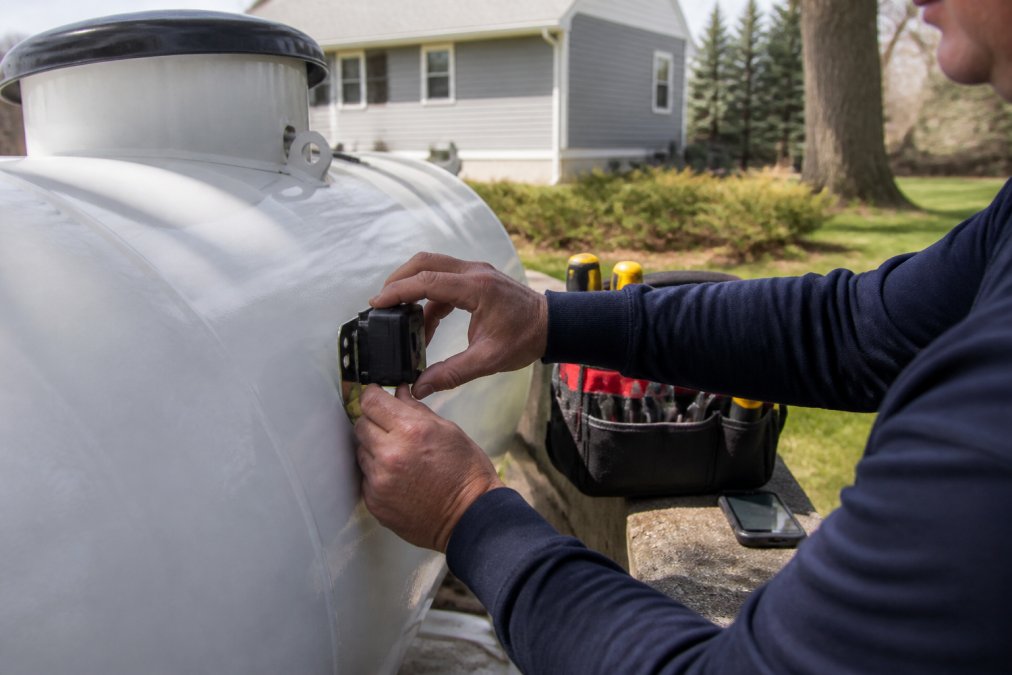
Most DIY propane tank monitors attach to the existing gauge or to a specific point on the tank using clamps, magnets, or brackets. Installation usually takes 15 to 30 minutes. Turn off any propane appliances before installing as a safety precaution. Make sure the tank is on level ground and stable.
Attach the sensor according to instructions. If it uses a clamp, tighten it firmly but don’t over-tighten. If it uses a magnetic mount, clean the tank surface where the magnet will attach.
Step 3: Configure Mobile App and Alerts
Download the monitoring system’s mobile app or log into its web dashboard. Create an account and pair your sensor with the app. Set your low-fuel alert threshold, typically between 20% and 50% remaining fuel. If you have automatic delivery set up, the alert might trigger an order automatically.
Customize notification preferences: push notifications, text messages, emails, or all three. Test the notification system to confirm you receive alerts. Many systems let you set usage trends and consumption patterns to predict when you’ll run out and recommend ordering dates.
Propane Run-Out Prevention Tips
Running out of propane in the middle of winter is a safety and comfort emergency. Prevention is far easier than recovery.
Setting Low Fuel Alerts and Thresholds
The most effective prevention tool is your low-fuel alert threshold. Set it conservatively at 25% to 30% remaining, not at 10%. Fuel delivery takes time, and winter demand can create delays. If you wait until critically low, you risk running out before the truck arrives.
If you use propane for heating, set your threshold higher during winter months, perhaps 40%, and lower it during warmer months. Test your alert system monthly to confirm alerts reach you.
Scheduling Automatic Delivery
Automatic delivery removes the guesswork entirely. When your fuel drops below your set threshold, the system automatically schedules delivery from your propane supplier. You don’t have to remember to order, and delivery happens on a predictable schedule.
Automatic delivery works best when you have a reliable supplier. Discount Propane’s easy online ordering and transparent pricing make automatic delivery straightforward. Keep a backup plan: if automatic delivery fails, you should have a way to order emergency propane quickly.
Monitoring Consumption Patterns and Usage Trends
Understanding your propane consumption patterns helps you predict run-outs, identify efficiency problems, and plan your heating strategy. Most remote monitoring systems track daily or weekly fuel usage.
If your tank drops 10% per week during winter but only 2% per week during summer, that tells you exactly how much heating fuel you’re using. Unexpected spikes in consumption might indicate a heating system malfunction, a leak, or a thermostat set too high.
Consumption trends help you plan ahead. If historical data shows you use 30% of your tank per month during winter, you know you need delivery every three to four weeks. Seasonal consumption varies dramatically, so adjust your alert thresholds and delivery schedule to match actual usage.
The U.S. Department of Energy provides guidance on propane heating efficiency and consumption monitoring.
Troubleshooting Connectivity and Common Issues
Wireless propane tank monitoring systems are reliable, but connectivity problems occasionally occur.
WiFi monitors lose signal: Check that your home WiFi is working and the monitor is within range. Restart your router. If the problem persists, check the app for battery status and replace batteries if needed.
Cellular monitors show no signal: Move the tank closer to a window or higher location to improve signal strength. Some cellular monitors have external antennas you can relocate.
Gauge readings are inaccurate: Recalibrate the sensor according to manufacturer’s instructions. If the physical gauge is stuck, tap it gently or have it replaced.
App doesn’t connect to sensor: Ensure you’re using the correct WiFi network or that cellular data is enabled. Log out of the app and log back in. If the problem continues, restart the sensor hardware.
Alerts aren’t arriving: Check your notification settings in the app and ensure push notifications are enabled. Verify your alert threshold is set correctly.
Most connectivity issues resolve with basic troubleshooting. If problems persist, contact your monitor manufacturer’s support team.
Propane tank run-outs disrupt your heating, your business, and your peace of mind. Remote propane tank monitoring prevents that problem by giving you real-time visibility into your fuel level and automating the ordering process. Discount Propane’s transparent online pricing and flexible delivery options make it easy to order propane on your schedule when your monitoring system alerts you to low fuel.
| Monitoring Method | Setup Time | Monthly Cost | Best For |
|---|---|---|---|
| Manual gauge checking | None | $0 | Frequent tank checkers, accessible tank locations |
| WiFi-enabled remote monitor | 20-30 minutes | $0-5 | Homes with strong WiFi coverage near tank |
| Cellular-enabled remote monitor | 20-30 minutes | $5-15 | Rural areas, multiple properties, unreliable WiFi |
| Provider-supplied hardware | Professional installation | Varies | Automatic delivery integration, hands-off management |
Set your low-fuel alert threshold at 25-30% during winter months, not at 10%. This gives you time to schedule delivery before you actually run out of fuel, even if your supplier experiences delays.
A stuck propane tank gauge is one of the most common reasons homeowners think they’re out of fuel when they actually have supply remaining. Tapping the gauge gently sometimes frees it, but if it stays stuck, the gauge should be replaced to avoid false emergencies.
The American Gas Association’s propane safety standards recommend regular monitoring and maintenance of propane systems to prevent emergencies and ensure safe operation.
Frequently Asked Questions
How do I monitor my propane tank level remotely?
Remote propane tank monitoring uses wireless sensors attached to your tank that transmit fuel level data to a mobile app via cellular or WiFi connectivity. Once installed, the sensor continuously tracks your tank percentage and sends push notifications when fuel drops below your set threshold. Most systems display real-time tank data on a dashboard accessible from your phone or computer, allowing you to schedule delivery before running out.
Are propane tank monitors worth the investment?
Yes, especially if you rely on propane for heating or cooking. Remote monitors prevent costly run-outs, eliminate manual gauge checks, and enable automatic delivery scheduling. They provide peace of mind during winter months and help you track consumption patterns to identify potential heating system issues. For contractors and businesses requiring consistent supply, the convenience and reliability far outweigh the initial hardware cost.
Can I install a propane tank monitor myself?
Many wireless propane tank monitors are designed for DIY installation and don't require a technician. Installation typically involves attaching the sensor to your tank's gauge, powering it on, and downloading the mobile app to configure alerts. However, if your tank is buried or you're uncomfortable working with propane equipment, hiring a professional ensures proper installation and safety compliance. Always verify compatibility with your specific tank model before purchasing.
What should I do if my propane tank runs out of fuel?
If your tank runs completely empty, your propane appliances will stop working immediately. You'll need to call your propane provider for emergency delivery. To restart service after a run-out, the provider may need to bleed air from the lines and re-light your pilot lights. This is why remote monitoring is valuable, it alerts you to low levels well before the tank empties, giving you time to schedule delivery and avoid service interruptions during heating season.
This article was written using GrandRanker