

Table of Contents
- Why Online Propane Ordering Matters
- Automatic Propane Delivery vs Will-Call: Which Fits Your Needs
- Propane Price Protection Plans and Fixed-Rate Options
- Real-Time Account Management and Usage Monitoring
- Payment Flexibility and Paperless Billing
- Safety, Reliability, and Energy Efficiency
- Making the Switch: What to Expect
Last Updated: August 13, 2026
Why Online Propane Ordering Matters
Online propane ordering has transformed how homeowners and businesses manage fuel supply. The shift from phone calls and will-call pickups to digital platforms offers more than convenience, it provides transparency and control. You see actual pricing before committing, monitor your tank in real time, and schedule delivery on your timeline, not the supplier’s.
For contractors managing multiple job sites, consistent, predictable delivery without constant phone calls frees up hours monthly. For homeowners converting from oil heating, the digital interface removes friction from a major system change. Discount Propane exemplifies this shift, combining upfront, real-time pricing with flexible delivery scheduling and multiple payment options, credit card, cash on delivery, or Zelle, all accessible from your phone or PC. No commitment required just to check prices.
Automatic Propane Delivery vs Will-Call: Which Fits Your Needs
Automatic delivery means the supplier monitors your tank usage and schedules deliveries before you run dry. Will-call means you contact the supplier when you need propane, and they deliver on their schedule.
Automatic delivery prevents running out mid-winter. Your supplier tracks consumption patterns and calculates when your tank will likely empty, scheduling delivery beforehand. For most residential heating customers, this is the safer option, though you lose some control over timing.
Will-call puts you in charge. You decide when to order, which works well if you monitor your tank regularly and understand your consumption patterns. Contractors often prefer will-call because they can request propane specifically when needed for job sites. The risk is forgetting to order until your tank is nearly empty.
Many suppliers offer both options. Discount Propane’s online ordering system makes will-call seamless: you request delivery when needed and see available time slots. For residential customers in cold climates, automatic delivery removes major stress. For contractors with variable demand, will-call with easy online scheduling offers needed flexibility.

Propane Price Protection Plans and Fixed-Rate Options
Price volatility in propane markets makes budgeting difficult. Price protection plans and fixed-rate options lock in pricing for a set period, eliminating uncertainty.
Fixed-rate plans set a single price per gallon for a contract period, typically a heating season or year. You pay that rate regardless of market fluctuations. If market prices spike, you win; if they drop, you lose. The trade-off is predictability.
Price cap plans set a ceiling price but allow you to benefit if market rates fall below it. You pay the lower of the market price or the cap. The supplier charges a small premium for this flexibility.
Budget billing spreads annual propane costs evenly across 12 months, smoothing cash flow but not locking in a specific price.
Platforms like Discount Propane show current pricing upfront, so you can compare options before committing. Heavy users with stable heating needs often benefit from fixed rates. Lighter users or those with variable demand might prefer flexibility. Check current rates and decide whether price certainty is worth the potential cost.
Real-Time Account Management and Usage Monitoring
Managing propane online means accessing tank level, delivery history, usage trends, and upcoming billing instantly. Most modern suppliers offer cloud-based account portals where you log in and see your tank’s current level and consumption over time. Some systems integrate remote tank monitoring devices that transmit tank level data every 24 hours.
The practical benefit: you never wonder whether you’re running low. You get alerts via email, SMS, or app notification when your tank reaches a certain level. For homeowners, this eliminates anxiety about running out during cold snaps. For contractors managing multiple job sites, it means scheduling deliveries around your work schedule.
Usage monitoring reveals consumption patterns. Over a heating season, you see when you use the most propane and whether your heating system operates efficiently. If consumption suddenly spikes, it might signal a heating system problem worth investigating.
Real-time monitoring also supports better planning. If you see your tank is at 40% and a cold forecast is coming, you can request delivery before demand peaks. Suppliers are less stressed, you get faster service, and everyone wins.
Payment Flexibility and Paperless Billing
Modern suppliers offer multiple payment methods and digital billing, removing friction from propane payments.
Payment options typically include credit cards, debit cards, ACH transfers, digital wallets like Zelle, and cash on delivery. The advantage is choosing what works for your situation.
Paperless billing means your invoice arrives via email instead of mail. You can view, download, and store it digitally, creating a searchable record of your propane history.
Automatic recurring payments let you set up a schedule so payments happen without your involvement, eliminating late payments and administrative burden.
Budget billing stabilizes cash flow by spreading costs evenly across the year, particularly helpful for businesses managing multiple utility costs.
The online propane ordering benefits 2026 include reviewing payment history instantly. You see exactly what you paid, when, and what you received. For homeowners, this is peace of mind. For contractors, it’s easier to track fuel costs by project. For businesses, it simplifies accounting.
If you’re switching propane suppliers, [ask about how they handle the transition](/faq/). Most will help you schedule a final delivery from your old supplier and a first delivery from them on the same day, avoiding any gap in service. Confirm this before switching.
Safety, Reliability, and Energy Efficiency
Propane is safe when handled properly. Modern delivery systems, storage tanks, and appliances are engineered with multiple safety features.
Delivery safety involves trained drivers following strict protocols. They inspect tanks before delivery, check for leaks, and ensure proper connections. Tanks are regularly tested and certified to withstand pressure.
Tank safety standards are set by the Department of Transportation. Tanks must be inspected every 5 or 10 years, depending on the tank type, condition, and previous requalification method. Regulators and valves prevent overpressurization.
Appliance safety depends on proper installation and maintenance. Heating systems should be installed by licensed technicians following building codes. Annual inspections catch problems before they become hazardous.
Energy efficiency matters for both cost and environmental impact. Modern propane heating systems are significantly more efficient than older models. A new high-efficiency furnace converts 95% of propane’s energy into usable heat. For homeowners converting from oil to propane, the efficiency improvement is substantial.
Environmental impact: Propane is a clean-burning fuel with low emissions. It doesn’t contaminate groundwater like heating oil can. Some suppliers are exploring renewable propane, though availability is still limited.
Reliability comes down to supply chain. Propane is produced domestically and distributed through established networks. Supply in the U.S. is generally stable. During extreme cold snaps, demand spikes and some suppliers may experience temporary delays, but outright shortages are rare.
Reputable suppliers publish information about safety protocols, delivery reliability, and environmental practices transparently. Discount Propane’s emphasis on transparent pricing extends to transparency about how they operate.
Making the Switch: What to Expect
Switching propane suppliers is straightforward if you understand the process.
For existing propane customers switching suppliers:
Contact your new supplier and request a quote. They’ll ask about your tank size, heating system type, current usage, and preferred delivery schedule. Once you agree, they’ll schedule your first delivery.
Coordinate timing with your old supplier. Most new suppliers will work with you to schedule their first delivery shortly after your old supplier’s final delivery, preventing gaps in service. You don’t need to drain your existing tank.
Your new supplier will inspect your tank and connections before their first delivery. If your tank is old or damaged, they may require repairs or replacement before delivery.
For customers converting from oil to propane:
You’ll need to replace your oil furnace or boiler with a propane unit. Hire a licensed HVAC contractor to handle tank installation, line connections, and system testing. The process usually takes a few days.
Get quotes from multiple contractors. Ask about equipment efficiency ratings, warranty terms, and installation timelines. A qualified contractor will ensure everything meets building codes and safety standards.
Once your propane system is installed, contact your propane supplier to schedule your first delivery.
For new propane customers:
If you’re installing propane heating in a new building, work with your contractor to size the tank appropriately. Propane suppliers can help with tank sizing recommendations based on your building’s square footage and climate.
Account setup:
Once your first delivery is scheduled, create an online account with your supplier. This involves providing contact information, payment method, and delivery preferences. You’ll receive login credentials and can immediately access your account portal.
First delivery timing:
Plan for your first delivery before you need it. If you’re converting in fall, schedule it before the heating season begins. Most suppliers can accommodate specific delivery windows.
What happens during delivery:
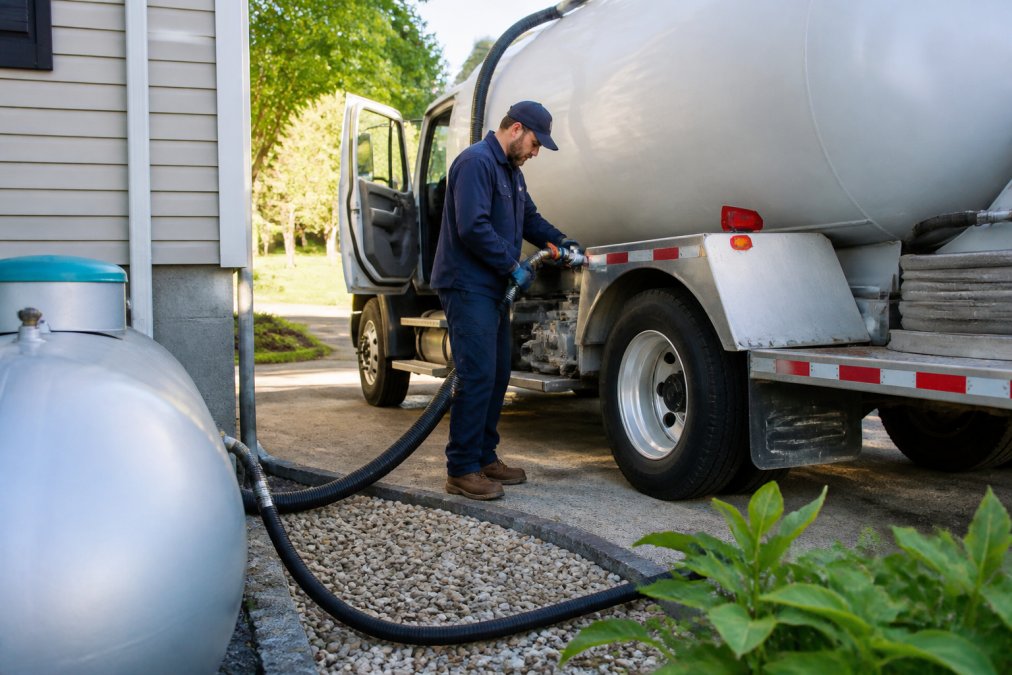
A propane truck arrives at your property. The driver will inspect your tank, connect their hose, and begin delivery. The process typically takes 15-30 minutes. Once complete, the driver will provide documentation showing gallons delivered.
Cost considerations:
Switching suppliers may involve a tank rental fee if the supplier owns the tank. Some charge monthly rental; others include it in the per-gallon price. Ask about this upfront. Some suppliers charge a delivery surcharge per delivery; others include it in pricing. Get a complete quote showing all costs.
If your old propane supplier owns your tank, you may not be able to transfer to a new supplier without purchasing or renting a new tank. Ask about tank ownership before switching. Some suppliers will buy out your old tank as part of switching incentives.
The entire process, from contacting a new supplier to receiving your first delivery, typically takes one to two weeks. Planning ahead prevents service gaps.
Switching to online propane ordering means gaining control over a major utility. Real-time pricing visibility, flexible scheduling, and transparent account management eliminate the frustration of traditional propane service. Whether you’re converting from oil, switching suppliers, or optimizing your current setup, the online propane ordering benefits 2026 make managing your fuel supply simpler and more cost-effective.
Discount Propane’s approach, upfront pricing, easy online ordering, and secure account management, demonstrates what modern propane service should look like. Check current pricing and available delivery times on their website. See prices before committing, schedule delivery on your timeline, and manage everything from your phone.
Frequently Asked Questions
How does online propane ordering prevent running out of fuel during winter?
Online propane ordering systems use real-time usage forecasting and tank monitoring to predict when you'll need delivery. Automatic delivery schedules fuel before your tank empties, typically triggered when levels drop to a certain point. This approach eliminates the need to manually call for refills and reduces the risk of unexpected outages during cold months when demand peaks.
What is the difference between automatic propane delivery vs will-call service?
Automatic propane delivery schedules fuel shipments based on your usage patterns and tank levels, ensuring consistent supply without action needed from you. Will-call requires you to contact your provider each time you need a refill. Automatic delivery offers convenience and reliability, while will-call gives you control over when deliveries occur but requires active management and carries higher run-out risk.
How do propane price protection plans work and can they save money?
Propane price protection plans lock in a fixed rate for a set period, protecting you from market price increases. If prices rise above your locked rate, you pay the lower amount. These plans provide budget predictability and can save money if market prices surge during heating season. Review plan terms carefully, as some include caps on savings or require minimum purchase volumes.
Is online propane ordering secure for credit card payments?
Reputable online propane providers use PCI-compliant payment processing, which means your credit card data meets strict security standards set by the payment card industry. Look for providers that clearly state PCI compliance and offer multiple payment methods including credit cards, ACH transfers, and digital payment services like Zelle for added flexibility and security.
This article was written using GrandRanker