

Table of Contents
- How to Read Your Propane Tank Gauge
- Monitor Your Average Propane Usage Per Month
- Establish a Refill Schedule Based on Consumption
- Automatic Propane Delivery vs. Will-Call Service
- Use Smart Home Monitoring for Real-Time Alerts
- Conduct Regular Safety Checks and Leak Tests
- What to Do If You Run Out of Propane
Last Updated: August 22, 2026
How to Read Your Propane Tank Gauge
A propane tank gauge shows the percentage of fuel remaining in your tank, displayed as a dial, digital readout, or float indicator depending on your tank type. Most residential propane tanks use one of three systems: float gauges work like car fuel gauges with a mechanical arm that moves a needle across a dial; dial gauges display the percentage directly; and digital gauges show precise readings on a small screen but require occasional battery replacement.
A reading of 80% means you have 80% of your tank’s capacity remaining. The critical threshold is 20-30%, not zero. Most propane suppliers recommend refilling when your tank drops to 20-30% to ensure you never run completely dry and to prevent system disruptions (npga.org).
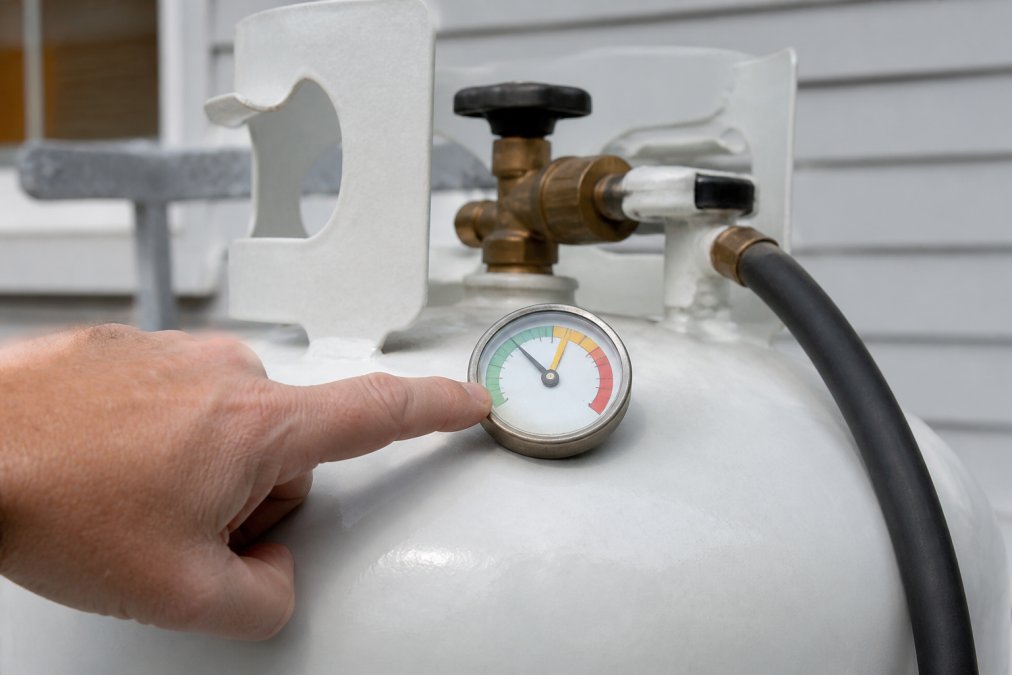
Check your gauge weekly during winter heating season. If your tank is exposed to weather, wipe the gauge face clean for visibility. A gauge reading that seems stuck or doesn’t change after several days of heating use may indicate a faulty gauge requiring inspection by a propane technician.
Monitor Your Average Propane Usage Per Month
Understanding your household’s monthly propane consumption is the foundation of preventing outages. Usage depends on space size, outdoor temperature, the number of propane appliances, and heating system efficiency.
A typical residential home using propane for heating consumes 30-50 gallons monthly during mild weather, jumping to 100-150 gallons or more from November through March in cold climates (eia.gov). Homes using propane only for water heating or cooking consume 5-15 gallons monthly. Tracking actual consumption over several months provides a realistic baseline for planning refills.
The most reliable method is keeping records of delivery dates and amounts. Note the tank gauge reading before and after each delivery, then calculate the difference. After three to four months, a pattern emerges showing higher winter consumption and lower summer usage. Calculate your average monthly burn rate by dividing total gallons used by the number of months tracked. If you used 300 gallons over four months, your average is 75 gallons per month. This number predicts when your tank will reach the 20-30% refill threshold.
Weather significantly affects consumption. A particularly cold winter can push usage 20-30% higher than normal. Keep this in mind when planning; if forecasts predict an exceptionally cold season, schedule refills earlier than usual.
Establish a Refill Schedule Based on Consumption
With your average monthly usage calculated, creating a refill schedule is straightforward. If your average consumption is 60 gallons per month and your tank holds 500 gallons, you have roughly eight months of fuel. However, refill when your tank reaches 20-30% capacity. For a 500-gallon tank, that’s 100-150 gallons remaining. If your monthly consumption is 60 gallons, you have roughly two months of heating left at that point, enough time to schedule delivery without urgency.
Create a calendar reminder based on your usage pattern. If you typically use 50 gallons monthly and want to refill at 25%, mark a reminder 10 weeks after your last delivery. During winter months when consumption peaks, check your gauge every two weeks. During summer when usage drops, monthly checks are sufficient.
Document your refill schedule in writing or set phone reminders. Many homeowners find that marking a calendar at the start of heating season with anticipated refill dates creates accountability and prevents discovering a low tank during a cold night.
Automatic Propane Delivery vs. Will-Call Service
Two service models exist for propane delivery. Will-call delivery requires you to contact your propane supplier and request delivery. You initiate the transaction and control timing, but you’re responsible for remembering to call. During peak heating season, will-call customers sometimes face delays because suppliers prioritize automatic delivery customers and emergency calls.
Automatic delivery works differently. Your propane supplier monitors your account based on historical usage and weather patterns, then schedules deliveries before your tank reaches a critical level. You don’t need to remember to call; the company manages the schedule. This eliminates the risk of forgetting to order and removes guesswork about refill timing.
For contractors and industrial facilities requiring consistent propane supply, automatic delivery eliminates downtime risk. For residential users, automatic delivery removes the cognitive burden of monitoring and calling. The cost difference between will-call and automatic delivery is typically minimal. The real difference is convenience and reliability. Discount Propane offers both service models with transparent, real-time online pricing, allowing you to check current propane prices before ordering and schedule fast delivery without commitment.
Use Smart Home Monitoring for Real-Time Alerts
Smart home monitoring systems offer real-time alerts when your tank level drops below a threshold you set, eliminating guesswork entirely. These systems use wireless sensors attached to your propane tank that communicate with your smartphone via an app. You receive notifications when your fuel level reaches 30%, 20%, or your chosen percentage. Some systems integrate with smart home platforms like Alexa or Google Home, letting you check your propane level by voice command.
Installation is simple. Most wireless monitoring systems attach magnetically or with adhesive to your existing tank gauge. No wiring or modifications to your propane system are required. Battery-powered sensors typically last 2-3 years before needing replacement (peer-reviewed research). Monthly subscription costs are modest, usually between $5-15 depending on the provider.
For homeowners managing heating systems in multiple buildings, smart monitoring adds security. You’re no longer reliant on remembering to check a gauge. The system alerts you automatically, and you respond by scheduling delivery at your convenience. surviving power outages.
Conduct Regular Safety Checks and Leak Tests
Preventing running out of propane also means ensuring your propane system operates safely and doesn’t leak fuel unnecessarily. A system leak can deplete your tank faster than normal consumption, creating an artificial shortage that’s actually a safety problem.
Conduct a visual inspection of your propane system monthly. Look at the regulator, shut-off valve, and all visible connections where propane lines connect to appliances. Check for corrosion (white, green, or blue discoloration), cracks, or loose fittings.
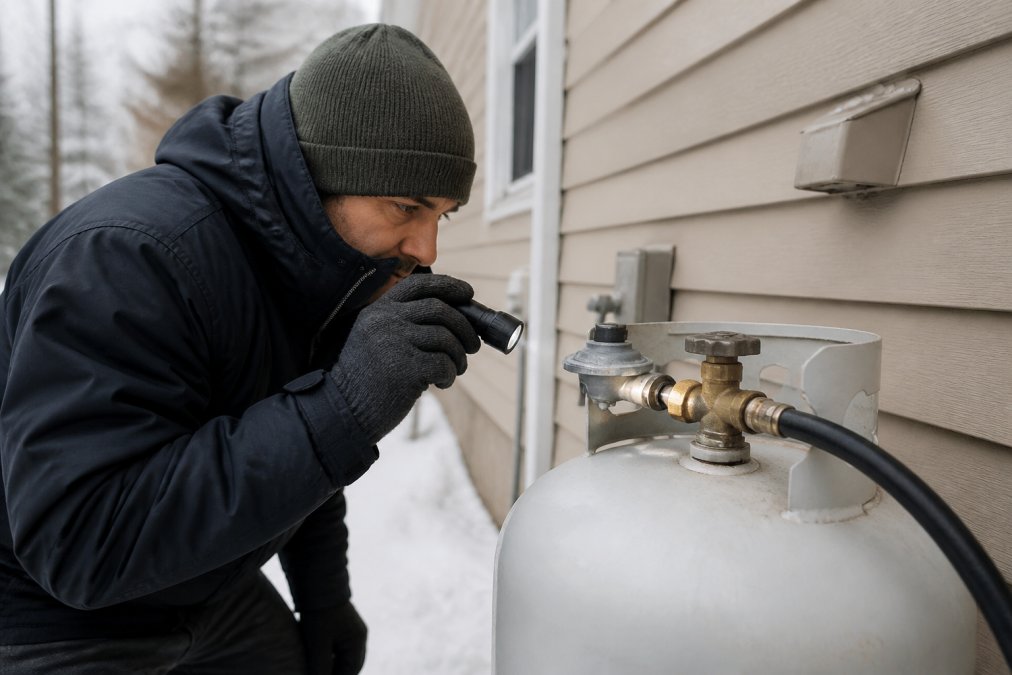
Perform a leak test annually or whenever you suspect a problem. Mix liquid dish soap with water in a spray bottle, then spray all propane connections, the regulator, shut-off valve, tank connection, and all line connections leading to appliances. If propane is leaking, bubbles will form at the leak point. Never use an open flame to test for leaks; this is dangerous and can ignite leaking propane.
If you detect a leak, stop using propane immediately. Turn off the main shut-off valve on your tank, open windows and doors to ventilate, and call a propane technician. Don’t attempt to repair the leak yourself; propane systems require professional service. A system leak explains why your propane consumption seems higher than expected. Fixing the leak restores normal consumption and prevents wasting fuel.
What to Do If You Run Out of Propane
Despite your best planning, emergencies happen. Equipment failures, unexpectedly harsh weather, or miscalculations can leave you without propane when you need it.
When you discover your tank is empty, contact your propane supplier immediately for emergency service. Many suppliers offer same-day or next-day emergency refills, though you may pay a premium for expedited delivery. Discount Propane offers fast, flexible delivery scheduling through their online platform, allowing you to request emergency refills quickly.
After your tank is refilled, you’ll need to restart your appliances. For a furnace, locate the pilot light and reset button near the pilot light assembly. Hold the reset button for 30 seconds, then release. The pilot light should ignite. If it doesn’t ignite after three attempts, wait five minutes and try again. If the pilot light still won’t ignite after multiple attempts, call a heating technician.
Water heaters have a similar reset process. Locate the pilot light assembly on the bottom of the tank, press and hold the reset button for 30 seconds, then release. Gas stoves and ovens typically restart automatically once propane pressure is restored.
If none of your appliances restart after refilling and attempting the pilot light reset, call a propane technician. Prevention is always easier than emergency response. The strategies outlined above eliminate the scenario of running out of propane entirely.
Running out of propane disrupts your heating, hot water, and cooking when you need them most. The solution combines awareness, planning, and the right delivery service. Discount Propane simplifies propane management with upfront, real-time online pricing, easy online ordering, and fast, flexible delivery scheduling. Check your propane prices and schedule your next delivery through their secure online platform, no commitment required, and you’ll know exactly what you’re paying before the truck arrives.
Frequently Asked Questions
At what percentage should I schedule a propane refill?
Schedule your refill when your propane tank gauge reads 20-30%. This prevents you from running out unexpectedly while allowing enough time to arrange delivery before cold weather hits. During winter months when consumption increases, check your gauge weekly and refill more frequently. Waiting until the tank is completely empty creates safety risks and emergency situations.
How can I ensure my propane supply doesn't run out in cold weather?
Cold weather increases propane consumption significantly. Monitor your tank gauge weekly during heating season, calculate your monthly burn rate, and adjust your refill schedule accordingly. Automatic delivery programs eliminate the guesswork by scheduling refills based on your usage patterns. Keep detailed records of refill dates and tank levels to predict when you'll need your next delivery before temperatures drop.
What should I do if I run out of propane in the middle of the night?
If your propane runs out, your heating system will shut off automatically. Contact your propane supplier immediately for emergency delivery. While waiting, close interior doors to concentrate heat in one room, use safe alternative heat sources like a fireplace if available, and keep family members warm with blankets. Once delivery arrives, you may need to relight pilot lights on appliances. Prevent this by monitoring your tank regularly and scheduling refills before reaching zero.
How do I check my propane tank gauge?
Most residential propane tanks have a float gauge on the side showing a percentage or full/empty indicator. The gauge reads the liquid propane level inside the tank. Look for the gauge during your regular inspections, and record the reading weekly during heating season. If your gauge is broken or unclear, contact your propane supplier for assistance or replacement.
This article was written using GrandRanker