
Table of Contents
- Why Businesses Need Fuel Alternatives
- Propane Delivery: The Reliable Fuel Alternative for Businesses
- Bulk Propane Delivery vs. Cylinder Exchange for Forklifts
- Commercial Propane Pricing Transparency and Cost Control
- Benefits of Switching to Propane for Businesses
- Alternative Energy Solutions: Solar, Biodiesel, and EV Charging
- How to Choose the Right Fuel Alternative for Your Business
- Conclusion
Last Updated: August 23, 2026
Why Businesses Need Fuel Alternatives
The energy landscape for commercial operations has shifted dramatically. Rising fuel costs, supply chain disruptions, and regulatory pressure around emissions are forcing businesses to rethink how they power their operations. What worked five years ago, relying on a single fuel source and accepting whatever pricing the market offered, no longer cuts it.
Businesses today face a genuine choice: lock into traditional energy sources and accept volatile pricing, or diversify their fuel strategy and gain control over costs and reliability. The problem isn’t that fuel alternatives exist. It’s that most business owners don’t understand which alternatives actually make sense for their specific operation, what the real cost trade-offs are, and how to implement them without massive capital investment.
This guide from Discount Propane breaks down the fuel alternatives available to businesses, with specific focus on propane delivery, renewable energy solutions, and biodiesel options. We’ll help you understand which alternatives fit your operation, how they compare on cost and reliability, and what the switching process actually looks like.
Propane Delivery: The Reliable Fuel Alternative for Businesses
Propane has become the default fuel alternative for businesses because it solves a fundamental problem: it delivers consistent heat and power without the infrastructure demands of natural gas or the environmental concerns of heating oil. For commercial operations on Long Island, propane offers flexibility that traditional fuel sources simply can’t match.
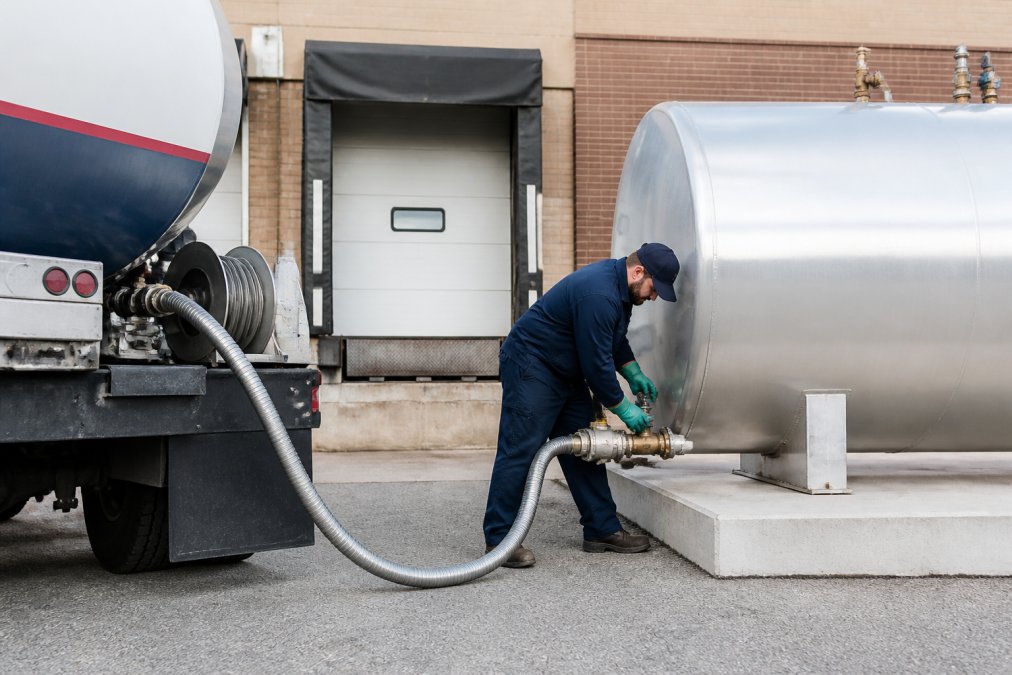
Here’s what makes propane work for businesses. Unlike heating oil, propane doesn’t require complex storage tank maintenance or environmental compliance inspections. Unlike natural gas, propane doesn’t depend on grid infrastructure, you own the fuel supply, which means you’re not vulnerable to utility outages or service disruptions. For businesses that need reliable, on-demand fuel for heating, hot water, cooking, forklifts, or generators, propane sits in the sweet spot between cost-effectiveness and operational simplicity.
Automatic delivery is where propane’s advantage becomes obvious. Instead of manually monitoring tank levels and calling for emergency refills when you run low, automatic delivery systems track consumption and schedule refills before you need them. This eliminates the risk of running out of fuel during critical operations, something that matters enormously for construction sites, manufacturing facilities, or any business where a heating outage costs money.
Discount Propane offers commercial propane delivery with real-time online pricing and flexible scheduling. The transparent pricing model means you see costs before ordering, not after the truck arrives. For businesses that have been burned by surprise fuel surcharges or hidden delivery fees, this directness changes the entire calculation.
The logistics of propane delivery also favor businesses. Tank sizes range from 23 gallons for portable use up to 2,000 gallons for large facilities, so the solution scales from small operations to industrial sites. Installation is straightforward, and tanks require minimal ongoing maintenance beyond annual safety inspections.
Bulk Propane Delivery vs. Cylinder Exchange for Forklifts
For businesses running forklift fleets, the propane decision becomes more specific: bulk delivery to a permanent tank versus cylinder exchange. This choice directly impacts your operational costs and workflow.
Bulk propane delivery works like this: a permanent tank sits on your property, and propane gets delivered automatically or on-demand. Your forklifts refuel from that tank. The cost per gallon tends to be lower because you’re buying in larger quantities and eliminating the overhead of cylinder logistics. You also maintain control, no waiting for cylinder exchanges, no dealing with third-party cylinder suppliers.
Cylinder exchange flips the model. You swap empty propane cylinders for full ones from a supplier. This works well if your forklift usage is light or seasonal, since you only pay for cylinders when you need them. The trade-off is higher per-gallon costs and operational friction, your team spends time managing cylinder swaps instead of focusing on core work.
For most commercial operations running regular forklift activity, bulk delivery wins on both cost and convenience. The decision hinges on your usage volume. Light, irregular use? Cylinder exchange makes sense. Daily forklift operations? Bulk delivery delivers better economics and operational efficiency.
Commercial Propane Pricing Transparency and Cost Control
This is where most businesses get frustrated with traditional fuel suppliers. Pricing feels opaque, surcharges appear without warning, and rates climb without explanation. You end up paying more than competitors because you can’t actually see what you’re paying until the bill arrives.
Real-time pricing transparency changes this dynamic. When you can see propane prices before ordering, you gain actual control over your fuel budget. You can time purchases around market conditions instead of being forced to buy whenever you run low. You can compare pricing across suppliers without calling multiple companies and waiting for quotes.
Discount Propane’s model centers on this transparency. Upfront, real-time online pricing means you know your cost per gallon before committing to a delivery. Easy online ordering lets you schedule delivery on your timeline, not the supplier’s. No commitment requirements mean you’re not locked into long-term contracts with price escalation clauses that quietly raise your costs year after year.
For commercial operations, this matters because fuel costs directly hit your bottom line. A 10-cent-per-gallon difference on 1,000 gallons monthly is $100 you’re either saving or losing. Multiply that across a year, and pricing transparency becomes a material cost control mechanism.
The other variable affecting commercial propane pricing is delivery frequency. Automatic delivery typically costs less per gallon than emergency or on-demand fills, because the supplier can plan routes efficiently. But you need to balance that savings against the working capital tied up in maintaining higher tank levels.
Benefits of Switching to Propane for Businesses
Switching from heating oil or natural gas to propane delivers three concrete benefits that justify the transition effort.
Cost predictability. Propane pricing fluctuates like all commodities, but the transparency available through modern suppliers means you’re not subsidizing the supplier’s margin. You see the actual market price. You can schedule deliveries strategically. You’re not locked into long-term contracts with hidden escalation clauses.
Operational reliability. Propane doesn’t depend on grid infrastructure or municipal utility systems. You own the fuel supply, which means you control availability. For businesses that can’t afford heating outages, restaurants, hospitals, manufacturing plants, data centers, this autonomy is invaluable. Automatic delivery systems ensure you never run dry. EV charger installation.
Environmental compliance. Propane burns cleaner than heating oil, producing fewer particulates and lower emissions (the EPA). This matters increasingly as municipalities tighten air quality regulations and businesses face pressure to reduce their carbon footprint. Switching to propane demonstrates environmental commitment without requiring massive capital investment in renewable energy systems.
For construction companies on Long Island that have relied on heating oil for job site heaters, the switch to propane is straightforward. The equipment is compatible, the fuel is reliable, and the cost is typically lower. For manufacturing facilities running equipment that traditionally used natural gas, propane offers similar performance with fuel independence.
Alternative Energy Solutions: Solar, Biodiesel, and EV Charging
Propane solves the immediate fuel problem, but it doesn’t address the longer-term shift toward renewable and alternative energy. For businesses thinking beyond the next five years, solar, biodiesel, and EV charging infrastructure represent the next layer of energy strategy.

Commercial Solar Installation
Solar works for businesses because it directly reduces electricity costs and improves long-term financial predictability. Unlike fuel costs, which fluctuate with market conditions, solar production is free after the initial installation. A 25-year panel warranty means you’re locking in your electricity cost for decades.
Long Island Power Solutions installs custom solar systems for commercial properties, handling everything from site assessment to permitting to installation. The typical business case involves a cost-benefit analysis that projects energy savings over the system’s lifetime, accounting for state tax credits and net metering incentives.
Solar makes the most sense for businesses with high daytime electricity consumption, warehouses, manufacturing facilities, office parks, or retail locations. Rooftops or open land become productive assets instead of unused space. Battery backup systems add resilience by storing solar energy for use during outages or nighttime operations.
The capital requirement is significant, but incentive programs like PSEG Long Island’s Net Metering significantly reduce the effective cost. Many businesses finance solar through equipment leases or power purchase agreements, paying for the system through the electricity savings it generates.
Biodiesel Delivery for Fleet Operations
Biodiesel offers a middle path for businesses running diesel fleets. Instead of switching to electric vehicles, which requires infrastructure investment and operational changes, you blend biodiesel into your existing fuel. B20 biodiesel (20% biodiesel, 80% conventional diesel) works in standard diesel engines without modification (energy.gov).
Nuzzi Fuel delivers B20 biodiesel blends to commercial customers on Long Island. The environmental benefit is real: biodiesel reduces greenhouse gas emissions and particulates compared to pure diesel. The operational benefit is simplicity, your existing fleet runs on it without changes.
For businesses with 10+ diesel vehicles, biodiesel delivery makes financial sense, especially when factoring in New York State fuel tax benefits for renewable fuel blends. The cost per gallon is competitive with conventional diesel, and the environmental credential matters increasingly for businesses seeking sustainability certifications.
EV Charging Infrastructure
Electric vehicle adoption is accelerating, and businesses that install charging infrastructure now position themselves as forward-thinking employers and customer-friendly destinations. ORB Electric handles turnkey installation of Level 2 and commercial charging systems for businesses across Long Island.
The infrastructure investment is real, site planning, electrical upgrades, installation, and compliance work. But federal tax credits and PSEG Long Island’s EV Make Ready program cover significant portions of the cost. For businesses looking to attract talent, reduce fleet operating costs, or differentiate their customer experience, EV charging infrastructure delivers multiple benefits.
Charging works best for businesses with predictable vehicle usage patterns, delivery fleets, service vehicles, employee parking. The scalability matters: you can start with 2-4 chargers and expand as EV adoption grows among your fleet and customers.
How to Choose the Right Fuel Alternative for Your Business
Selecting the right fuel alternative requires honest answers to four questions.
What’s your primary fuel need? Heating, equipment power, fleet fuel, or electricity? Different needs point toward different solutions. A construction company needing job site heat goes propane. A manufacturing facility running electric equipment might prioritize solar. A fleet operation considers biodiesel.
What’s your consumption volume? This determines whether bulk delivery, cylinder exchange, or renewable infrastructure makes financial sense. Light, seasonal use might favor smaller solutions. Heavy, consistent use justifies larger capital investments.
What’s your operational constraint? Do you need fuel reliability (propane), cost stability (solar), or environmental compliance (biodiesel)? Most businesses optimize for one primary constraint, then layer in secondary considerations.
What’s your capital availability? Propane requires modest upfront investment for tank installation. Solar requires significant capital but delivers long-term cost reduction. EV charging infrastructure requires electrical upgrades. Match the solution to what your business can actually finance.
| Fuel Alternative | Best For | Primary Benefit | Capital Requirement |
|---|---|---|---|
| Propane Delivery | Heating, equipment power, reliability-focused | Cost control, fuel independence | Low to moderate |
| Solar Installation | Electricity reduction, long-term cost stability | Predictable energy costs, environmental credential | High (offset by incentives) |
| Biodiesel | Existing diesel fleets, environmental compliance | Lower emissions, tax benefits, no equipment changes | Minimal |
| EV Charging | Fleet electrification, customer/employee experience | Future-proofing, cost reduction over time | Moderate to high |
For most businesses, the answer isn’t either-or. A manufacturing facility might run propane for process heating, install solar for electricity, and plan EV charging infrastructure for future fleet conversion. The goal is building an energy strategy that addresses your immediate needs while positioning for long-term cost control and regulatory compliance.
Fuel costs are one of the few business expenses you can actually control. Most businesses accept whatever their current supplier charges and never revisit the decision. That’s leaving money on the table.
Discount Propane helps businesses take back that control with transparent, real-time propane pricing and flexible delivery scheduling. See prices before ordering. Schedule deliveries on your timeline. Pay with the method that works for you, credit card, cash on delivery, or Zelle. Get started with Discount Propane and eliminate the guesswork from your fuel budget.
=== FAQ ANSWERS (audit these too, same rules) ===
[1] Q: What are the primary benefits of switching from heating oil to propane for businesses?
A: Propane offers cleaner combustion, lower particulate emissions, and often more competitive pricing than heating oil. For businesses, propane provides flexibility for multiple applications, heating, cooking, equipment operation, and forklifts, from a single fuel source. Switching reduces environmental impact while maintaining reliable, on-demand fuel supply without the long-term price lock-in of traditional oil contracts.
[2] Q: How does bulk propane delivery compare to traditional fuel oil services?
A: Bulk propane delivery offers automatic scheduling, transparent per-gallon pricing, and faster deployment for emergency needs. Unlike fuel oil, propane can power diverse equipment, generators, forklifts, space heaters, and cooking appliances, from the same supply. Propane burns cleaner and produces fewer emissions. Many propane providers offer real-time online pricing and easy scheduling, whereas traditional oil services often require phone calls and longer lead times.
[3] Q: What should businesses consider when choosing a fuel alternative?
A: Evaluate your current fuel consumption, equipment compatibility, storage space, and delivery frequency needs. Compare pricing models, per-gallon rates, automatic delivery discounts, and contract terms. Consider reliability: does the provider offer same-day or emergency service? Check whether they provide transparent, real-time pricing and flexible payment options. Assess long-term sustainability goals; propane, solar, and biodiesel each offer environmental benefits. Finally, confirm the provider has local service support and safety compliance certifications for on-site tank inspections and maintenance.
[4] Q: Is propane a cleaner-burning alternative for industrial heating and equipment?
A: Yes. Propane combustion produces significantly lower particulate matter and greenhouse gas emissions compared to heating oil or diesel (peer-reviewed research). It burns more completely with fewer byproducts, making it compliant with most air quality standards. For industrial equipment like forklifts and generators, propane reduces harmful emissions while maintaining consistent performance. Propane’s cleaner burn also reduces maintenance costs on equipment by minimizing carbon buildup in engines and burners.
Frequently Asked Questions
What are the primary benefits of switching from heating oil to propane for businesses?
Propane offers cleaner combustion, lower particulate emissions, and often more competitive pricing than heating oil. For businesses, propane provides flexibility for multiple applications, heating, cooking, equipment operation, and forklifts, from a single fuel source. Switching reduces environmental impact while maintaining reliable, on-demand fuel supply without the long-term price lock-in of traditional oil contracts.
How does bulk propane delivery compare to traditional fuel oil services?
Bulk propane delivery offers automatic scheduling, transparent per-gallon pricing, and faster deployment for emergency needs. Unlike fuel oil, propane can power diverse equipment, generators, forklifts, space heaters, and cooking appliances, from the same supply. Propane burns cleaner and produces fewer emissions. Many propane providers offer real-time online pricing and easy scheduling, whereas traditional oil services often require phone calls and longer lead times.
What should businesses consider when choosing a fuel alternative?
Evaluate your current fuel consumption, equipment compatibility, storage space, and delivery frequency needs. Compare pricing models, per-gallon rates, automatic delivery discounts, and contract terms. Consider reliability: does the provider offer same-day or emergency service? Check whether they provide transparent, real-time pricing and flexible payment options. Assess long-term sustainability goals; propane, solar, and biodiesel each offer environmental benefits. Finally, confirm the provider has local service support and safety compliance certifications for on-site tank inspections and maintenance.
Is propane a cleaner-burning alternative for industrial heating and equipment?
Yes. Propane combustion produces significantly lower particulate matter and greenhouse gas emissions compared to heating oil or diesel. It burns more completely with fewer byproducts, making it compliant with most air quality standards. For industrial equipment like forklifts and generators, propane reduces harmful emissions while maintaining consistent performance. Propane's cleaner burn also reduces maintenance costs on equipment by minimizing carbon buildup in engines and burners.
This article was written using GrandRanker