

Table of Contents
- Determine Tank Ownership vs. Leasing
- Review Your Current Service Contract
- Understand Propane Termination Fees
- Draft a Propane Contract Cancellation Letter
- Steps to Switch Propane Providers
- Avoiding Service Interruptions During the Switch
- Conclusion
Last Updated: August 20, 2026
Determine Tank Ownership vs. Leasing
The first step to switching propane providers is understanding whether you own or lease your propane tank. This distinction fundamentally changes your switching process and what fees you’ll encounter.
Tank ownership means you purchased the tank outright and own it permanently. You’re responsible for all maintenance, inspections, and eventual removal. When you switch propane providers, you keep your tank and the new supplier simply connects to your existing equipment.
Tank leasing is far more common. Your current propane provider owns the tank and charges you a monthly lease fee. The supplier maintains the tank, handles safety inspections, and manages regulatory compliance. When you switch providers, the old supplier removes their leased tank and your new provider installs their own.
To determine your situation, check your current propane bill for line items labeled "tank lease," "equipment rental," or "monthly service charge." If you see a recurring monthly fee beyond the actual propane cost, you’re leasing. Call your current propane provider directly and ask: "Do I own this tank, or is it leased?" They’ll confirm immediately. Knowing your ownership status prevents surprises during the switching process.
Review Your Current Service Contract
Your service contract is the legal document governing your propane relationship with your current provider. Before you take any action, review it thoroughly.
Locate your contract and identify these critical details:
- Contract length: Is it a one-year, three-year, or five-year agreement? Some contracts automatically renew unless you provide notice by a specific date.
- Termination fees: What penalties apply if you cancel early?
- Renewal terms: When does your contract expire, and what happens automatically after expiration?
- Notice requirements: How much advance notice must you provide to cancel without penalty?
Many contracts include automatic renewal clauses. If your contract expired more than 12 months ago and you haven’t signed a new one, you may already be month-to-month with no termination fee. Check your most recent bill or contract renewal notice to confirm your current status.
If your contract is still active and you’re within the commitment period, you’ll likely face a termination fee. Understanding the exact amount allows you to make an informed decision about whether switching makes financial sense. Some customers find that lower rates from a new provider offset the termination fee within a few months. reducing energy bills.
Understand Propane Termination Fees
Termination fees are the primary cost barrier when you switch propane providers. Understanding how they’re calculated helps you make a realistic financial decision.
Propane termination fees typically fall into three categories:
Flat termination fees are fixed amounts stated in your contract, often ranging from $100 to $500. These are straightforward and owed regardless of how much time remains on your contract.
Remaining contract value fees are proportional to the time left on your agreement. If you have 18 months remaining on a three-year contract and your annual service charge is $300, your termination fee might be $150.
Pump-out or restocking fees are separate charges some suppliers impose when they remove a leased tank, typically ranging from $50 to $150 depending on tank size.
Call your current provider and ask them to calculate your exact termination fee based on your contract end date. Get this number in writing via email. Once you know the fee, compare it against potential savings from switching. If a new propane provider offers rates 20% lower than your current supplier, calculate how many months it takes for those savings to cover the termination fee. If the payback period is under a year, switching likely makes financial sense.
Draft a Propane Contract Cancellation Letter
A formal cancellation letter creates a documented record of your intent to switch propane providers. This protects you by establishing the date you officially notified your supplier.
Your cancellation letter should be brief, professional, and include specific information. Here’s a template you can adapt:
[Your Name]
[Your Address]
[Your Phone Number]
[Your Email Address]
[Date]
[Current Propane Provider Name]
[Provider Address]
Attn: Customer Service
RE: Propane Service Termination Notice – Account #[Your Account Number]
Dear [Provider Name]:
I am writing to formally notify you of my intent to terminate my propane service contract effective [termination date, typically 30 to 60 days from today]. Please process the cancellation of my account and provide me with the final bill, including any applicable termination fees.
I will arrange for tank removal on [proposed removal date]. Please confirm your availability for pickup and provide any special instructions for preparing the tank.
If you have questions regarding this cancellation, please contact me at [phone number] or [email address].
Sincerely,
[Your Signature]
[Your Printed Name]
Send this letter via certified mail with return receipt requested, or email it with a read receipt. Keep copies for your records. The effective termination date should comply with your contract’s notice requirements. If your contract requires 60 days’ notice, your termination date should be at least 60 days from the date you send the letter.
Steps to Switch Propane Providers
Switching propane providers involves coordinating three key actions: notifying your current supplier, arranging tank removal and installation, and scheduling your first delivery with the new provider.
Step 1: Notify Your Current Provider
Begin by sending your formal cancellation letter at least 30 to 60 days before you want service to end. When you contact your current provider, confirm these details:
- Your account number and service address
- The date you want service to terminate
- Whether you own or lease the tank
- If leased, the date and time they’ll remove it
Ask your current provider for a final bill estimate. Request written confirmation of your cancellation and the scheduled removal date.
Step 2: Arrange Tank Removal and Installation
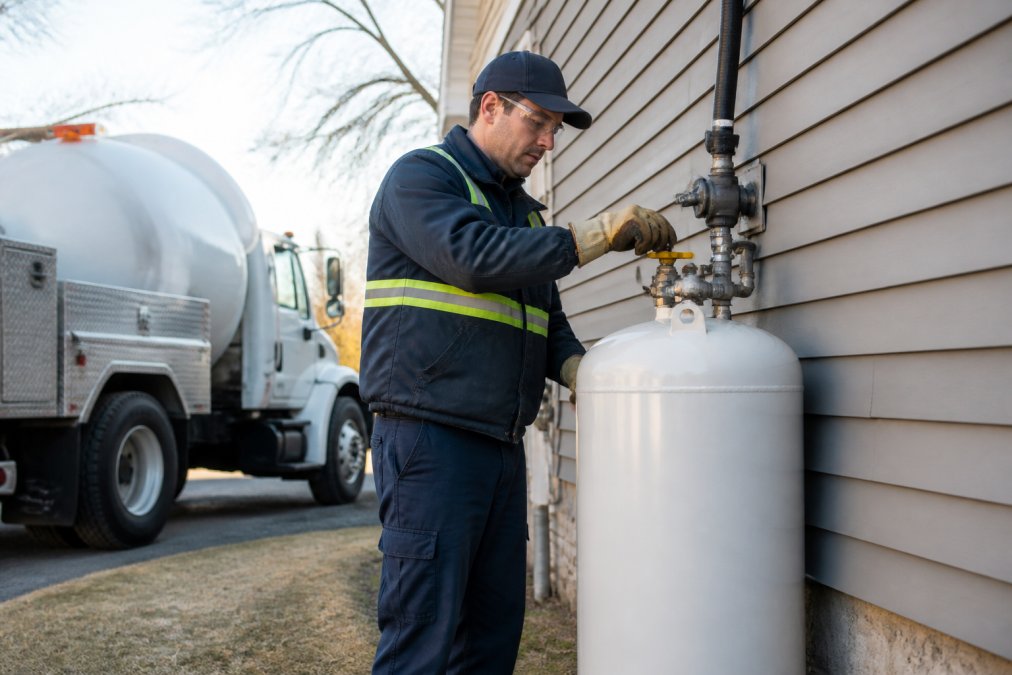
Coordinate the timing of tank removal and installation carefully. Ideally, your old provider removes their leased tank on one day, and your new provider installs theirs the next day or within a few days.
Contact your new propane provider at least two weeks before your desired installation date. Provide them with:
- Your service address and any access restrictions
- Your preferred installation date and time window
- Tank size you need
- Whether you want automatic delivery or will call for deliveries
If you own your existing tank, confirm that your new provider can connect to it before scheduling installation.
Step 3: Schedule Your First Delivery
After your new tank is installed, your first delivery typically occurs within a few days. Before your first delivery, confirm:
- The delivery date and time window
- Payment method
- Your preferred delivery schedule going forward
Ensure someone is available during your installation and first delivery appointments. The technician may need access to your heating system, thermostat, or tank area.
Avoiding Service Interruptions During the Switch
Running out of propane during winter is a genuine risk when switching providers. Strategic planning prevents this problem.
Calculate your current propane consumption to estimate how long your tank will last. Check your propane bills from the previous winter. If you used 500 gallons over four months, you’re consuming roughly 125 gallons monthly. This helps you time your switch to coincide with a full or nearly full tank.
Schedule your switch during a period when you have adequate propane reserves. Coordinate your cancellation date to overlap slightly with your new provider’s installation. Ideally, your old provider removes their tank after your new provider has installed theirs and confirmed the connection works.
Communicate directly with both providers about your switching timeline. Call your new provider and say: "I’m switching from [old provider]. They’re removing their tank on [date]. Can you install on [date + 1 or 2 days]?" This explicit coordination prevents assumptions and catches scheduling conflicts before they become problems.
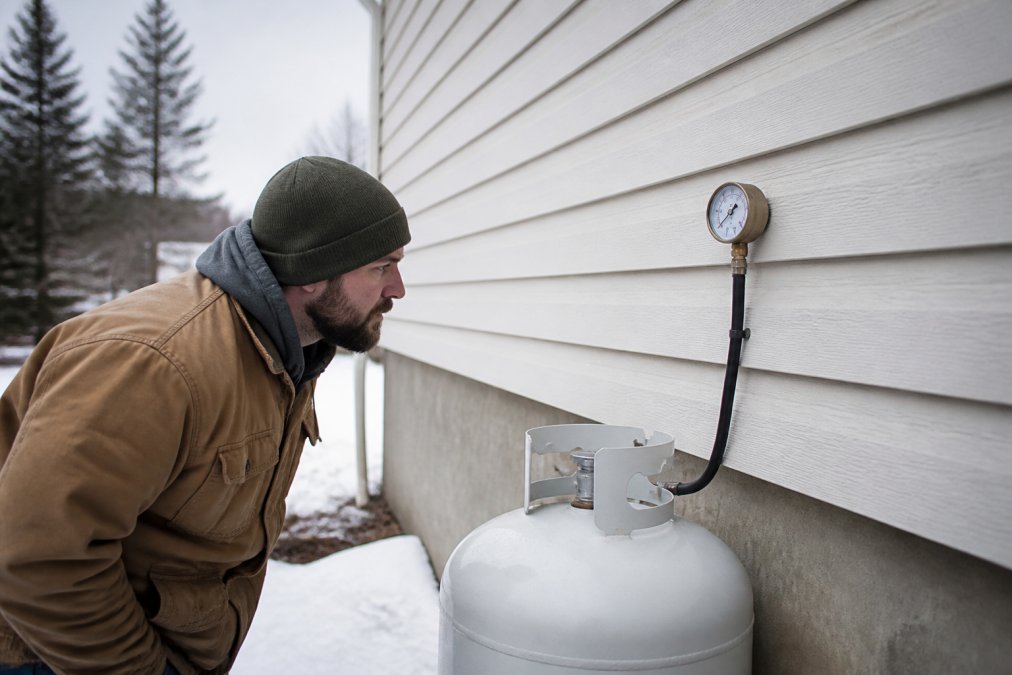
Monitor your tank gauge closely during the transition period. If you notice the level dropping faster than expected, contact your new provider immediately and request an emergency delivery. Keep your old provider’s phone number until you’ve confirmed that your new provider’s system is working correctly.
Conclusion
Switching propane providers is manageable when you approach it systematically. Start by understanding whether you own or lease your tank, review your current contract for termination fees and notice requirements, and draft a formal cancellation letter. Coordinate tank removal and installation carefully to avoid service gaps, and ensure your new provider schedules your first delivery promptly.
At Discount Propane, we make switching straightforward with transparent, real-time online pricing and fast, flexible delivery scheduling. You can see propane prices anytime without commitment, schedule deliveries at your convenience, and manage your account securely from your phone or computer. Our flexible payment options, including credit card, cash on delivery, and Zelle, eliminate the friction of traditional propane suppliers.
Get your propane price today and discover why switching to Discount Propane makes sense for residential and commercial customers across the region.
Frequently Asked Questions
What happens to my existing propane tank when I switch providers?
If you own the tank, it stays with you and your new propane provider can use it for deliveries. If you lease it from your current provider, they will remove it during tank removal. Your new provider will either install their own tank or, if compatible, may use your existing tank depending on their equipment standards. Always confirm ownership status in your service contract before switching propane providers.
Are there hidden fees when switching propane suppliers?
Common charges include termination fees (ranging from $50 to $300+ depending on contract terms), pump-out fees for remaining propane in your tank, restocking fees, and tank removal costs. Some providers charge account transfer fees or early termination penalties. Review your service contract carefully and request an itemized breakdown of all fees before switching. Ask your new propane provider about any setup or installation charges upfront.
How do I avoid running out of propane during the switch?
Schedule your final delivery from your old provider before requesting tank removal. Have your new provider lined up to deliver within 1-2 days of the old tank being removed. Monitor your fuel level closely during the transition period. If you use automatic delivery, ensure both providers have clear dates for their last and first deliveries respectively. For will-call customers, place an order with your new provider immediately after canceling with the old one to minimize gaps.
What should I include in a propane contract cancellation letter?
Your cancellation letter should include your account number, current address, the date you want service to end, your signature, and the date you're sending it. Request written confirmation of cancellation and ask for an itemized final bill showing any termination fees, pump-out charges, or restocking fees. Send it certified mail or email with read receipt to create a paper trail. Keep a copy for your records and note the expected date for tank removal and final billing.
This article was written using GrandRanker