

Table of Contents
- Common Hidden Fees in Propane Delivery
- How to Read a Propane Bill and Spot Overcharges
- Propane Tank Rental Fees Explained
- Is Propane Cheaper Than Heating Oil?
- Steps to Negotiate Better Propane Rates and Terms
- Questions to Ask Before Signing a Propane Contract
- Conclusion
Last Updated: August 17, 2026
Common Hidden Fees in Propane Delivery
Propane bills look simple on the surface: a price per gallon, a quantity delivered, and a total. But buried in the fine print are charges that can easily double your actual cost. The most common culprits include delivery surcharges, tank rental fees, minimum usage penalties, and regulatory compliance charges. A delivery surcharge might be labeled as a "fuel surcharge," "hazmat fee," or "transportation charge", each name disguises the same thing: an extra cost per gallon on top of the base price. Tank rental fees can run from monthly charges to annual service fees, often buried in contract language. Minimum usage penalties are particularly sneaky: some suppliers charge you if consumption falls below a certain threshold during a contract period. Emergency delivery fees apply when you call for same-day or after-hours service. Early termination fees are another trap, potentially including restocking fees, tank removal charges, or exit penalties. Some contracts include automatic price increases tied to market indices, meaning your rate can jump without warning. The key is that these fees aren’t always clearly itemized on your bill.
Request an itemized bill from your propane supplier that breaks down every charge separately. If they can’t provide one, that’s a red flag. Transparent suppliers will show you the base price per gallon, all surcharges, tank fees, and any other charges as distinct line items.
How to Read a Propane Bill and Spot Overcharges
Your propane bill contains more information than most people realize. Start by identifying the key sections: the billing period, the quantity delivered (in gallons), the price per gallon, and the total charges. The billing period tells you when the delivery occurred; you should only be billed for propane actually delivered during that period. The quantity delivered is typically listed in gallons, cross-reference this with your tank gauge if possible.
The price per gallon is where most people miss overcharges. Your bill might show a base price per gallon, but then add surcharges on top of that. A $2.50 per gallon base price can become $3.10 or higher once surcharges are applied. Regulatory compliance charges, hazmat fees, and delivery surcharges should all be listed separately. If they’re lumped into a single "total per gallon" figure, ask for a breakdown.
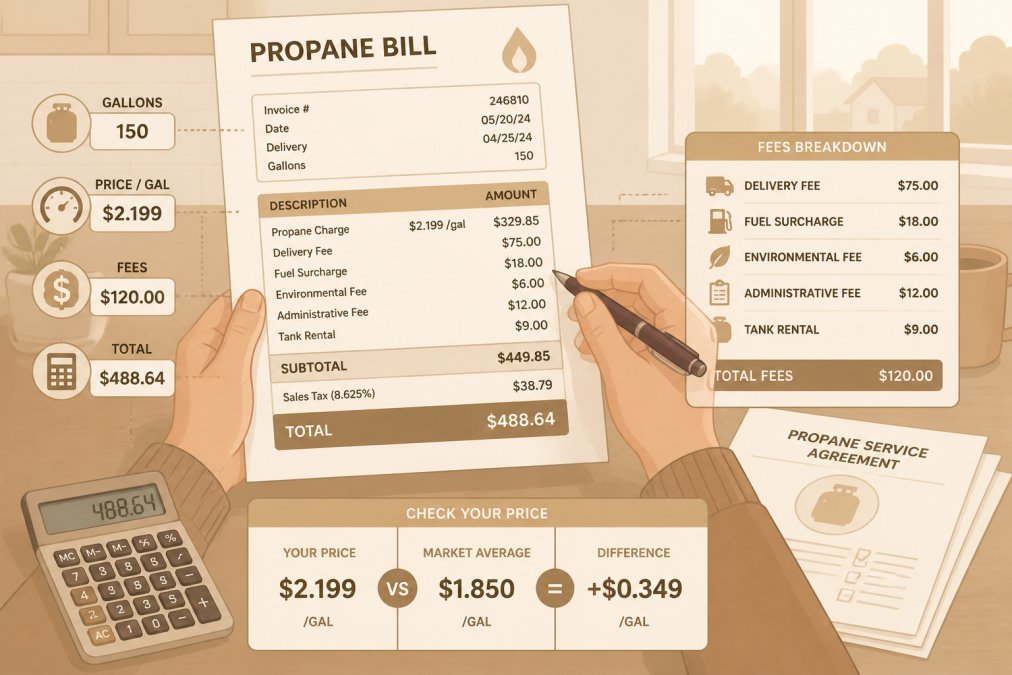
Look for these red flags: unexplained charges without description, fees that increase month-to-month without explanation, or a "total per gallon" that doesn’t match the base price plus listed surcharges. If your supplier uses variable pricing tied to a fuel market index, the price should fluctuate with market conditions, but never jump dramatically without explanation. Compare your current bill to previous ones and ask why any changes occurred. Keep records of tank gauge readings and delivery dates to verify that the quantity billed matches what was actually delivered.
The most important number on your propane bill is the all-in price per gallon after all surcharges. This is what you’re actually paying. Compare this figure across suppliers and contract terms to see the true cost difference.
Propane Tank Rental Fees Explained
Many propane suppliers own the tanks they deliver from and charge a monthly or annual rental fee for using their equipment. This is one of the most common hidden fees in propane delivery. Tank rental fees vary widely depending on tank size and supplier. Some suppliers bundle the tank rental into the total price, making it invisible on your bill. Others list it separately, which at least gives you transparency.
The key question is: who owns the tank? If the supplier owns it, you’ll pay a rental fee. If you own the tank, you won’t, but you’ll be responsible for maintenance, leak testing, and eventual removal or replacement. Some suppliers offer a choice: rent their tank or use your own. Tank removal fees apply if you want to stop service or switch suppliers. Some suppliers charge a "restocking fee" when you return their tank, claiming they need to refurbish it before renting it to another customer.
Ask your propane supplier upfront: What is the monthly or annual tank rental fee? Is it included in the per-gallon price or listed separately? What happens to the tank if I cancel service? Can I use my own tank instead? These questions will help you understand the true cost of service and compare options fairly.
Is Propane Cheaper Than Heating Oil?
This question doesn’t have a universal answer, it depends on current market prices, your heating system efficiency, and local supplier availability. Propane and heating oil prices fluctuate based on crude oil markets, supply and demand, and seasonal factors. In some regions and at some times, propane is significantly cheaper per BTU (British Thermal Unit) delivered than heating oil. The only way to know for certain is to compare current prices from local suppliers in your area.
Beyond the raw price per gallon, consider efficiency. Modern propane heating systems are typically more efficient than older oil systems, meaning you get more heat per unit of fuel. Propane also offers advantages in convenience: automatic delivery systems can keep your tank full without monitoring, and suppliers often offer more flexible payment options than oil suppliers.
When comparing propane to heating oil, factor in all costs: the base fuel price, delivery surcharges, tank rental or ownership costs, annual service fees, and any conversion expenses. A supplier with a lower per-gallon price but higher surcharges and rental fees might actually be more expensive overall than a competitor with a slightly higher base price but transparent, all-inclusive billing.
Don’t make a heating fuel decision based on price alone. Consider your current system’s age, the cost and complexity of conversion, long-term reliability of your chosen supplier, and contract terms. Switching fuels is a significant commitment, and choosing the wrong supplier or locking into a bad contract can cost thousands of dollars over time.
Steps to Negotiate Better Propane Rates and Terms
Most propane customers accept whatever rate their supplier offers, assuming there’s no room for negotiation. That assumption is wrong. Propane rates and contract terms are negotiable, especially if you’re a commercial customer or willing to commit to a longer contract.
Start by gathering competitive quotes from at least three different propane suppliers. Request detailed quotes that break down the base price per gallon, all surcharges, tank rental fees, minimum usage penalties, and early termination fees. Once you have multiple quotes, use them as leverage. Call your current supplier and tell them you have a competitive offer. Many suppliers will match or beat a competitor’s price to retain your business.

Negotiate contract terms, not just price. Push back on minimum usage penalties by requesting they be waived or reduced. Ask about price protection plans that cap how high your rate can increase during the contract term. Request that early termination fees be eliminated or capped at a reasonable amount. Consider your consumption patterns, if you use propane year-round and maintain consistent usage, you’re a more valuable customer. Suppliers prefer predictable, steady customers and may offer better rates to lock in that reliability.
Ask about automatic delivery versus will-call. Automatic delivery is convenient but sometimes comes with higher rates. Will-call delivery might have lower rates, though it requires more active management. Get everything in writing. Once you’ve negotiated rates and terms, ensure they’re documented in your contract. Review the contract carefully before signing, paying special attention to price adjustment clauses, renewal terms, and cancellation policies.
Questions to Ask Before Signing a Propane Contract
Before you commit to any propane supplier, ask these questions in writing and get written answers.
Pricing and Surcharges:
- What is the base price per gallon, and how is it determined?
- Are there any surcharges, and if so, what are they and how much do they add per gallon?
- Is there a delivery surcharge, hazmat fee, or regulatory compliance charge?
- How often can the price per gallon change, and what triggers a change?
- Is there a price protection plan available, and what does it cost?
Tank and Equipment:
- Who owns the propane tank, you or the supplier?
- If the supplier owns it, what is the monthly or annual rental fee?
- What happens to the tank if I cancel service?
- Is there a tank removal fee or restocking fee?
- Can I use my own tank instead of renting yours?
Delivery and Service:
- What is the automatic delivery schedule, and can it be customized?
- Is there a minimum order size or minimum usage requirement?
- What happens if I use less propane than the minimum?
- How quickly can you deliver in an emergency, and is there an emergency delivery fee?
- What is included in your service: meter reading, leak testing, system checks?
Contract Terms:
- How long is the contract, and what are the renewal terms?
- What is the early termination fee if I want to cancel before the contract ends?
- Can the contract terms change after it’s signed?
- Is there a price increase cap during the contract term?
- What happens if you go out of business or stop serving my area?
Payment and Billing:
- What payment methods do you accept?
- How often am I billed, and when is payment due?
- Can I set up automatic payments?
- Will you provide an itemized bill that shows all charges separately?
- What is your dispute resolution process if I believe I’ve been overcharged?
Transparency:
- Can you provide references from current customers?
- Are you licensed and insured?
- What is your complaint history with the state regulatory agency?
- Do you have a customer service phone line with local representatives?
If a supplier is evasive, refuses to answer in writing, or seems unwilling to be transparent, that’s a red flag. Choose a supplier that’s willing to answer all your questions clearly and provide written confirmation.
Avoiding hidden fees in propane delivery comes down to three things: understanding what fees exist, reading your bills carefully, and negotiating your contract terms upfront. Hidden fees aren’t always the result of intentional deception, sometimes they’re just standard industry practices that suppliers assume customers understand. But that doesn’t make them any less costly.
At Discount Propane, we believe transparency is non-negotiable. Our upfront, real-time online pricing means you see exactly what you’re paying before you order, no surprise surcharges, no hidden fees, no guesswork. With easy online ordering, flexible delivery options, and secure account management, you can manage your propane needs on your own terms. Get a propane price quote today and see the difference transparent pricing makes.
Frequently Asked Questions
What are the most common hidden fees in residential propane delivery?
Common hidden fees include delivery surcharges, hazmat fees, minimum usage penalties, tank rental charges, emergency delivery premiums, and annual service fees. Many suppliers also charge for meter readings, leak tests, and system checks without clearly itemizing them upfront. When reviewing your propane bill, look for line items beyond the per-gallon fuel cost. Ask your supplier for a complete fee schedule before signing any service agreement to understand the total cost of ownership.
How can I tell if my propane provider is overcharging me?
Compare your price per gallon against current market rates and request an itemized bill showing each charge separately. Check whether you're paying a fixed rate or variable pricing tied to the fuel market index. Review your contract for automatic delivery versus will-call options, as automatic delivery often includes higher surcharges. Contact multiple suppliers for quotes and ask about their pricing transparency tools. If your rates have increased significantly without explanation, request a detailed breakdown and consider filing a complaint with your state's regulatory agency if you suspect unfair pricing practices.
What is the 80/20 rule for propane and how does it affect costs?
The 80/20 rule refers to tank ownership agreements where the supplier owns the tank and charges a rental fee, or you own it outright. If you own the tank (80% ownership scenario), you avoid monthly rental fees but bear maintenance costs. If the supplier owns it (20% ownership scenario), you pay rental fees but the supplier handles maintenance. Understanding tank ownership is critical because rental fees can add $10-$20 monthly to your bill. Calculate the long-term cost difference: a tank rental fee multiplied by 12 months or more can exceed the cost of purchasing your own tank outright, especially for high-volume users.
Are there ways to avoid tank rental or service fees?
Yes. Purchase your own propane tank instead of renting from the supplier, which eliminates monthly rental charges. Negotiate a fixed-rate contract rather than variable pricing to avoid market-driven surcharges. Request that annual service fees and leak test charges be bundled into a single upfront cost rather than spread across billing cycles. Ask about switching to will-call delivery instead of automatic delivery to reduce surcharges. Some suppliers offer price protection plans that cap increases, reducing the risk of unexpected hikes. Always request a written fee schedule and ask which charges are negotiable before committing to a contract.
This article was written using GrandRanker