
Table of Contents
- Is Propane Heating Efficient for Older Homes?
- Propane vs. Heating Oil Cost: What Older Homeowners Actually Pay
- Propane Furnace Efficiency: AFUE Ratings and Real-World Performance
- Oil to Propane Conversion Cost: Installation, Equipment, and Timeline
- How Long Does 100 Gallons of Propane Last for Heating?
- Dual-Fuel and Hybrid Heating Systems: When Propane Makes Sense
- Equipment Lifespan and Replacement Timing for Older Homes
- Frequently Asked Questions
Last Updated: October 4, 2026
Is Propane Heating Efficient for Older Homes?
Understanding propane heating efficiency older homes depends on several factors: the age of your furnace, your home’s insulation quality, and how well you maintain your heating system. Propane heating efficiency older homes can work effectively, but older furnaces typically operate at 80% AFUE (Annual Fuel Use Efficiency), meaning 20% of the fuel’s energy is lost through the chimney.
At Discount Propane, we work with homeowners across the region who are evaluating heating options. The efficiency picture gets complicated when you factor in heat loss from poor insulation, air leakage, and the actual cost of propane delivered to your home. An older house with significant air leakage will waste heat regardless of furnace efficiency. That’s where the real efficiency problem often lies, not in the equipment, but in the building envelope itself.
Here’s what matters most: an efficient furnace in a drafty, poorly insulated older home will still cost more to operate than a mid-efficiency furnace in a well-sealed house. Before you invest in a new high-efficiency system, you should understand your home’s heat loss patterns and compare the delivered cost of propane against other heating fuels in your area.
Propane vs. Heating Oil Cost: What Older Homeowners Actually Pay
Comparing propane and heating oil costs requires looking beyond the per-gallon price. Propane contains approximately 91,333 BTU per gallon, while heating oil contains about 139,000 BTU per gallon. This means you’ll use more propane by volume to produce the same heat output, which affects your annual fuel costs significantly.
The cost-per-BTU comparison is what really determines your annual heating bill. If propane costs less per BTU than heating oil in your area, it becomes the more economical choice, even though you’ll burn more gallons. Many homeowners switching from oil to propane find their heating costs drop, but the savings depend entirely on local fuel prices, which fluctuate seasonally.
Older homes typically require 800 to 1,200 gallons of heating oil per year, depending on home size, insulation, and winter severity. Converting to propane means you’d use significantly more gallons to produce equivalent heat, but if propane’s per-BTU cost is lower, you still come out ahead.
With Discount Propane, you can see real-time pricing online before you order, which eliminates the guesswork. Transparent pricing lets you make cost comparisons month to month and decide when to fill your tank based on actual market conditions rather than emergency delivery calls.
Propane Furnace Efficiency: AFUE Ratings and Real-World Performance
AFUE (Annual Fuel Use Efficiency) measures what percentage of the fuel’s energy actually heats your home. A furnace rated at 80% AFUE converts 80 cents of every dollar spent on fuel into usable heat; the remaining 20 cents escapes through the flue. Mid-efficiency furnaces typically range from 80-85% AFUE, while high-efficiency models reach 90-95% AFUE.
The difference sounds significant until you calculate the actual dollars saved. Upgrading from an 80% to a 95% furnace reduces fuel consumption by roughly 15-19%, depending on your home’s heat loss. For a homeowner burning 1,000 gallons annually, that’s a savings of 150-190 gallons per year. At current propane prices, that translates to meaningful savings, but only if the furnace replacement cost can be recovered within a reasonable timeframe.
Older propane furnaces (15+ years old) often operate below their rated AFUE due to wear, dust buildup, and inefficient combustion. A furnace inspection can reveal whether your existing system is performing near its rating or whether degradation has reduced efficiency significantly. Sometimes a thorough cleaning and maintenance restore efficiency without requiring replacement.
High-Efficiency vs. Mid-Efficiency Furnaces for Older Homes
High-efficiency propane furnaces (90-95% AFUE) extract more heat from combustion gases before venting them. They also require sealed combustion, meaning they draw outside air directly rather than using indoor air. Installation in older homes sometimes requires additional ductwork modifications or venting upgrades, which adds to the total project cost.
Mid-efficiency furnaces (80-85% AFUE) are simpler to install and less expensive upfront. For older homes with existing ductwork and venting infrastructure, a mid-efficiency replacement often fits without major modifications. The trade-off is higher annual fuel consumption, but if your home has significant heat loss problems, the furnace efficiency rating becomes less important than addressing the building envelope itself.
The decision between high-efficiency and mid-efficiency should factor in your home’s age, insulation condition, and how long you plan to stay. High-efficiency systems make sense if you’re staying 10+ years and your home’s insulation is solid. For shorter timelines or homes needing major envelope work first, a mid-efficiency system recovers its cost more quickly.
Cold-Weather Performance in Winter Conditions
Propane furnaces perform reliably in cold winter weather, maintaining consistent heat output even when outdoor temperatures drop well below freezing. Unlike heat pumps, which lose efficiency in extreme cold, propane furnaces operate at rated capacity regardless of outdoor conditions. This makes propane a dependable choice for older homes in regions with severe winters.
The one caveat: propane can gel or become sluggish in extreme cold if the tank isn’t properly maintained or if the fuel line isn’t insulated. Modern propane systems include safeguards against this, but older systems sometimes need upgrades. Ensuring your propane tank is properly sized and your fuel line is protected prevents cold-weather delivery issues.
| Heating System | Cold-Weather Performance | Efficiency Below 32°F | Reliability |
|---|---|---|---|
| Propane Furnace | Maintains rated output | 80-95% AFUE | Highly reliable |
| Heat Pump | Reduced efficiency | 50-70% effective | Requires backup |
| Heating Oil | Maintains rated output | 80-90% AFUE | Reliable |
| Electric Resistance | Maintains output | 100% efficient | Reliable but expensive |
Oil to Propane Conversion Cost: Installation, Equipment, and Timeline
Converting from heating oil to propane involves replacing the oil tank, installing a propane tank, upgrading the furnace (or retrofitting an existing one), and running new fuel lines. The total project typically takes 2-5 days, depending on your home’s layout and whether existing ductwork can be reused.
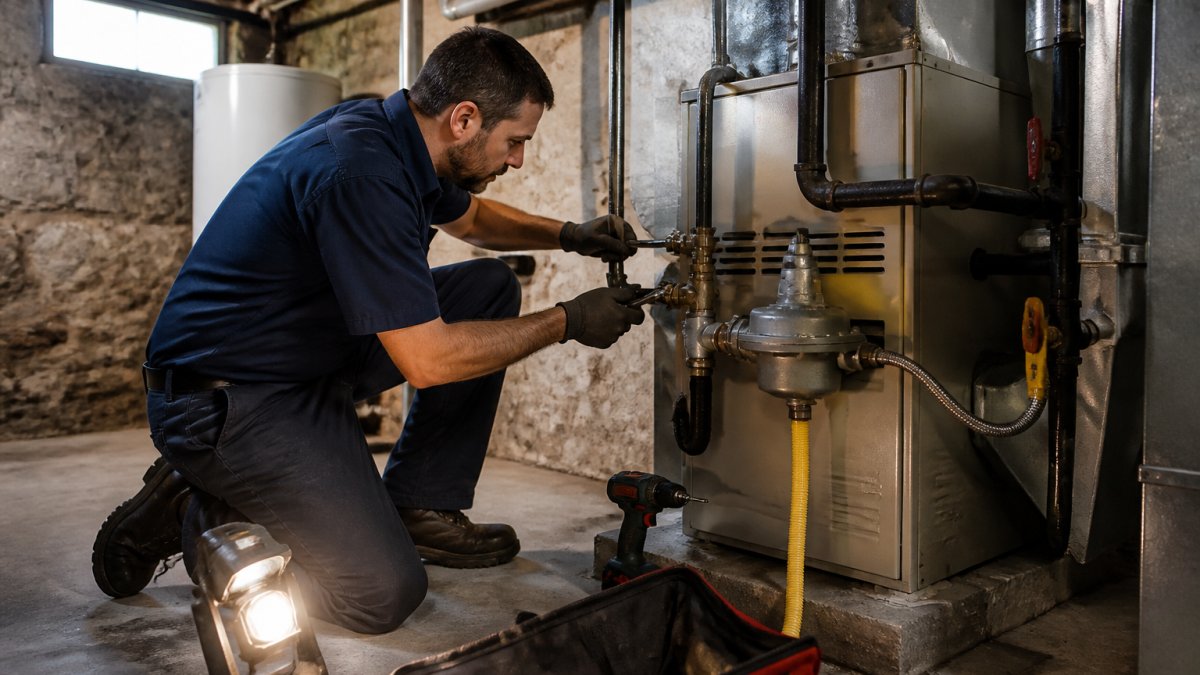
Equipment costs include the propane tank (usually rented or leased), the furnace itself, fuel lines, venting modifications, and labor. Removing the old oil tank adds cost if the tank requires environmental remediation.
The timeline depends on whether your existing ductwork is compatible with propane heating. If your oil furnace used the same duct system, propane installation is straightforward. If modifications are needed, the project extends to 5+ days.
Propane conversion feasibility in existing older homes often hinges on tank placement. Propane tanks require outdoor installation with clearance from windows, doors, and property lines. Homes with limited yard space or dense landscaping may face challenges.
How Long Does 100 Gallons of Propane Last for Heating?
The duration of 100 gallons of propane depends on your furnace’s BTU output, how often it runs, and your home’s heating demand. A typical older home with moderate insulation and an 80,000 BTU furnace running continuously consumes roughly 5-8 gallons per day during peak winter months. At that rate, 100 gallons lasts 12-20 days.
However, furnaces don’t run continuously, they cycle on and off based on temperature. During mild weather, the same furnace might consume only 2-3 gallons per day. During extreme cold snaps, consumption can spike to 10+ gallons daily. This variability makes it impossible to predict exactly how long 100 gallons will last without knowing your home’s specific heating patterns.
A practical benchmark: most older homes in the region consume 800-1,200 gallons of propane annually for heating. That works out to roughly 70-100 gallons per month during the heating season (November through March), with lower consumption in shoulder months like October and April. If your home uses 80 gallons per month, then 100 gallons represents slightly more than one month of heating.
Home Size, Insulation, and Heat Loss Factors
Heat loss is the primary driver of propane consumption. A 2,000-square-foot older home with poor insulation and air leakage will consume far more propane than a similarly sized newer home with modern insulation. The difference can be 30-50% or more, depending on how severe the envelope problems are.
Common sources of heat loss in older homes include:
- Single-pane or poorly sealed windows
- Uninsulated basement walls and rim joists
- Attic insulation that has settled or degraded
- Air leakage around electrical outlets, door frames, and ductwork
- Lack of vapor barriers or moisture management
A home energy audit identifies where heat is escaping. Many utilities offer subsidized audits that pinpoint the biggest efficiency problems. Addressing the top 3-4 heat loss sources often reduces propane consumption by 15-25%, which is more cost-effective than replacing a furnace.
Dual-Fuel and Hybrid Heating Systems: When Propane Makes Sense
A hybrid heating system combines propane with a heat pump or electric resistance heating to optimize efficiency and cost. The heat pump handles moderate temperature days when outdoor temps are above 32-40°F, and the propane furnace kicks in during cold snaps when the heat pump becomes inefficient. This approach reduces propane consumption while maintaining reliable heating year-round.
Hybrid systems make sense for older homes in regions with moderate winters where temperatures frequently fluctuate. If your area experiences long, sustained cold periods, the propane furnace runs most of the season anyway, reducing the hybrid system’s advantage. Hybrid systems also cost more upfront due to the dual equipment, so the payback period depends on your local electricity and propane prices.
Another hybrid option is propane with a backup electric resistance system. This setup is simpler and less expensive than a heat pump hybrid, but it sacrifices some efficiency gains. The propane furnace handles primary heating, and electric resistance activates only during extreme emergencies, keeping your backup heating cost minimal while ensuring you never lose heat.
Equipment Lifespan and Replacement Timing for Older Homes
A propane furnace typically lasts 15-25 years with proper maintenance. Furnaces installed in the 1990s or early 2000s are now at or past their expected lifespan and should be evaluated for replacement.
Replacement timing is a financial decision. If your furnace still operates but is approaching 20 years old, you’re in a decision window: replace it now while it works, or wait until it fails and face an emergency replacement during winter.
A furnace that’s 10-15 years old and functioning well can often be maintained for another 5-10 years if it’s been serviced regularly. Annual maintenance, cleaning the burner, checking the heat exchanger, and testing safety controls, extends lifespan and maintains efficiency.
When evaluating replacement, compare the cost of a new mid-efficiency system against the cost of continued repairs and higher fuel consumption. If repairs exceed 50% of a new furnace’s cost, replacement is usually more economical.
Converting to propane heating or upgrading your existing propane system requires understanding both the equipment efficiency and your home’s actual heat loss patterns. Many homeowners discover that a new furnace alone doesn’t solve high heating bills, addressing air leakage and insulation problems is equally important.
Frequently Asked Questions
Is propane more efficient than heating oil in an older home?
Propane furnaces with high AFUE ratings (90%+) are more efficient than older oil systems, but the actual savings depend on your current equipment and home insulation. A newer high-efficiency propane furnace can deliver 15-20% better efficiency than a mid-efficiency oil burner, though older propane systems perform similarly to older oil systems. Efficiency gains are most noticeable when replacing equipment that is 15+ years old.
How long does 100 gallons of propane last for heating an older home?
A 100-gallon propane delivery typically lasts 3-6 weeks in a moderately insulated older home during winter, depending on outdoor temperature, home size, furnace efficiency, and thermostat settings. A 2,000-square-foot home with moderate insulation and a mid-efficiency furnace running at 65-68°F may consume roughly 15-20 gallons per week in cold weather. Homes with poor insulation or larger square footage will deplete propane faster.
What should homeowners compare before switching from oil to propane?
Compare current fuel costs per BTU, furnace efficiency ratings (AFUE %), annual heating consumption in gallons, and installation costs for conversion. Request quotes for high-efficiency propane furnace equipment and installation labor. Factor in propane tank installation if needed, and verify that your home’s existing ductwork or heating distribution system is compatible. Check whether conversion incentives or rebates apply in your area.
Does poor insulation make propane heating less efficient?
Yes. Poor insulation increases heat loss, forcing your propane furnace to run longer and consume more fuel to maintain temperature. A well-insulated older home with sealed air leaks will require 20-30% less propane than the same home with drafts and gaps. Before converting to propane, assess your home’s insulation condition; adding weatherstripping, sealing ductwork, or upgrading attic insulation can dramatically reduce fuel consumption and improve overall efficiency.