
Table of Contents
- Long Island Propane vs Peconic Propane: Head-to-Head Comparison
- Service Coverage and Delivery Options
- Understanding Propane Delivery Rates
- Bulk Propane Delivery vs Cylinder Exchange for Forklifts
- Emergency Propane Delivery and Response Times
- Tank Installation and Heating System Conversions
- Which Provider Should You Choose?
Last Updated: August 19, 2026
Long Island Propane vs Peconic Propane: Head-to-Head Comparison
If you’re comparing propane providers on Long Island, you’re likely weighing reliability, pricing transparency, and service quality. The choice between Long Island Propane vs Peconic Propane, and other regional competitors, hinges on specific factors: whether you need bulk delivery for heating, cylinder exchange for equipment, emergency response capabilities, or conversion services from oil to propane.
This guide from Discount Propane breaks down the key differences so you can make an informed decision based on your actual needs, not just brand recognition or habit.
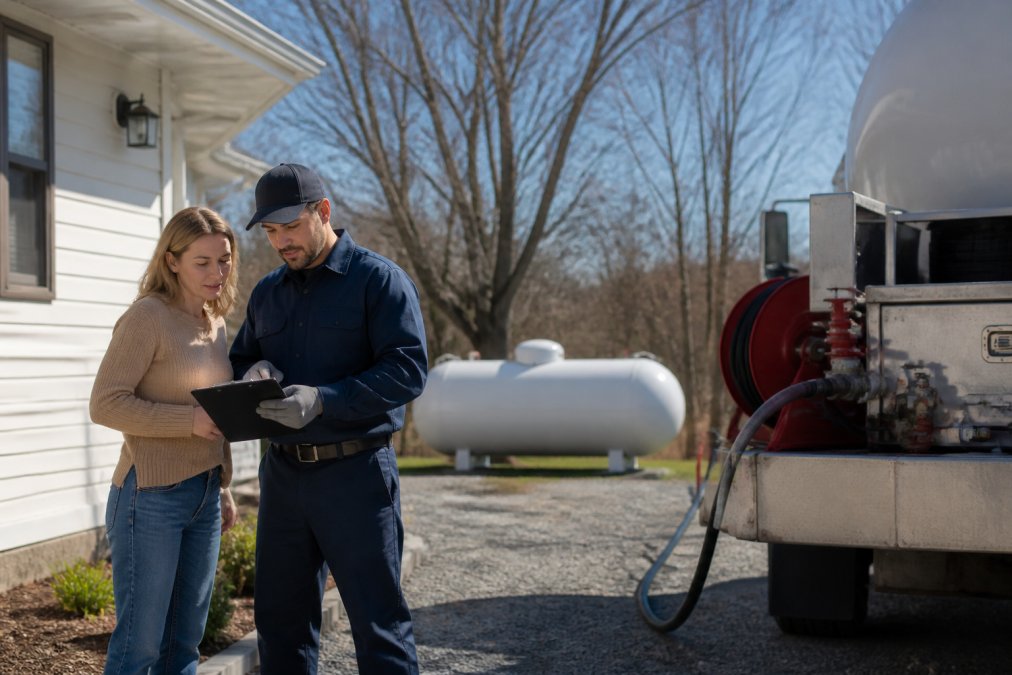
The propane market on Long Island is fragmented. Some providers excel at residential delivery but struggle with commercial cylinder exchange. Others focus on bulk tank installations but lack responsive emergency service. Understanding where each provider’s strengths lie, and where they fall short, saves you money and prevents service disruptions.
Long Island Propane and Peconic Propane both serve the region, but they operate with different service models, coverage areas, and pricing structures. Neither is universally "better", the right choice depends on whether you prioritize fast delivery scheduling, transparent online pricing, specialized services like forklift cylinder exchange, or 24/7 emergency support.
The critical distinction: Long Island Propane vs Peconic Propane comes down to service model (automatic delivery vs. will-call), geographic coverage (all of Long Island vs. primarily Suffolk County), and specialty offerings (cylinder exchange vs. oil conversions). Match the provider to your use case, not the other way around.
Service Coverage and Delivery Options
Peconic Propane focuses primarily on Suffolk County and the Hamptons, which covers the eastern portion of Long Island but may not reach western areas. Their service territory is smaller and more concentrated, which can mean faster response times within their zone but limited reach elsewhere. Long Island Propane serves a broader geographic footprint across Nassau County and Western Suffolk County.
Discount Propane operates across Long Island with real-time online pricing and flexible delivery scheduling, daily, weekly, or monthly for commercial accounts. This flexibility matters for construction sites and businesses that need consistent propane supply without committing to a fixed schedule.
Peconic Propane offers both automatic delivery (for customers who want propane refilled on a set schedule) and will-call delivery (where you request delivery as needed). Automatic delivery prevents run-outs during winter but locks you into a delivery schedule that may not match your actual consumption. Will-call gives you control but requires planning ahead.
Long Island Propane similarly provides automatic and will-call options, though specific scheduling details vary by account type. For contractors and job site operators, the ability to request delivery on short notice, without lengthy wait times, often matters more than whether delivery is automatic.
Peconic Propane advertises 24/7 emergency response for existing customers, which is a genuine differentiator for homeowners worried about losing heat in the middle of winter. Emergency service availability is rarely advertised by other regional providers, making this a meaningful safety net for residential users.
If you run a [construction site](/propane-for-construction-site-heaters-safety-sizing-guide/) or operate industrial equipment, prioritize providers that offer flexible commercial scheduling without mandatory automatic delivery. Discount Propane’s daily/weekly/monthly options for commercial accounts beat providers locked into fixed schedules.
Understanding Propane Delivery Rates
Propane pricing on Long Island fluctuates with market rates, but the way providers communicate pricing differs significantly. Discount Propane emphasizes transparent, upfront online pricing, you see the current rate before ordering, with no hidden fees or surcharges added at delivery. This removes the uncertainty that frustrates many customers who’ve been surprised by higher-than-expected bills.
Peconic Propane advertises upfront, transparent pricing with no hidden fees, but specific per-gallon rates require a quote. Long Island Propane claims competitive pricing and offers budget plans, but published rates aren’t immediately visible.
The real cost difference between providers depends on several factors: the size of your order (bulk deliveries often have lower per-gallon costs), whether you’re on automatic delivery (sometimes offers modest discounts), your tank size, and seasonal demand. Winter pricing is typically higher than summer pricing across all providers.
A homeowner using 500 gallons per winter will pay differently than a contractor who burns through 1,000+ gallons per week on job site heaters. Bulk delivery customers often negotiate better rates, while small residential cylinder exchanges pay a premium for convenience.
Transparent pricing matters because it allows you to compare actual costs across providers. Some companies quote low introductory rates, then raise prices after the first season, a common complaint among customers locked into multi-year contracts. Discount Propane’s no-commitment model means you can check current pricing anytime without obligation.
Avoid providers that refuse to quote pricing online or require a phone call to see rates. This opacity often signals that prices will shift once you’re locked in as a customer. Transparent, real-time pricing is the only reliable way to compare actual costs.
Bulk Propane Delivery vs Cylinder Exchange for Forklifts
Contractors and industrial operators face a different decision than homeowners: whether to use bulk tank delivery for job site heaters or rely on forklift cylinder exchange for equipment. These are fundamentally different service models.
Bulk propane delivery involves a large tank (typically 500-2,000 gallons) installed at your site, with a delivery truck bringing propane to refill it. This works for stationary heating needs, job site trailers, temporary heating systems, or permanent facility heating. Bulk delivery is cost-effective at scale and reduces the frequency of deliveries.
Cylinder exchange is a swap service: you exchange an empty forklift propane cylinder for a full one, either through pickup/delivery or by visiting a retail location. This is faster than waiting for a bulk delivery truck but costs more per gallon and requires managing cylinder logistics.
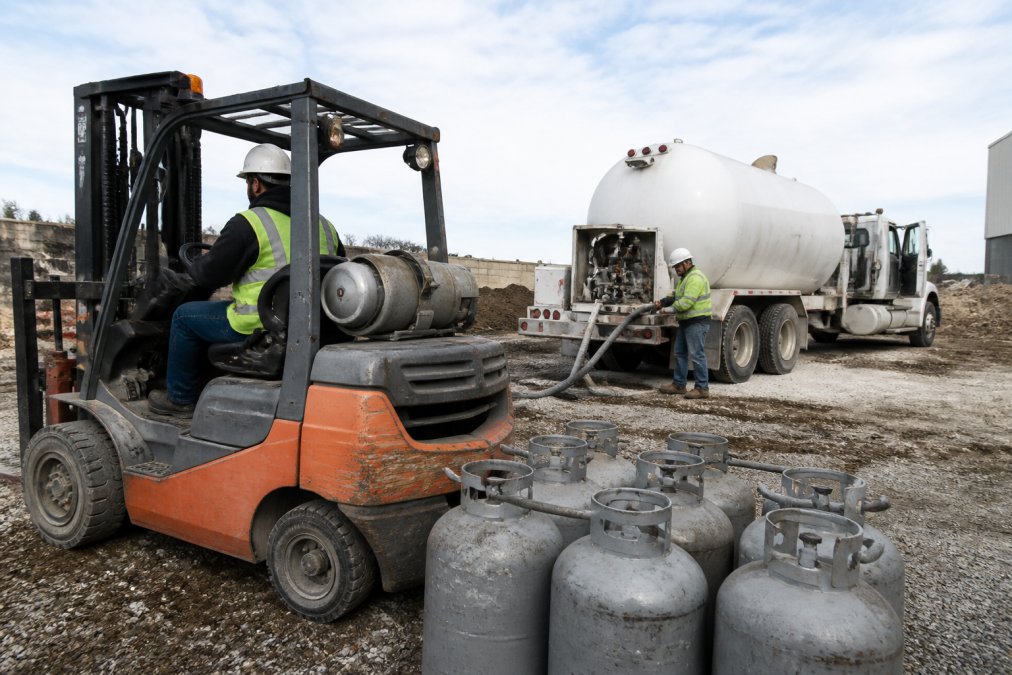
Discount Propane offers a forklift cylinder exchange program with no charge for aluminum cylinders, which reduces the friction and cost of swapping cylinders frequently. This is particularly valuable for contractors who operate multiple forklifts or need rapid turnaround.
Peconic Propane focuses on residential and home heating services, with less emphasis on commercial cylinder exchange programs. Their strength is in tank installation and oil-to-propane conversions, not high-volume cylinder logistics.
Long Island Propane emphasizes tank installation and automatic delivery for homes and small businesses, but their commercial cylinder exchange capabilities aren’t clearly detailed.
The choice depends on your operation. If you’re running a construction site with temporary heating needs, bulk delivery makes sense, order once, use it over weeks, then schedule a final pickup. If you operate forklifts or other equipment with propane engines, cylinder exchange is often more practical, though you’ll pay more per gallon.
Emergency Propane Delivery and Response Times
Winter heating emergencies are real. Running out of propane on a Friday night or holiday weekend can leave you without heat for days if your provider can’t respond quickly.
Peconic Propane explicitly advertises 24/7 emergency response for existing customers, which is the clearest commitment in the market. This matters for homeowners in older homes with unreliable heating or families with young children.
Long Island Propane and other regional providers don’t prominently advertise emergency response times, which suggests this may not be a priority or capability. Discount Propane’s flexible delivery scheduling and online ordering system means you can request delivery quickly during business hours, but 24/7 emergency response isn’t highlighted.
For contractors and commercial operators, emergency response matters less because you can plan ahead with bulk tank capacity or maintain cylinder reserves. For residential customers, especially those in older homes or areas prone to heating failures, emergency response availability is a genuine safety feature worth paying for.
The cost of emergency service varies. Some providers include it in standard pricing, while others charge premium rates for off-hours delivery. Peconic Propane includes it for existing customers, which is a competitive advantage.
If you’re a homeowner in an older house or live in an area with unpredictable heating issues, emergency response availability should be a primary selection criterion. Peconic Propane’s 24/7 commitment is a meaningful safety advantage over providers that only respond during business hours.
Tank Installation and Heating System Conversions
Converting from oil heat to propane is increasingly common on Long Island, driven by lower operating costs and cleaner emissions. This requires professional installation of propane tanks, safety inspection, and system conversion work.
Peconic Propane explicitly offers oil-to-propane conversions, positioning this as a core service alongside tank installation. They handle both above-ground and underground tank installation, which matters because some properties have space constraints or aesthetic preferences that favor one option over the other.
Long Island Propane also provides oil-to-propane conversion services, though the specifics of their installation capabilities aren’t detailed as clearly.
Discount Propane offers tank installation and oil-to-propane conversion services. This doesn’t mean they can’t coordinate with contractors, but it’s not a highlighted capability.
Tank installation requires licensed professionals and compliance with local codes. Above-ground tanks are simpler to install but more visible. Underground tanks are aesthetically preferable but more expensive and require careful site assessment. The choice depends on your property layout, budget, and local regulations.
Conversion from oil to propane typically involves disconnecting the oil tank, installing a propane tank, converting the heating system (burner replacement and safety testing), and removing the old oil infrastructure. This is a multi-step project that takes days or weeks, depending on complexity.
If you’re planning a conversion, verify that your provider either performs this work directly or has established relationships with licensed contractors. Providers that only deliver propane and don’t coordinate conversions leave you to manage multiple vendors, adding complexity and cost.
Which Provider Should You Choose?
The answer depends on your specific use case, not on which company has the longest history or most reviews.
Choose Discount Propane if: You prioritize transparent, real-time online pricing and want to see costs before ordering. You need flexible delivery scheduling (daily, weekly, or monthly for commercial accounts) without long-term commitment. You operate a construction site or business that requires cylinder exchange for forklifts. You prefer easy online account management and multiple payment options (credit card, cash on delivery, Zelle). You want to avoid surprise price hikes by checking rates anytime before ordering.
Choose Peconic Propane if: You live in Suffolk County or the Hamptons and want a local provider with deep regional roots. You need 24/7 emergency response for peace of mind during winter. You’re planning an oil-to-propane conversion and want a single provider handling both tank installation and ongoing delivery. You prefer automatic delivery on a fixed schedule to prevent run-outs. You value extensive service offerings beyond just delivery (pool heaters, outdoor kitchens, fire pits).
Choose Long Island Propane if: You live in a central Long Island location and want a family-owned provider with competitive pricing. You want online account management and smart tank monitoring to prevent run-outs. You’re interested in budget plans that spread costs across the heating season. You need oil-to-propane conversion services.
The real decision hinges on three factors: geographic coverage (does the provider serve your location?), service model (do you want automatic delivery, will-call, or flexible commercial scheduling?), and pricing transparency (can you see real costs before committing?).
Long Island Propane vs Peconic Propane both serve the region, but they operate differently. Discount Propane stands out for transparent online pricing and no-commitment flexibility, making it particularly attractive for cost-conscious customers and commercial operators who value control over their delivery schedule.
If you’ve been with the same provider for years despite mediocre pricing, the switching cost is lower than you think. Most providers handle account transfers quickly, and competitive pricing differences can save hundreds of dollars per heating season, justifying the effort to compare.
Frequently Asked Questions
How do I compare propane delivery rates between Long Island Propane and Peconic Propane?
Both providers offer transparent pricing, but rates depend on your delivery frequency, tank size, and usage volume. Long Island Propane emphasizes real-time online pricing you can check before ordering, while Peconic Propane focuses on upfront quotes with no hidden fees. Contact both for a quote based on your specific needs, residential automatic delivery, bulk orders, or emergency service, to see which aligns with your budget and service preferences.
What's the difference between bulk propane delivery and cylinder exchange for construction sites?
Bulk propane delivery fills large stationary tanks (100+ gallons) at your location, ideal for ongoing heating on job sites. Cylinder exchange swaps out smaller portable cylinders (like forklift propane), offering faster service but less volume per transaction. For construction sites requiring consistent supply, bulk delivery reduces downtime. For equipment like forklifts needing frequent quick swaps, cylinder exchange is more practical. Discount Propane offers both options with a specialized forklift cylinder exchange program.
Do both companies offer emergency propane delivery?
Peconic Propane explicitly offers 24/7 emergency response for existing customers, which is critical if you run out of heat in winter. Long Island Propane's emergency availability depends on your service agreement. If emergency response is essential for your home heating or business operations, confirm response time guarantees in writing before signing up. Ask about after-hours fees and whether emergency service is included in standard plans or costs extra.
Can either company handle oil-to-propane conversions for my home?
Peconic Propane explicitly offers oil-to-propane conversions as part of their service suite, making them a complete solution if you're switching from heating oil. Long Island Propane focuses on propane delivery and account management but may partner with contractors for conversion work. If conversion is your main need, Peconic's in-house capability simplifies the process. Otherwise, you may need to hire a separate HVAC contractor for the conversion and use either provider for ongoing fuel delivery.
Why should I switch from my current propane company if they're already delivering to me?
Switching makes sense if your current provider charges more, offers poor service reliability, or lacks transparency on pricing. Discount Propane's real-time online pricing and no-commitment price checks let you see what you'd actually pay before committing. Peconic Propane's 24/7 emergency support and comprehensive service options (conversions, installations, pool heaters) may add value beyond basic delivery. Compare your current per-gallon cost, delivery frequency, and service quality against what these providers offer, you might save significantly or gain faster, more reliable service.
The propane market on Long Island is competitive enough that price shopping actually matters. Don’t assume your current provider is the best option just because they’ve been delivering to you. Check current rates from Discount Propane and other competitors before the heating season starts. Get Propane Price and compare transparent, upfront quotes across providers, the savings often exceed the time investment in switching.
This article was written using GrandRanker