
Table of Contents
- Why Switch From Propane Alternatives
- Propane Delivery Long Island: Understanding Your Current Setup
- Renewable Propane Blends and Low-Carbon Fuel Options
- Propane Tank Refill vs Exchange: Which Makes Sense for You
- How to Switch Propane Companies Without Service Gaps
- Propane vs. Heat Pumps and Other Heating Alternatives
- Tank Ownership vs. Leasing: What Protects Your Budget
- Conclusion
Last Updated: August 24, 2026
Why Switch From Propane
Propane alternatives have become increasingly viable for homeowners and businesses looking to reduce energy costs, lower environmental impact, or explore options beyond traditional propane delivery. Rising fuel costs, cleaner-burning options, and evolving technology have made alternatives worth evaluating.
The propane market has evolved significantly. Renewable propane blends, heat pump technology, and alternative fuel options have matured enough to become genuine contenders. Understanding your options isn’t about abandoning propane entirely, it’s about making an informed decision that matches the right fuel or heating method to your actual situation.
The best time to evaluate propane alternatives is before you’re locked into a multi-year contract or facing an emergency. Plan your evaluation for late summer or early fall.
Propane Delivery Long Island: Understanding Your Current Setup
Before exploring alternatives, understand what you currently have. Most residential customers operate under one of two delivery models: automatic delivery or exchange-based refilling.
Automatic delivery means a propane company monitors your tank level and delivers fuel on a schedule, usually quarterly or as needed during heating season. This model offers convenience but often locks you into pricing agreements and creates dependency on a single provider’s logistics.
Tank exchange programs work differently. You own or lease a smaller portable tank (typically 20-40 pounds). When it runs low, you swap it for a full one at a retail location or through a delivery service. This model offers flexibility but requires active management and often comes with higher per-unit fuel costs.
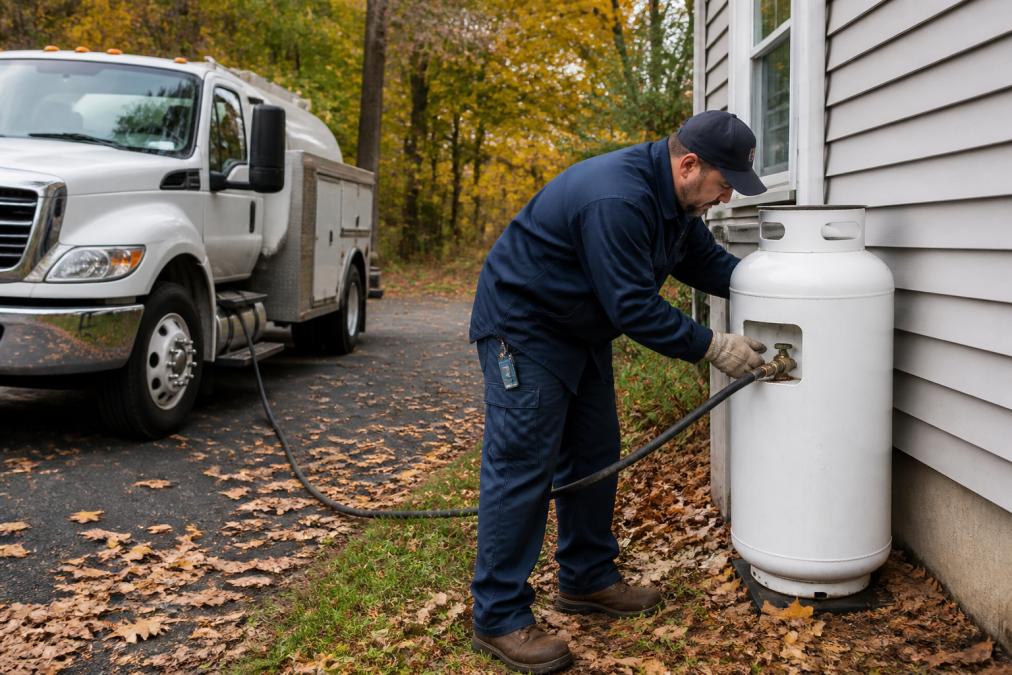
Commercial operations typically use larger stationary tanks (100-1,000+ gallons) with scheduled delivery routes and volume-based pricing.
The critical question: Are you paying for convenience, or are you overpaying for it? Understanding what you’re actually paying for, fuel, delivery, monitoring, or service, is the first step in evaluating whether an alternative makes financial sense.
Your current propane setup is likely optimized for convenience, not cost efficiency. Most customers could save money by switching providers or exploring alternatives.
Renewable Propane Blends and Low-Carbon Fuel Options
Renewable propane blends represent the most straightforward alternative for customers who want to reduce their carbon footprint without replacing their entire heating system. These fuels are chemically compatible with conventional propane, meaning existing furnaces, water heaters, and appliances require no modification.
Suburban Propane + rDME combines traditional propane with renewable dimethyl ether (rDME), a fuel produced from waste materials like dairy waste, biogas, and landfill gas. Your existing propane infrastructure works without upgrades. Chevron Renewable Propane uses 100% renewable raw materials, specifically waste fats and oils, to produce a fuel chemically identical to conventional propane.
Both renewable blends reduce greenhouse gas emissions significantly compared to conventional propane and support domestic energy independence by using waste materials. The practical limitation: availability. Renewable propane blends are not yet universally available across all service areas. Confirm availability in your service area before switching providers specifically for this option.
Renewable propane blends are genuine alternatives, but they’re not universally available yet. Confirm availability before switching providers specifically for this option.
Propane Tank Refill vs Exchange: Which Makes Sense for You
This decision determines both your upfront costs and your ongoing convenience level.
Refillable cylinders (typically 5-40 pounds) are purchased once and refilled repeatedly. After 3-4 refills, you’ve recovered the upfront cost and subsequent fills are cheaper than buying new disposable cylinders.
Disposable cylinders are purchased full and discarded when empty. They’re convenient for occasional use but the per-unit cost is high. For regular, consistent use, disposables become expensive quickly.
Stationary tank exchanges (20-40 pounds) sit at your home and are swapped by a delivery service when empty. Pricing is typically higher per gallon than automatic delivery but lower than portable cylinder exchanges.
For residential heating, automatic delivery of a stationary tank (100-500 gallons) usually offers the best price-per-gallon. For portable or seasonal use, refillable cylinders beat disposables after the initial investment. electrical heating options.
| Tank Type | Best For | Upfront Cost | Per-Unit Cost | Convenience |
|---|---|---|---|---|
| Refillable Cylinders | Regular portable use | Varies | Low (after payoff) | Moderate |
| Disposable Cylinders | Occasional/emergency use | Varies | High | High |
| Stationary Exchange | Seasonal or supplemental | Lease varies | Medium | Medium |
| Automatic Delivery (Large Tank) | Primary heating fuel | Tank lease or purchase | Low | High |
Customers using disposable cylinders for regular grilling or heating often spend 3-4 times more than they would with refillables or automatic delivery.
How to Switch Propane Companies Without Service Gaps
Switching propane providers is straightforward if you follow a clear sequence.
Step 1: Confirm your new provider’s service area. Check that your new provider delivers to your address and can meet your volume requirements. Discount Propane, for example, operates across Long Island and offers online ordering with transparent pricing visible before you commit.
Step 2: Get a final meter reading from your current provider in writing. This determines your final bill and prevents disputes.
Step 3: Schedule your new provider’s first delivery 2-3 days after your final reading. This buffer prevents overlap while avoiding a dangerous gap.
Step 4: Notify your current provider in writing that you’re switching. Include your account number and the date you want service to end.
Step 5: Be present for both the final reading and the first new delivery to ensure accuracy.

The most common mistake is switching during peak heating season without confirming the new provider can deliver on your preferred date. If switching in December or January, build in extra buffer time and confirm delivery windows multiple times.
Before switching, review your current contract for early termination fees. Sometimes paying a small penalty to escape a provider charging inflated rates makes financial sense.
The best time to switch propane providers is late summer or early fall, before heating season demand spikes. Delivery times are faster and pricing is more competitive.
Propane vs. Heat Pumps and Other Heating Alternatives
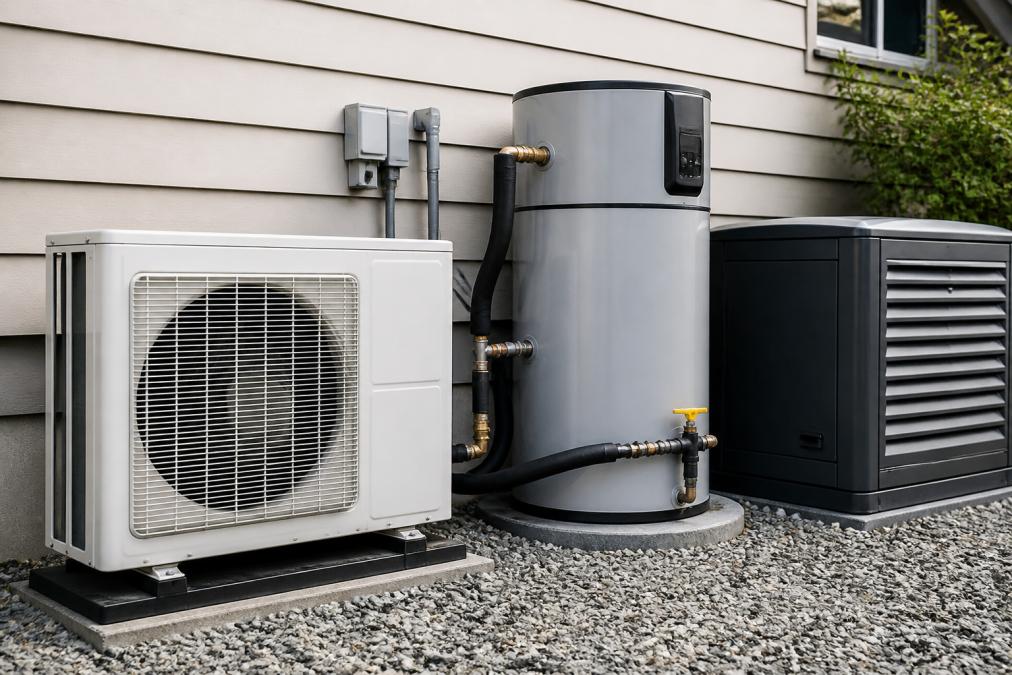
Heat pumps represent the most serious alternative to propane for primary home heating. They extract heat from outside air or ground and move it indoors, even in cold climates.
Why heat pumps matter: They use electricity instead of fuel, so your heating cost depends on local electricity rates rather than propane markets. If electricity is cheap in your area, heat pumps can significantly reduce heating costs. They also eliminate the need for fuel delivery, tank monitoring, or provider switching.
The practical limitations: Heat pumps require significant upfront investment, typically $10,000-20,000 for installation (energy.gov). They work best in well-insulated homes; poorly insulated homes need supplemental heating or expensive efficiency upgrades first. Installation timelines run 2-4 weeks, and not all contractors are experienced with heat pump retrofits (energy.gov).
Propane remains cheaper than heat pumps for many customers, especially those with existing propane infrastructure. The comparison depends entirely on local electricity rates, propane prices, your home’s insulation, climate zone, and available incentives.
Natural gas is another alternative where available. It typically offers lower per-unit costs than propane but requires pipeline infrastructure that doesn’t exist in many areas. If natural gas is available to your home, comparing propane vs. natural gas pricing makes sense.
The decision tree is simple: If electricity is cheap and your home is well-insulated, explore heat pumps. If propane is your current fuel and prices are rising, investigate renewable propane blends or switching providers before committing to a full system replacement.
Tank Ownership vs. Leasing: What Protects Your Budget
This decision affects your long-term costs and your flexibility if you want to switch providers later.
Tank ownership means you buy the propane tank outright. You own it permanently and can take it with you if you move or switch providers. The upfront cost is significant, but you avoid monthly lease fees. Over 10-15 years, ownership usually costs less than leasing.
Tank leasing means your propane provider owns the tank. You pay a monthly or annual lease fee (typically $50-150 per year). The provider handles maintenance and inspections. If you switch providers, you leave the tank behind and the new provider typically supplies a new one. Leasing requires no upfront capital but the long-term cost is higher.
The hidden cost of leasing: you’re locked into that provider. Switching means abandoning the tank and accepting a new lease from a new provider. Some customers stay with expensive providers specifically because switching would mean losing their leased tank.
For customers planning to stay in one home long-term and committed to a reliable provider, ownership makes financial sense. For renters or those uncertain about their long-term heating needs, leasing offers flexibility despite higher long-term costs.
Discount Propane’s transparent pricing model and easy online ordering reduce the lock-in risk of leasing because you can quickly compare pricing and switch if rates become uncompetitive.
Tank leasing is convenient but expensive. If you own your home and plan to stay, buying your tank breaks even in 5-7 years and saves money thereafter.
Conclusion
Evaluating propane alternatives isn’t about abandoning propane entirely, it’s about ensuring your heating fuel and delivery method align with your budget, environmental goals, and lifestyle. Renewable propane blends offer lower-carbon heating without equipment changes. Heat pumps provide genuine long-term savings if electricity is cheap in your area. Switching providers or changing your tank ownership structure can reduce costs immediately.
The fastest path forward is getting transparent pricing from multiple providers and comparing your actual options. Discount Propane offers upfront, real-time online pricing so you can see costs before ordering, with no hidden fees or surprise surcharges when the truck arrives. With flexible payment options including credit card, cash on delivery, and Zelle, plus secure account management from your phone or computer, switching is frictionless. Get your propane price today and see whether staying with your current provider still makes sense.
=== FAQ ANSWERS (audit these too, same rules) ===
[1] Q: What are the main advantages of renewable propane alternatives over conventional propane?
A: Renewable propane blends and low-carbon fuel options significantly reduce greenhouse gas emissions and carbon footprint compared to conventional propane. Products like Suburban Propane + rDME and Chevron Renewable Propane use waste materials and renewable feedstocks, offering cleaner combustion while remaining compatible with existing propane infrastructure and equipment. This means you reduce environmental impact without costly conversions.
[2] Q: Is it cheaper to refill propane tanks or exchange them?
A: Refilling propane tanks typically costs less per unit of fuel over time compared to exchanging disposable cylinders. Refillable cylinders have a higher upfront cost but pay for themselves through repeated use. Exchange cylinders offer convenience without commitment but carry higher per-fill costs. For residential heating and regular use, refilling is more budget-friendly; for occasional portable use, exchange may be simpler.
[3] Q: What factors should I consider when switching propane providers?
A: Key factors include transparent pricing, delivery reliability, payment flexibility, and customer service availability. Check whether the provider offers real-time online pricing, automatic delivery scheduling, and secure account management. Review their service area, emergency response times, and whether they handle tank maintenance. Confirm they can manage your specific needs, whether residential heating, commercial supply, or construction site delivery.
[4] Q: How does propane compare to heat pumps as a heating alternative?
A: Heat pumps are increasingly efficient for moderate climates but struggle in extreme cold and require significant upfront investment. Propane remains more cost-effective in areas with harsh winters and offers faster heat delivery. Propane works with existing ductwork and doesn’t require electrical upgrades. However, heat pumps produce zero direct emissions, while propane combustion generates greenhouse gases. Your choice depends on climate, budget, and environmental priorities.
[5] Q: Should I own or lease my propane tank?
A: Tank ownership gives you long-term control and eliminates monthly lease fees, making it cost-effective over 5+ years. Leasing offers flexibility, you’re not responsible for maintenance or replacement, and works well if you may relocate. Most providers offer both options. Calculate your expected usage and tenure: owners benefit from fixed assets; renters value simplicity and zero maintenance liability. Ask your provider about tank condition requirements and ownership transfer policies.
Frequently Asked Questions
What are the main advantages of renewable propane alternatives over conventional propane?
Renewable propane blends and low-carbon fuel options significantly reduce greenhouse gas emissions and carbon footprint compared to conventional propane. Products like Suburban Propane + rDME and Chevron Renewable Propane use waste materials and renewable feedstocks, offering cleaner combustion while remaining compatible with existing propane infrastructure and equipment. This means you reduce environmental impact without costly conversions.
Is it cheaper to refill propane tanks or exchange them?
Refilling propane tanks typically costs less per unit of fuel over time compared to exchanging disposable cylinders. Refillable cylinders have a higher upfront cost but pay for themselves through repeated use. Exchange cylinders offer convenience without commitment but carry higher per-fill costs. For residential heating and regular use, refilling is more budget-friendly; for occasional portable use, exchange may be simpler.
What factors should I consider when switching propane providers?
Key factors include transparent pricing, delivery reliability, payment flexibility, and customer service availability. Check whether the provider offers real-time online pricing, automatic delivery scheduling, and secure account management. Review their service area, emergency response times, and whether they handle tank maintenance. Confirm they can manage your specific needs, whether residential heating, commercial supply, or construction site delivery.
How does propane compare to heat pumps as a heating alternative?
Heat pumps are increasingly efficient for moderate climates but struggle in extreme cold and require significant upfront investment. Propane remains more cost-effective in areas with harsh winters and offers faster heat delivery. Propane works with existing ductwork and doesn't require electrical upgrades. However, heat pumps produce zero direct emissions, while propane combustion generates greenhouse gases. Your choice depends on climate, budget, and environmental priorities.
Should I own or lease my propane tank?
Tank ownership gives you long-term control and eliminates monthly lease fees, making it cost-effective over 5+ years. Leasing offers flexibility, you're not responsible for maintenance or replacement, and works well if you may relocate. Most providers offer both options. Calculate your expected usage and tenure: owners benefit from fixed assets; renters value simplicity and zero maintenance liability. Ask your provider about tank condition requirements and ownership transfer policies.
This article was written using GrandRanker