
Last Updated: November 3, 2026
Quick Summary
A propane tank safety inspection checklist is a simple set of visual and functional checks you run on your tank, regulator, valves, and surrounding area, and a 15-minute seasonal walk-around is one of the cheapest forms of insurance a propane household has. It catches problems like rust, clogged vents, and slow leaks before they become emergencies.
- Check the tank shell monthly for rust, dents, flaking paint, and leaning.
- Keep the clearance zone free of debris, brush, and stored wood within 10 feet.
- Mix dish soap and water on valve and regulator fittings and watch for bubbles.
- Never use a metal shovel, ice chopper, or hammer on or near the regulator, valve, or gauge.
- Standard residential safety inspections often carry zero inspection fee.
Table of Contents
- Why a Propane Tank Safety Inspection Checklist Matters
- Visual Inspection of Tank Condition: Rust, Dents, and Paint
- Safety Clearances and Distance Requirements Around Your Tank
- Propane Leak Detection for Homeowners: Smell, Sound, and Soap Tests
- Regulator, Valve, and Gauge Checks
- Seasonal Prep: Snow Removal, Debris Clearing, and Delivery Access
- Propane Tank Maintenance Tips: DIY vs. Professional Boundaries
- Propane Tank Inspection Cost: What Homeowners Should Expect
- Frequently Asked Questions
Why a Propane Tank Safety Inspection Checklist Matters
A propane tank safety inspection checklist for homeowners is a simple, repeatable set of visual and functional checks you run on your tank, regulator, valves, and surrounding area to catch problems before they become emergencies. A 15-minute seasonal walk-around is one of the cheapest forms of insurance a propane household has.
The stakes are real. Federal guidance in NFPA 58, the national standard for propane storage and handling sets minimum setback distances between tanks and structures, and those distances exist because leaks, pressure failures, and fire exposure are documented risks, not hypothetical ones. A checklist keeps you inside those safety margins.
What most guides miss is the distinction between a visual check you can do yourself and a certified inspection that legally must be done by a professional. Knowing where that line sits is what separates a useful checklist from a dangerous one.
If you notice any warning sign while running your checks, our team explains the specific signs you need a propane tank inspection and how quickly to act.
Visual Inspection of Tank Condition: Rust, Dents, and Paint
Check the tank shell first: rust, dents, deep scratches, and flaking paint are the four visible conditions that most often signal a tank needs professional attention. Walk the full circumference, including the base and the dome, and look at the tank from a few angles so a leaning tank is obvious.
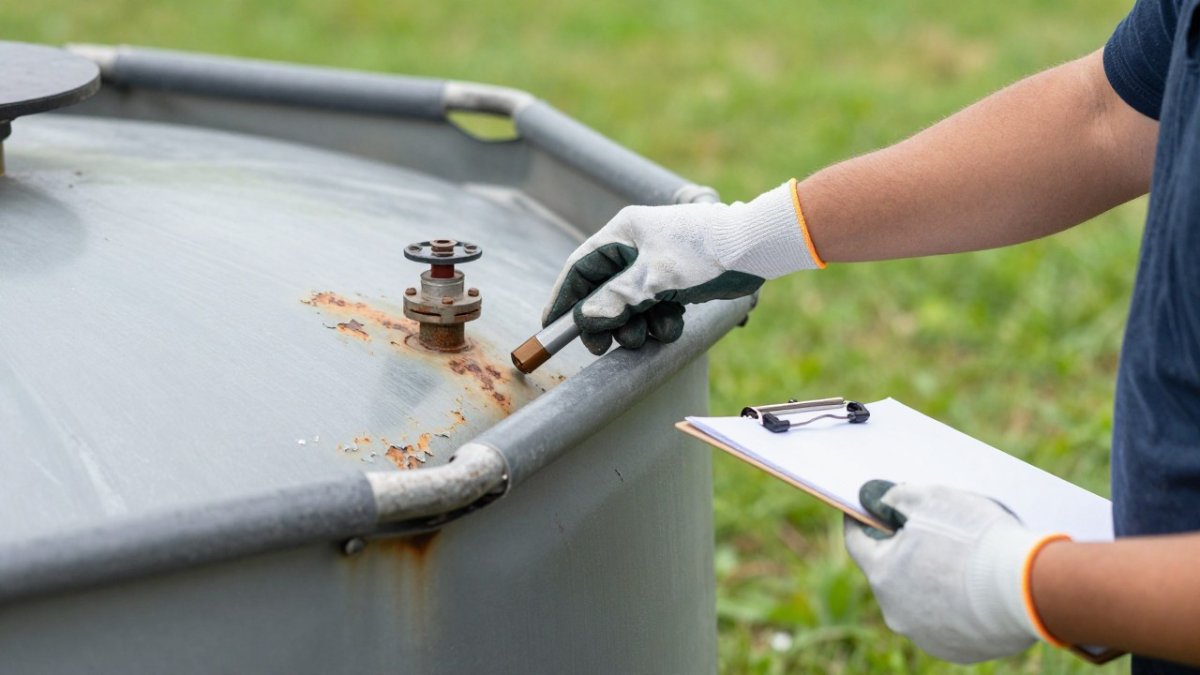
Rust matters most where it’s pitted or bubbling under paint, because that can indicate metal loss rather than surface staining. Dents matter when they sit near a weld seam or the valve collar.
Paint condition is your early warning system. Chalky, peeling, or faded paint lets moisture reach steel, and once corrosion starts it accelerates. A fresh coat of paint is a legitimate homeowner task; welding, dent repair, and valve work are not.
Watch out: never sand, scrape, or repaint a tank that shows pitting or bubbling without a professional looking at it first, since you can hide active corrosion under a fresh coat.
Safety Clearances and Distance Requirements Around Your Tank
Minimum setback distances are set by code, not preference: 10 feet from structures for tanks under 500 gallons and 25 feet for tanks between 500 and 2,000 gallons, per NFPA 58 as summarized in LP tank permitting guidance. Those are the legal minimums, and they’re measured from the tank to the building, property line, or ignition source.
Keeping a clear zone around the tank that is free of dry leaves, brush, grass clippings, and stored wood helps reduce fire risk, because combustible material piled against a tank is a common avoidable hazard.
Also check what sits above and beside the tank, such as chimney vents, dryer vents, and window air conditioners, since these can be heat or ignition sources. If a vent terminates close to the tank, ask a qualified professional to review it.
Propane Leak Detection for Homeowners: Smell, Sound, and Soap Tests
Propane leak detection for homeowners comes down to three senses and one test: smell, sound, sight, and a soapy-water check at the connections. Propane itself is odorless, so an odorant called mercaptan is added, which is why a leak usually announces itself as a rotten egg smell before anything else.
Listen for a hiss at the regulator and valve, and look for dead grass, frost, or oily residue at a connection. For a proper check, mix dish soap and water, brush it on the valve and regulator fittings, and watch for bubbles. Bubbles mean gas is escaping.
If the soap test bubbles, or you smell gas, stop. Don’t flip switches, don’t light anything, and don’t try to tighten fittings yourself. Get everyone clear, then follow the steps to take during a propane gas leak and call your provider and emergency services from a safe distance.
Watch out: a faint smell that comes and goes is still a leak signal, not a nuisance.
Regulator, Valve, and Gauge Checks
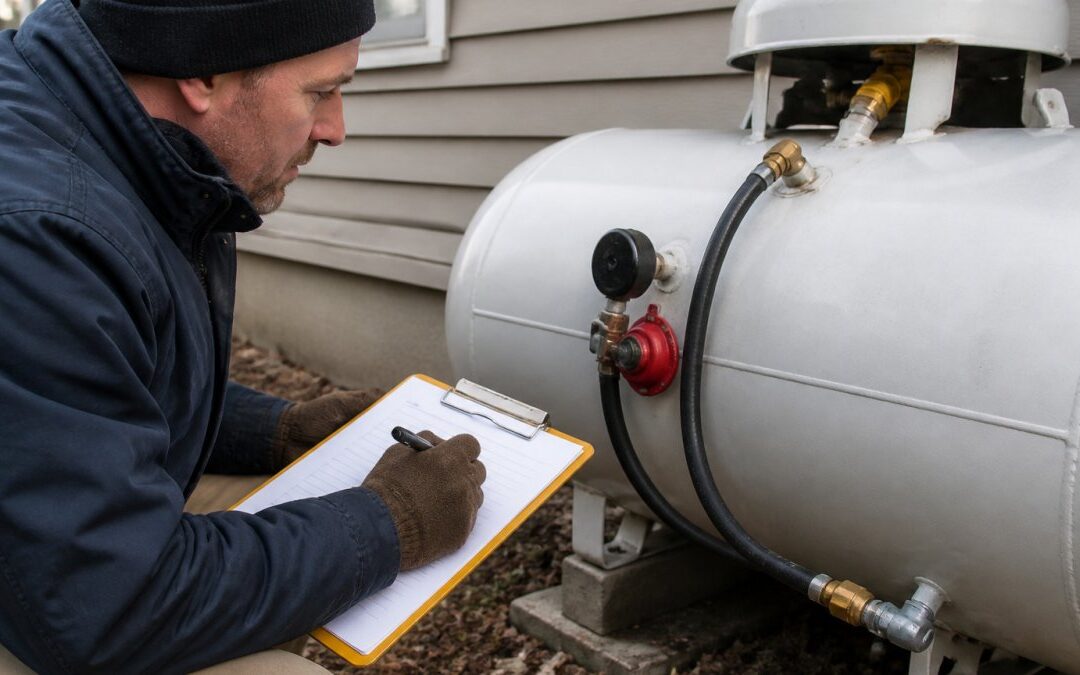
The regulator, main valve, and gauge are the three components most likely to fail quietly, and each has a simple homeowner check. Look at the regulator for corrosion, ice buildup, or a vent screen clogged with debris, and confirm the valve turns freely without force. Integrating these quick inspections into a broader routine of preventative home maintenance ensures that your entire fuel system remains reliable and secure throughout the changing seasons.
The gauge tells you two things: how much fuel you have and whether consumption has changed unexpectedly. A sudden drop with no weather change to explain it deserves a call. The pressure relief valve should be visible, unobstructed, and free of paint or debris blocking its outlet.
Recognizing the specific signs of a faulty propane regulator early can help you avoid problems, because a failing regulator can affect appliance performance. If you see frost on the regulator in mild weather or hear a humming or chattering sound, treat it as a service call.
| Check | What to Look For | Frequency | Who Does It |
|---|---|---|---|
| Tank shell | Rust, dents, flaking paint, leaning | Monthly visual | Homeowner |
| Clearance zone | Debris, brush, stored wood within 10 feet | Monthly | Homeowner |
| Regulator | Corrosion, frost, clogged vent | Monthly visual | Homeowner |
| Gauge | Sudden unexplained drop | Weekly in heating season | Homeowner |
| Valve and fittings | Hiss, bubbles on soap test | Seasonally | Homeowner |
| Pressure relief valve | Blockage, paint, debris | Seasonally | Homeowner |
| Recertification | Tank age and stamp date | Per code interval | Certified technician |
Seasonal Prep: Snow Removal, Debris Clearing, and Delivery Access
Seasonal prep is where a checklist earns its keep, because the hazards change with the weather and the consequences of skipping a step are different in January than in July.
Winter: snow and ice. Keep the tank top, regulator, gauge, and pressure relief valve clear of snow, and never let snow bury the regulator vent or pile against the tank shell.
Summer: vegetation and clearance. Mow and trim the clearance zone, pull weeds from the tank base, and keep grass clippings, mulch, and stored wood out of the 10-foot working clearance.
Fall: delivery planning and alarms. Read the gauge, plan the first fill before demand spikes, clear storm-blown branches and roof debris, and test carbon monoxide alarms. Seasonal checklists from providers increasingly bundle fuel planning with safety checks. American River Gas publishes a fall propane checklist that pairs gauge reading and delivery planning with clearing the tank area and testing carbon monoxide alarms, which is a sensible model to copy.
Watch out: never use a metal shovel, ice chopper, or hammer on or near the regulator, valve, or gauge. A struck fitting can create a leak that wasn’t there before the snow fell.
Debris clearing isn’t just a fall job. Our fuller guide on how to prepare your propane system for winter covers the cold-weather sequence in detail.
Propane Tank Maintenance Tips: DIY vs. Professional Boundaries
Most guides blur the line between what a homeowner can safely do and what legally requires a certified technician.
What homeowners can do: visual checks of the tank shell, regulator, valve, gauge, and clearance zone; clearing debris, snow, and vegetation; reading the gauge; running a soapy-water check at the connections; touching up paint on sound steel; and testing carbon monoxide alarms.
What requires a certified technician: any work on gas fittings, valve repair or replacement, regulator replacement, pressure testing, leak repair, dent or weld repair, and recertification. Tanks require periodic recertification as they age, and that work is generally performed by a certified technician.
Why the line sits there. The pressure boundary, the tank shell, valves, regulator, and fittings, is engineered and tested as a system. The legal context matters too: federal guidance in NFPA 58, the national standard for propane storage and handling sets minimum setback distances and handling requirements, and local fire codes adopt or extend those rules.
The handoff. When it’s time to hand off, our article on hiring a professional for propane system inspection walks through what to ask and what credentials to confirm.
Watch out: a common mistake is assuming a fuel delivery includes a full inspection.
Propane Tank Inspection Cost: What Homeowners Should Expect
Propane tank inspection cost varies by what’s being done, and the most important fact for homeowners is that standard residential safety inspections often carry zero inspection fee. The North Carolina Department of Agriculture and Consumer Services states that there are zero inspection fees associated with standard residential propane tank inspections in its jurisdiction, which reflects a broader pattern: routine safety checks are frequently bundled into service.
Costs appear when the work goes beyond a visual check. Pressure testing, regulator replacement, valve repair, and recertification are billable service calls, and pricing depends on the part, the labor, and the tank size.
Our advice: ask two questions before booking. Is the standard safety inspection free or bundled with delivery? And what’s the itemized cost if the technician finds a regulator or valve issue? That second question prevents the surprise invoice.
For fuel pricing itself, Discount Propane publishes real-time pricing online so you can see the number before you order, with no commitment required to check. You can get a propane price and schedule delivery online, pay by card through PCI-compliant processing, cash on delivery, or Zelle, and manage your account from your phone.
Running a propane tank safety inspection checklist takes about 15 minutes a season, and it’s the difference between catching corrosion, a clogged regulator vent, or a slow leak early and discovering it during a cold snap.
Frequently Asked Questions
Do residential propane tanks need to be inspected?
Yes. Homeowners should visually inspect their tank monthly and after severe weather, checking for rust, dents, and debris. Professional inspections are required for recertification, at intervals set by applicable code. NFPA 58 sets the safety standard. Regular inspections catch small issues before they become expensive repairs or safety hazards.
What are the common signs of a propane tank leak?
The most obvious sign is the rotten egg smell added to propane (mercaptan). You may also hear a hissing sound near the tank or appliances, see dead grass or frost around the tank, or notice a higher-than-normal gas bill. If you smell gas, leave the area immediately and call your provider from a safe distance. Never attempt to repair a leak yourself; propane leak detection for homeowners means recognizing these signs and calling a certified technician.
How often should a homeowner check their propane tank for rust?
Check for rust during your monthly visual inspection, and pay extra attention after winter or heavy rain. Look for flaking paint, orange-brown discoloration, or pitting on the tank surface. Minor surface rust can be cleaned and repainted, but deep rust or corrosion near the base or fittings requires professional evaluation. Keeping the area around the tank clear of debris and moisture helps prevent rust.
What is the 80/20 rule for propane tank filling?
The 80/20 rule means a propane tank should never be filled beyond 80 percent of its total capacity. The remaining 20 percent allows space for liquid propane to expand as it warms. Overfilling can cause pressure to build and trigger the pressure relief valve, releasing gas. It is useful to know when reading your gauge or discussing tank capacity with your provider.
Can a 20-year-old propane tank be recertified?
Yes, in many cases. The recertification process depends on the tank’s condition and the type of tank. A certified technician inspects for corrosion, dents, and valve integrity. If the tank passes, it can be recertified for another period. However, heavily rusted or damaged tanks may need replacement. Ask your provider about recertification requirements for older tanks.
