

Table of Contents
- Visual Damage: Dents, Bulges, and Corrosion
- How to Check for Propane Leaks
- Understanding Your Propane Tank Expiration Date
- Propane Tank Recertification Requirements
- Safety Relief Valve and Connection Point Issues
- Appliance Performance Warning Signs
- When to Replace vs. Repair Your Tank
- Frequently Asked Questions
Last Updated: October 2, 2026
Visual Damage: Dents, Bulges, and Corrosion
Physical damage to your propane tank is one of the clearest signs you need a propane tank inspection. Even minor dents or bulges can compromise structural integrity and create safety hazards.
Look for dents deeper than a quarter-inch or any bulging in the tank walls, these require immediate professional attention. Bulging indicates internal pressure problems or internal corrosion.
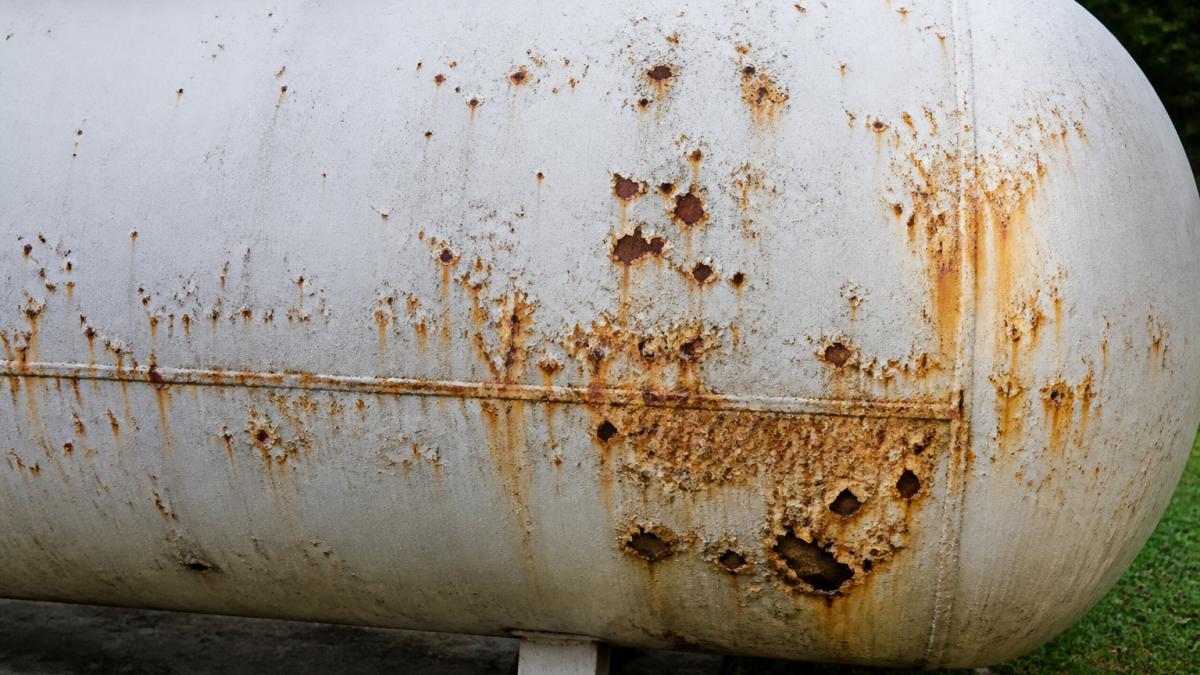
Rust and corrosion develop over time, especially in humid coastal environments where salt air accelerates oxidation.
Pay attention to connection points where the valve attaches to the tank, these are vulnerable to corrosion and where leaks most commonly develop. Schedule an inspection immediately if you notice rust or damage.
Dents larger than 1 inch in diameter or any bulging should be treated as an emergency. Do not use the tank. Contact a propane service provider immediately to assess whether the tank is safe to operate.
How to Check for Propane Leaks
Propane has an odor added specifically so you can identify leaks, a distinctive sulfur or rotten egg smell. If you detect this odor near your tank or appliances, take it seriously.
The bubble test is the most reliable way to check for leaks: mix dish soap and water in a spray bottle and spray around all connection points, valve stems, and fittings. If bubbles form and grow, you have a leak. Leaks at connection points may be fixed by tightening, but leaks inside the tank or at the valve require professional service.
Listen for hissing near the tank or regulator, or notice frost forming on the tank or regulator during warm weather, both indicate leaks.
Some leaks are too small to detect with these methods. Service technicians use specialized equipment to identify tiny leaks. If you suspect a leak but can’t confirm it, call a professional.
Keep your propane odorant working by using your tank regularly. If a tank sits unused for months, the odorant can settle or become less effective. Regular use ensures you’ll smell a leak if one develops.
Understanding Your Propane Tank Expiration Date
Every propane tank has an expiration date stamped on the collar or valve indicating when the tank’s last recertification occurred. Tanks require recertification every 5, 10, or 12 years depending on tank type and manufacturing date.
After the expiration date passes, the tank cannot legally be filled until recertified. Propane delivery services are required by federal safety regulations to refuse filling expired tanks.
Check the collar of your tank for a date stamp showing month and year. If today’s date is after that date, your tank needs recertification.
Plan ahead: if your tank will expire soon, schedule recertification before the date passes to prevent service interruptions and maintain compliance.
Propane Tank Recertification Requirements
Propane tank recertification is a mandatory safety process governed by federal Department of Transportation (DOT) standards and enforced locally through fire marshal oversight.
Federal Recertification Intervals
Most residential tanks require recertification every 10 or 12 years from manufacture or last recertification. Older tanks manufactured before 2002 may require recertification every 5 years.
Local Regulatory Compliance
Local fire marshal offices enforce additional inspection and documentation requirements beyond federal DOT standards.
What Happens During Recertification
Repair vs. Replacement During Recertification
Minor issues like valve problems or surface corrosion can sometimes be repaired. Significant internal corrosion, structural failure, cracks, or design non-compliance requires replacement.
Planning Ahead to Avoid Service Gaps
Recertification typically takes 5 to 10 business days. Set a calendar reminder 3 months before your tank’s expiration date and contact a certified facility early to schedule an appointment.
Track your tank’s recertification date and verify your local fire marshal’s inspection requirements. Set a reminder 3 months before expiration to schedule recertification, and confirm that your technician is certified and that the facility follows your municipality’s compliance standards.
Safety Relief Valve and Connection Point Issues
The safety relief valve prevents dangerous pressure buildup by releasing excess pressure if the tank becomes overpressurized. A propane tank inspection always includes checking this valve for proper operation.
Signs of a faulty safety relief valve include:
- Propane leaking from the valve stem
- Visible corrosion or damage to the valve body
- The valve appearing frozen or stuck in one position
- Hissing sounds coming from the valve area
Connection points are prone to leaks and corrosion from constant pressure and temperature changes. Inspect regularly using the bubble test method. Tighten loose fittings carefully, don’t over-tighten. If a connection continues to leak after tightening, the fitting or seal needs replacement.
If you see corrosion around the valve stem or signs of leaking, call a professional, valve replacement requires specialized tools and expertise.
Appliance Performance Warning Signs
Your propane appliances send signals when something’s wrong with your tank or system. Pay attention to changes in how your appliances perform.
Flame Color and Combustion Issues
Yellow or orange flames indicate incomplete combustion and carbon monoxide production, stop using the appliance immediately and call a professional. Blue flames with yellow tips are normal; pure blue indicates optimal conditions.
Pilot Light and Ignition Problems
Pilot lights that won’t stay lit suggest pressure problems, air in the system, or a faulty thermocouple.
Heating Performance and Output Changes
Slow heating or reduced appliance output can indicate low tank pressure, a regulator problem, or a clogged line.
Strange Smells and Odor Concerns
The rotten-egg or sulfur smell indicates a leak, follow leak detection procedures. A burning or acrid odor suggests incomplete combustion or a mechanical problem.
Post-Storm Inspection Protocol
Costal areas experience hurricanes, nor’easters, and severe thunderstorms that can damage propane systems. After any significant storm, particularly those involving flooding, high winds, or lightning, inspect your propane tank and system before using appliances.
After flooding or water exposure:
- Check for water pooled around the tank base or regulator
- Look for mud, debris, or sediment on the tank exterior or connection points
- Inspect the regulator for water intrusion (moisture inside the regulator housing)
- Check that all connection points are tight and free of corrosion
- Do not use appliances until a professional has inspected the system; water in the propane line or regulator can cause appliance malfunction or safety hazards
After high winds or lightning:
- Visually inspect the tank for new dents, cracks, or damage
- Check that the tank is still properly secured and hasn’t shifted
- Inspect the regulator and all visible connections for damage
- Look for any signs of leaks using the bubble test method
- If lightning struck nearby, have the regulator and safety relief valve tested by a professional; electrical surges can damage these components
When to Call a Professional Immediately
Don’t wait to schedule a routine inspection if you notice any of these issues after a storm:
- Water inside the regulator or connection points
- Visible cracks or holes in the tank
- The tank has shifted or is no longer level
- You smell propane but can’t locate the source
- Multiple appliances have performance issues simultaneously
- Pilot lights won’t stay lit or appliances won’t ignite
Storm-related propane system damage can develop into serious safety hazards if left unaddressed. A professional inspection after significant weather events provides peace of mind and prevents dangerous situations.
Yellow or orange flames are a safety emergency. Do not continue using the appliance. Have the system inspected before using it again. Yellow flames indicate carbon monoxide production, which is a serious health hazard. After storms, do not use appliances until a professional has inspected the tank and regulator for water damage or other storm-related issues.
When to Replace vs. Repair Your Tank
Not every tank problem requires replacement. Some issues can be repaired, extending the tank’s useful life.
Repair is typically appropriate for:
- Loose or leaking connection fittings
- Faulty safety relief valves
- Corroded but structurally sound tanks (surface rust can be cleaned and treated)
- Minor valve stem leaks
Replacement is necessary for:
- Deep internal corrosion that has penetrated the tank walls
- Structural damage like large dents or bulges
- Failed recertification due to irreparable defects
- Tanks older than 30-40 years with significant corrosion
- Cracks or holes in the tank body
A professional inspection will determine which path makes sense for your tank. Sometimes the cost of repair approaches or exceeds the cost of a new tank, making replacement the practical choice.
Consider the tank’s age and condition history. An older tank that’s required multiple repairs may be nearing the end of its service life.
A professional inspection will help you evaluate whether your tank should be repaired or replaced.
Propane tank safety depends on regular attention and professional inspection. The signs outlined here, physical damage, leaks, expired dates, valve problems, and appliance performance issues, are your early warning system.
Don’t ignore these warning signs. Schedule a propane tank inspection as soon as you notice any of them.
Frequently Asked Questions
How do I know if my propane tank needs to be recertified?
Check the date stamped on your tank’s collar or valve. Most residential propane tanks must be recertified every 10 years. If your tank shows the expiration date has passed, or if you see visible rust, corrosion, dents, or bulges, recertification is necessary. A qualified propane service provider can assess whether recertification or replacement is the right choice for your tank’s condition.
What are the common signs of a leaking propane tank?
The most obvious sign is a rotten egg or sulfur odor around your tank or appliances, propane companies add this odorant specifically so leaks are detectable. Other indicators include hissing sounds near connection points, frost forming on tank valves, or visible oily residue around fittings. If you suspect a leak, shut off the tank immediately and contact your propane service provider for professional inspection.
Do residential propane tanks in this region require regular inspections?
Yes. Residential propane tanks must comply with Department of Transportation (DOT) regulations and local fire codes. Most tanks require recertification every 10 years, and visual inspections should happen annually or whenever you notice physical damage, corrosion, or performance issues. Regular inspections protect your home from hazardous materials exposure and ensure your system operates safely.
Is it more cost-effective to recertify or replace an old propane tank?
That depends on the tank’s age, condition, and capacity. If your tank is under 10 years old with minor cosmetic rust, recertification may be the economical choice. However, if the tank shows deep corrosion, structural damage, or is over 15 years old, replacement often makes more sense for long-term safety and reliability. A professional inspection will help determine which option is right for your situation.