
Table of Contents
- What a Propane Regulator Does and Why It Matters
- Common Signs of a Faulty Propane Regulator
- Gas Leaks and Propane Odor: When to Act Immediately
- Bad Propane Regulator Symptoms vs. Other Causes
- Propane Regulator Troubleshooting: What You Can Safely Check
- Propane Regulator Lifespan and When Replacement Becomes Necessary
- Propane Regulator Replacement: What to Expect
- Frequently Asked Questions
Last Updated: October 12, 2026
What a Propane Regulator Does and Why It Matters
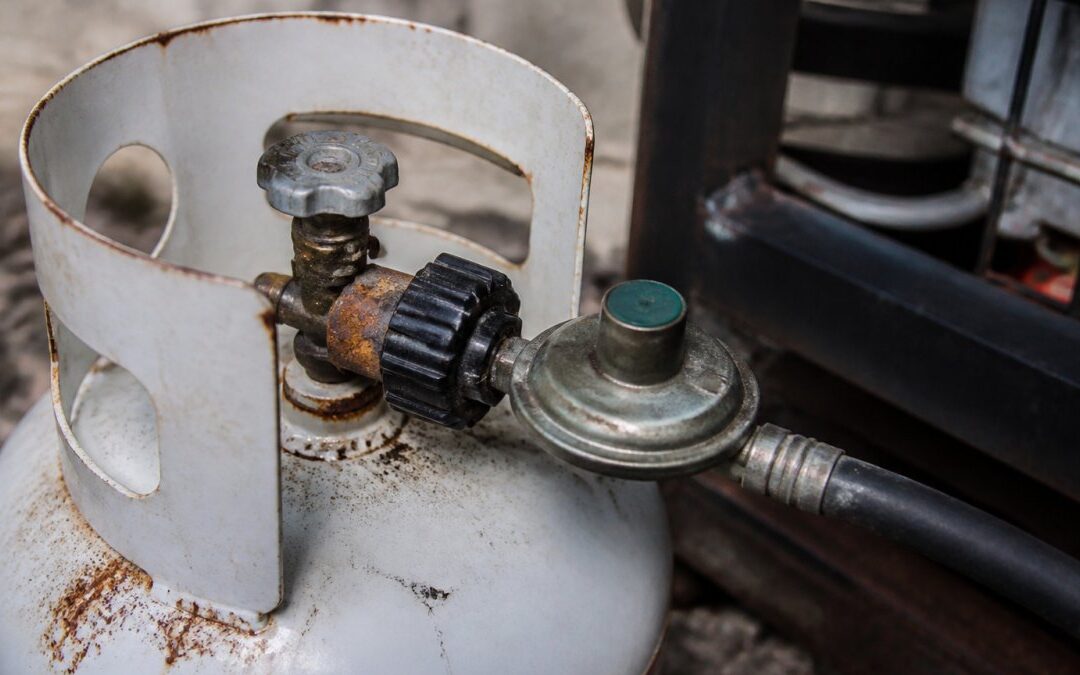
A propane regulator controls gas flow from your propane tank to your appliances, reducing high tank pressure to a safe, usable level.
The tank holds gas under pressure; the regulator releases just the right amount so your furnace, water heater, or grill gets steady fuel.
A faulty propane regulator is one of the most common issues, and one of the easiest to miss.
Common Signs of a Faulty Propane Regulator
A faulty propane regulator shows itself through clear warning signs, some obvious, others that creep up slowly.
Weak or Low Flame Output
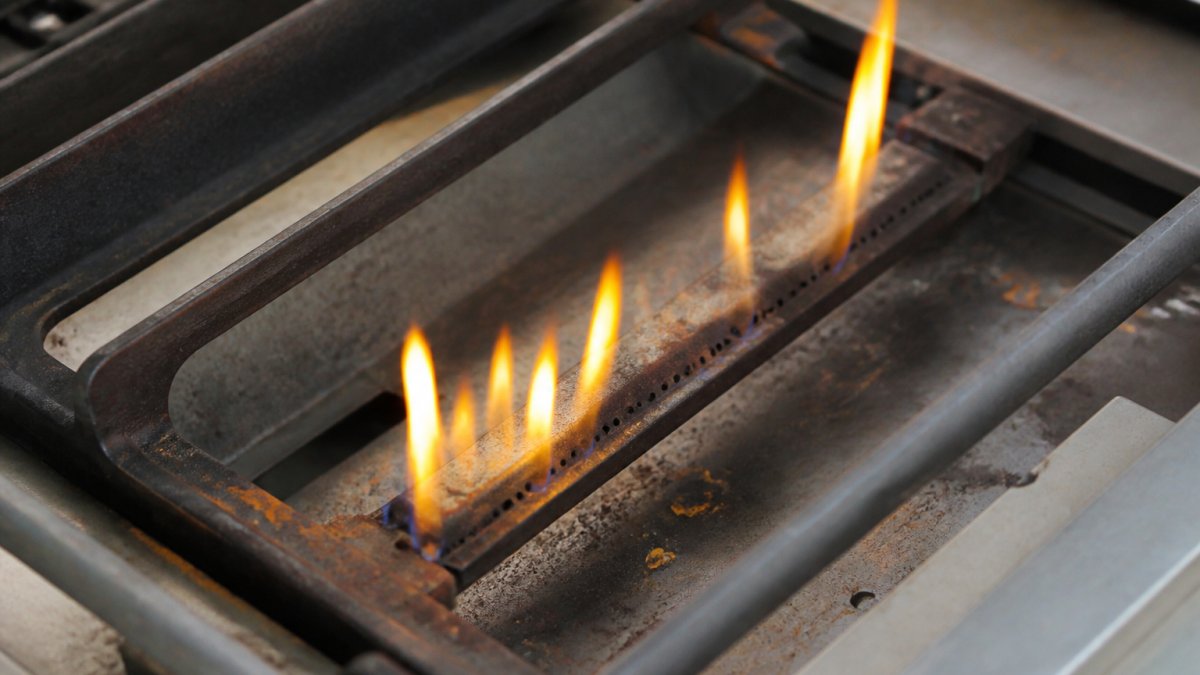
Your burners should produce strong, steady flames. When a regulator fails, gas flow drops and flames shrink.
Low flame output means burners take twice as long to heat water, your furnace struggles to warm your home, and grills barely get hot enough to cook.
If you’ve cleaned your burners and checked your tank level, but flames still won’t get strong, your regulator is likely the culprit.
Yellow, Orange, or Lazy Flames
Healthy propane flames are blue and steady. Yellow or orange flames mean incomplete combustion, your regulator isn’t delivering enough gas pressure.
Watch for flickering flames, orange tips instead of pure blue, soot on burners, and a rotten-egg smell (propane has an odor added for safety). Lazy flames that droop also signal dropping gas pressure.
Uneven Burner Flames
When one burner flames strong but another is weak, your regulator is failing unevenly, gas isn’t flowing at the same pressure to all burners. This happens when internal parts wear out, diaphragms crack or stick, or pressure can’t stabilize.
Appliances That Fail to Ignite
Your stove clicks but won’t light, your water heater won’t kick on, or your furnace makes noise but produces no heat. These ignition failures often mean gas pressure is too low to reach the igniter, the regulator isn’t opening fully, or pressure fluctuates too much for safe ignition. If you smell propane but appliances won’t ignite, stop using them and call a professional.
Unexpected Shutdowns or Flameout
Your furnace runs for ten minutes, then shuts off. Your water heater cuts out mid-shower. Your grill flames die suddenly. A faulty propane regulator can’t maintain steady pressure, so appliances shut down as a safety measure when pressure drops too low.
Gas Leaks and Propane Odor: When to Act Immediately
Propane is naturally odorless. Suppliers add mercaptan so you can detect a release before it reaches a dangerous concentration.
A faulty propane regulator is one of the most common sources of a leak.
What to Do the Moment You Smell Propane
Do these in order, even if the smell seems faint.
- Do not touch anything electrical. No light switches, thermostats, garage door openers, phone chargers, or appliance knobs. A spark can ignite accumulated gas.
- Do not use a phone, lighter, match, or anything that can spark inside the area. Wait until you are outside and upwind before calling.
- Get everyone out immediately. Leave doors open behind you if you can without delay. Do not stop to gather belongings.
- Move to a safe distance and stay upwind. A common guideline is at least several hundred feet from the tank and any structure, and farther if you can still smell gas.
- Call 911 or your propane supplier from outside. If you can smell gas strongly, call 911 first. If the odor is faint and you are unsure, call your supplier’s emergency line.
- Warn neighbors not to approach. If your tank or regulator is near a property line, keep others away until a professional clears the area.
- Do not re-enter, and do not try to shut off the tank valve yourself unless a qualified responder or your propane supplier tells you to. Turning a valve the wrong way, or creating a spark while doing it, can make the situation worse.
- Do not attempt to find the leak. Soap-bubble testing is for a known, controlled situation, not an active release. Leave leak location to a trained technician.
Propane is heavier than air (the CDC). It pools in low spots, basements, crawl spaces, bilges, and the bottom of an RV, where it can sit undetected and ignite from a distant spark. If anyone in the household smells gas in a low area, evacuate and call from outside.
Why a Failing Regulator Leaks
Regulator leaks usually come from one of four places:
- The diaphragm. This flexible membrane regulates pressure. Over years of flexing, it can develop pinholes or tears, letting gas escape through the vent opening.
- The inlet or outlet fittings. Vibration, thermal cycling, and repeated tank swaps can loosen threaded connections.
- The vent opening itself. The vent releases a tiny amount of gas as the regulator breathes. If the diaphragm is torn, the vent becomes a steady leak path.
A leaking regulator often shows other symptoms first, weak flames, a hiss near the tank, or frost on the body, so treat any of those as a reason to have the system inspected.
Slow Leaks vs. Fast Leaks
- Fast leaks produce an obvious, strong odor and sometimes a visible hiss or frost plume. These are immediate evacuations.
- Slow leaks produce a faint odor that may come and go, or that you notice only in an enclosed space. They are more dangerous because people get used to the smell and stop treating it as urgent.
If you smell propane more than once in the same area, assume a slow leak and call your supplier.
What Not to Do
- Do not use a flame of any kind to check for leaks.
- Do not use a vacuum, fan, or shop blower to try to clear gas.
- Do not restart appliances to “see if it happens again.”
Any propane odor is a stop-everything event. Evacuate, avoid every ignition source, and call 911 or your propane supplier from outside. Regulator leaks are not a DIY repair, replacement by a qualified technician is the only safe fix.
Bad Propane Regulator Symptoms vs. Other Causes
Not every flame problem means your regulator is faulty. Before you call for replacement, rule out these common culprits:
Clogged burner ports. Dirt and debris block gas flow. Clean the ports with a thin wire or needle. If flames strengthen, your regulator is fine.
Low tank level. Check your tank gauge. If it’s below 20%, refill before troubleshooting.
Bad connection. Loose fittings between tank and regulator cause pressure loss.
Dirty regulator vent. Snow, ice, or leaves can block the small vent hole.
Air in the line. After a refill or connection, air can get trapped.
If none of these fixes work, your regulator is likely faulty.
Propane Regulator Troubleshooting: What You Can Safely Check
You can safely perform basic checks before calling a technician.
Step 2: Inspect the regulator for damage.
Look for cracks, rust, or corrosion.
Step 4: Listen for hissing.
A faint hiss near the regulator is normal.
Step 5: Feel for ice buildup.
In cold weather, touch the regulator body gently.
Step 6: Check your burner ports.
Remove burner covers if possible.
Never attempt to disassemble your regulator.
Propane Regulator Lifespan and When Replacement Becomes Necessary
There is no single expiration date for every propane regulator. Service life depends on the equipment it serves, the climate, and how often the system cycles.
That range is a planning guideline, not a guarantee. A regulator in a coastal environment or exposed to years of freeze-thaw cycling can fail well inside that window, and one on a lightly used system can outlast it.
How to Read the Date on a Regulator
Most regulators carry a date stamp or code on the body or a metal tag. The format varies by manufacturer, some use a two-digit year, some a month/year code, and some a serialized code you have to look up. If you cannot decode the stamp, a propane technician can identify the age during an inspection. Replacement decisions are usually driven by age plus condition, not age alone.
Visible Signs the Regulator Is at End of Life
Inspect the regulator body and its connections for these conditions. Any one is a reason to have it evaluated by a professional.
- Rust or corrosion on the body. Flaking rust, pitting, or white/green residue on a brass or aluminum body indicates the housing is degrading.
- Cracks in the housing or diaphragm cover. Even a hairline crack can let gas escape or moisture and debris enter.
- A vent opening that is blocked, painted over, or pointed the wrong way. The vent must be open and oriented so it cannot collect water, snow, ice, or debris. A blocked vent causes pressure problems; a misoriented vent causes freeze-ups.
Conditions That Shorten Regulator Life
- Coastal or high-humidity environments. Salt air and constant moisture accelerate corrosion of the body and fittings.
- Wide temperature swings. Repeated freeze-thaw cycles stress the diaphragm and can introduce moisture.
- High-cycle systems. A regulator that constantly modulates, such as one serving a whole-house heating system in a cold climate, wears faster than one on a seasonal grill.
When to Have a Regulator Inspected
Have the regulator inspected by a qualified propane technician during your regular system service, commonly every one to two years for a whole-house system, and annually for an RV or any system that has shown symptoms. After roughly 15 years, plan for replacement even if it appears to be working, because internal wear is not visible from the outside.
Snap a photo of the regulator’s date stamp and any visible corrosion the next time your tank is serviced. Keeping that record makes it easy to track age and to show a technician exactly what has changed between visits.
Replacement vs. Repair
Regulators are not field-repairable. The diaphragm, seat, and spring are calibrated as a unit at the factory, and there is no safe way to open a regulator, replace a part, and return it to service in the field.
Replacement also lets you verify the regulator is correctly sized and staged. A single-stage regulator adequate for a small appliance may be undersized after a system upgrade, and a two-stage setup may be better for a larger home or longer piping run.
Use age as a planning trigger and condition as the deciding factor. Once a regulator shows corrosion, cracking, a blocked or misoriented vent, persistent frost, or repeated pressure problems after troubleshooting, replacement is the correct next step, and it must be done by a licensed propane technician.
Propane Regulator Replacement: What to Expect
Regulator replacement is straightforward but must be done by a licensed propane technician.
What the process involves:
- Technician shuts off the tank valve
- Regulator is disconnected from tank and appliance lines
- New regulator is installed with fresh connections
- System is pressure-tested for leaks
- Appliances are tested to confirm proper operation
- Old regulator is disposed of safely
The job takes 30 to 60 minutes. Cost depends on regulator type and location.
| Regulator Type | Best For | Typical Lifespan |
|---|---|---|
| Single-stage | Residential heating, small appliances | 15-20 years |
| Two-stage | Large homes, commercial systems | 15-20 years |
| Changeover | RVs, portable tanks | 10-15 years |
After replacement, your appliances should perform like new. Flames return to steady blue. Heat output normalizes.
When your propane system isn’t working right, a faulty propane regulator is often the cause.
Frequently Asked Questions
What is the typical lifespan of a propane regulator?
Most propane regulators last 10-15 years with proper maintenance and storage. However, lifespan varies based on climate, usage frequency, and exposure to moisture or corrosion. Regulators in harsh environments or high-use applications may need replacement sooner. If your regulator is approaching 10 years old or shows signs of wear, have a qualified propane technician inspect it. Replacing an aging regulator before failure occurs prevents safety risks and service interruptions.
Can a faulty propane regulator cause low flame or uneven burner performance?
Yes, a faulty regulator is a common cause of weak flames and uneven heat output. When a regulator fails, it cannot maintain steady gas pressure, resulting in low gas flow to burners. This causes weak or lazy flames, poor heat output, and inconsistent performance across multiple burners. If you notice these symptoms, check for other causes first (clogged lines, valve position), but a failing regulator is likely if all appliances show the same problem. A professional pressure test can confirm whether the regulator is the culprit.
What should you do if you smell propane near the regulator?
Propane has a distinctive rotten egg smell added for safety. If you detect this odor near the regulator, leave the area immediately and do not use any electrical switches or ignition sources. Move to fresh air and call your propane supplier or emergency services from a safe location. Do not attempt to locate the leak yourself. A qualified technician will perform a leak test and identify whether the regulator, tank valve, or gas line is leaking. Never ignore propane odor, it indicates a potential safety hazard.
When should you replace a propane regulator?
Replace your propane regulator if it shows signs of failure (weak flames, gas leaks, unexpected shutdowns), if it is 10-15 years old, or if a professional inspection reveals damage or corrosion. Also replace it if the regulator has been submerged in water or exposed to severe weather. Do not attempt a DIY replacement, propane system work requires a qualified technician to ensure proper installation, pressure testing, and safety. Contact a licensed propane provider to schedule replacement and verify that your system meets all safety standards.