
Table of Contents
- Industrial Propane vs Natural Gas Efficiency
- Benefits of Bulk Propane for Manufacturing Operations
- Environmental and Compliance Advantages of Industrial Propane
- Cost of Converting Heating Systems to Propane
- Industrial Propane Applications: Material Handling and Process Heating
- Energy Independence and Supply Chain Security
- Conclusion
- Frequently Asked Questions
Last Updated: September 23, 2026
Industrial Propane vs Natural Gas Efficiency
Industrial propane is a hydrocarbon gas liquid that delivers more consistent combustion efficiency than natural gas in high-demand manufacturing settings. When you need reliable heat output, propane delivers it without the infrastructure constraints of a pipeline.
The comparison comes down to two factors that matter on the plant floor: how efficiently the fuel burns and whether you can actually get it where you need it.
Combustion Efficiency and Heat Output
Propane burns hotter than natural gas per unit of volume. That higher flame temperature translates directly into faster heating cycles in energy-intensive applications like metal treatment and process heating.
Natural gas arrives through a pipeline at variable pressure. Propane arrives in a tank you control.
Infrastructure and Supply Differences
Natural gas requires a pipeline connection. If your facility sits outside a service area, or if the local utility caps your volume during peak demand, that’s a problem. Propane requires only a storage tank and a delivery schedule.
The U.S. Energy Information Administration’s propane data tracks how these supply dynamics shift by region and season.
Benefits of Bulk Propane for Manufacturing Operations
Bulk propane solves two operational problems at once: it puts fuel on your site and it locks in your cost per unit of heat. Manufacturers running industrial heating, forklifts, or process equipment benefit most from this arrangement.
On-Site Storage and Supply Reliability
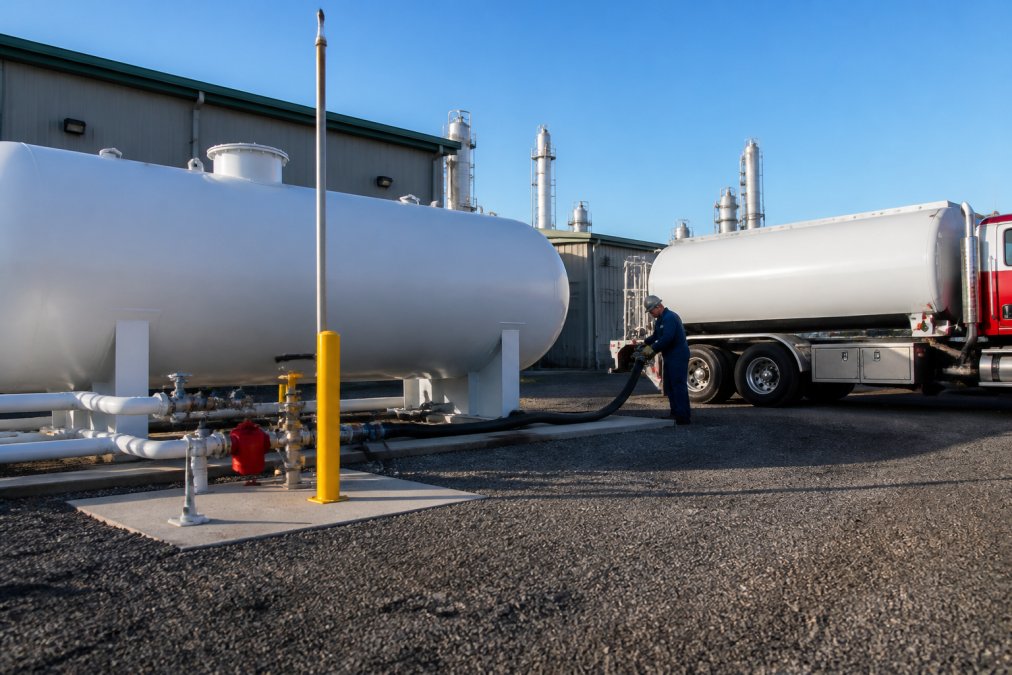
On-site storage means you’re not waiting on a utility. A tank on your property holds enough fuel to ride out supply disruptions, and a scheduled delivery keeps it topped off. For operations that can’t afford downtime, that buffer matters.
Cost-Per-BTU and Fuel Savings
Cost-per-BTU is the metric that actually determines your fuel budget, not the sticker price per gallon. Propane’s higher combustion efficiency often narrows the gap with natural gas once you account for how much heat each unit produces.
Track your cost-per-BTU monthly, not your cost-per-gallon. A cheaper gallon that burns cooler can cost more per unit of heat than a higher-priced fuel that burns hotter.
Environmental and Compliance Advantages of Industrial Propane
Propane’s environmental case in manufacturing is usually summarized as “cleaner than diesel,” but that framing undersells why it keeps showing up in corporate sustainability plans. The real driver is that propane gives plant managers a measurable, reportable emissions reduction they can document today, without waiting on an electrification capital project that may take years to approve.
What Propane Actually Emits Compared to Alternatives
Propane (HD-5, the grade used for most industrial and engine applications) is a low-carbon fossil fuel. Per unit of energy delivered, it produces less carbon dioxide than diesel, gasoline, or heating oil, and it burns with very low sulfur content. Compared to diesel, propane combustion also generates substantially lower nitrogen oxides (NOx) and near-zero particulate matter, which matters in facilities that fall under air permitting thresholds. Integrating these cleaner combustion profiles into a broader strategy for warehouse energy efficiency allows facility managers to optimize their environmental footprint while simultaneously reducing operational overhead.
That last point is often the practical trigger. A plant that adds diesel-fired process heat or backup generation can push itself closer to a Clean Air Act permitting threshold for NOx or particulate emissions. Propane’s lower criteria-pollutant profile gives operators more headroom before they cross into a major-source permit category, a distinction that affects both compliance cost and project timeline.
EPA overview of criteria air pollutants explains how NOx and particulate matter are regulated under the Clean Air Act.
The ESG Reporting Angle Most Suppliers Don’t Explain
For publicly traded manufacturers and their suppliers, propane usage now feeds directly into ESG and sustainability disclosures. The relevant reporting frameworks, the Sustainability Accounting Standards Board (SASB) standards, now consolidated under the International Sustainability Standards Board (ISSB), and CDP, all expect companies to quantify Scope 1 direct emissions from on-site fuel combustion. Propane burned on site is a Scope 1 source, which means it must be calculated and reported.
That creates a specific advantage for propane over diesel in the same application: because propane has a lower carbon content per unit of heat, the Scope 1 figure a facility reports is smaller for the same production output.
If your facility reports Scope 1 emissions, switching a process heater or backup generator from diesel to propane lowers the reported figure for the same heat output, and that reduction is documented using published EPA emission factors, not vendor estimates.
Propane as a Bridge Fuel in Hybrid Facilities
A growing pattern in manufacturing is pairing propane with on-site renewables. Solar and wind output is intermittent, and battery storage sized for full plant load is still capital-intensive. Propane generators and process heaters can fill the gap when renewable output drops, letting a facility claim a higher renewable share while keeping production steady.
Compliance and Safety Obligations That Come With It
Propane use brings its own regulatory footprint. Facilities storing propane above threshold quantities must comply with OSHA’s Process Safety Management standard (29 CFR 1910.119) and EPA’s Risk Management Program (40 CFR Part 68), and storage installations must meet NFPA 58, the Liquefied Petroleum Gas Code. These aren’t optional, they shape tank siting, separation distances, and operator training.
Cost of Converting Heating Systems to Propane
Conversion cost is the question every plant manager asks first, and the honest answer is that it varies widely, but “it depends” isn’t useful for budgeting. What follows is a framework for estimating your own number, plus the incentive programs that often offset a meaningful share of it.
The Four Cost Buckets
A propane conversion breaks into four categories. Estimate each separately rather than looking for a single installed-cost figure.
A Simple Payback Framework
Rather than quoting a single conversion price, run your own payback calculation:
- Annual fuel cost before conversion = current fuel consumption (in MMBtu) × current cost per MMBtu
- Annual fuel cost after conversion = same MMBtu demand × propane cost per MMBtu, adjusted for the efficiency difference between your old and new equipment
- Annual savings = the difference, plus any maintenance savings from cleaner combustion
- Simple payback (years) = total installed conversion cost ÷ annual savings
Calculate cost-per-MMBtu, not cost-per-gallon, when comparing fuels. A gallon of propane and a gallon of heating oil contain very different amounts of energy, so per-gallon pricing is misleading for budgeting.
Incentives and Financing That Reduce Net Cost
Conversion cost isn’t the whole story, net cost is. Several programs can offset a portion of the investment:
- Federal tax incentives. The Section 179 deduction and bonus depreciation rules let businesses expense qualifying equipment in the year it’s placed in service, which improves first-year cash flow. Confirm current limits and eligibility with a tax advisor, as these provisions change.
- Utility and state programs. Some states and utilities offer rebates for replacing older, higher-emitting equipment, particularly where the conversion reduces NOx or particulate emissions in a nonattainment area.
- Energy service agreements. Some suppliers structure fuel contracts that bundle tank installation or equipment financing into the supply agreement, spreading the upfront cost across the contract term.
What Actually Drives Your Number Up or Down
The two biggest swing factors are whether you already have storage and whether your existing burners can be converted rather than replaced. A facility converting from oil with an existing tank and convertible burners sits at the low end. A facility converting from electric process heat with no storage, high draw rates requiring a vaporizer, and burners that must be replaced sits at the high end.
Industrial Propane Applications: Material Handling and Process Heating
Propane powers two of the most common manufacturing functions: moving materials and heating processes. Forklift fleets running on propane refuel fast and keep working through long shifts, which is why material handling operations favor it over electric alternatives in high-throughput facilities.
| Application | Why Propane Fits | Key Benefit |
|---|---|---|
| Forklift fleets | Fast refueling, consistent power | Keeps material handling moving |
| Process heating | High, stable flame temperature | Predictable manufacturing throughput |
| Backup power | On-site storage, no pipeline | Keeps production running |
| Construction heat | Portable, no infrastructure | Works anywhere on site |
Energy Independence and Supply Chain Security
Domestic production of propane gives manufacturers a supply chain they can plan around. Most propane used in the U.S. comes from natural gas processing and oil refining within North America, which reduces exposure to overseas supply disruptions.
Don’t size your storage tank to your average weekly usage. Size it to cover your longest realistic resupply window, or a winter delivery delay can halt production.
Conclusion
Manufacturers are switching to industrial propane because it solves problems that pipelines and diesel can’t: on-site storage, supply chain reliability, and cleaner combustion. The operational case keeps getting stronger as energy costs and compliance requirements tighten.
Frequently Asked Questions
Why is industrial propane usage increasing in manufacturing?
Manufacturers are turning to industrial propane for several practical reasons. It offers cost-per-BTU savings compared to diesel and electricity, provides reliable on-site storage, and produces fewer carbon emissions than oil or coal. Propane also supports energy independence because most of the U.S. supply is domestically produced. Facilities using propane for forklifts, process heating, and power generation report lower fuel loss and better operational efficiency than with alternative fuels.
How does industrial propane vs natural gas efficiency compare for manufacturing?
Industrial propane vs natural gas efficiency depends on your facility’s location and infrastructure. Natural gas requires pipeline access, which many rural or expanding manufacturing sites lack. Propane delivers comparable combustion efficiency and heat output but stores on-site, so you are not vulnerable to pipeline interruptions. Propane also burns cleaner than oil, with lower nitrogen oxides and particulate matter emissions, making it a strong choice for facilities focused on greenhouse gas reduction.
What is the cost of converting heating systems to propane for a manufacturing facility?
The cost of converting heating systems to propane varies based on facility size, existing equipment, and whether you need new storage tanks or piping. Most conversions involve burner replacements, tank installation, and safety inspections. Many manufacturers find the upfront investment pays back through lower fuel costs and reduced maintenance. For current pricing and a site-specific quote, check Discount Propane’s website directly.
What are the benefits of bulk propane for manufacturing operations?
Bulk propane delivery gives manufacturers consistent supply without daily ordering. On-site storage tanks hold enough fuel to ride out supply chain disruptions, and bulk purchasing lowers cost-per-BTU. Facilities using bulk propane for material handling, industrial heating, and power generation reduce fuel loss and improve manufacturing throughput. Automatic delivery scheduling also eliminates the administrative burden of tracking fuel levels manually.