Table of Contents
- How Commercial Forklift Propane Cylinder Exchange Works
- Bulk Propane Delivery vs Cylinder Exchange for Forklifts
- Forklift Propane Tank Safety Regulations and Compliance
- Commercial Propane Cylinder Storage Requirements
- Scheduling Delivery and Managing Fuel Usage
- Benefits of Propane for Forklift Operations
- Getting Started With Forklift Propane Cylinder Exchange
Last Updated: August 27, 2026
How Commercial Forklift Propane Cylinder Exchange Works
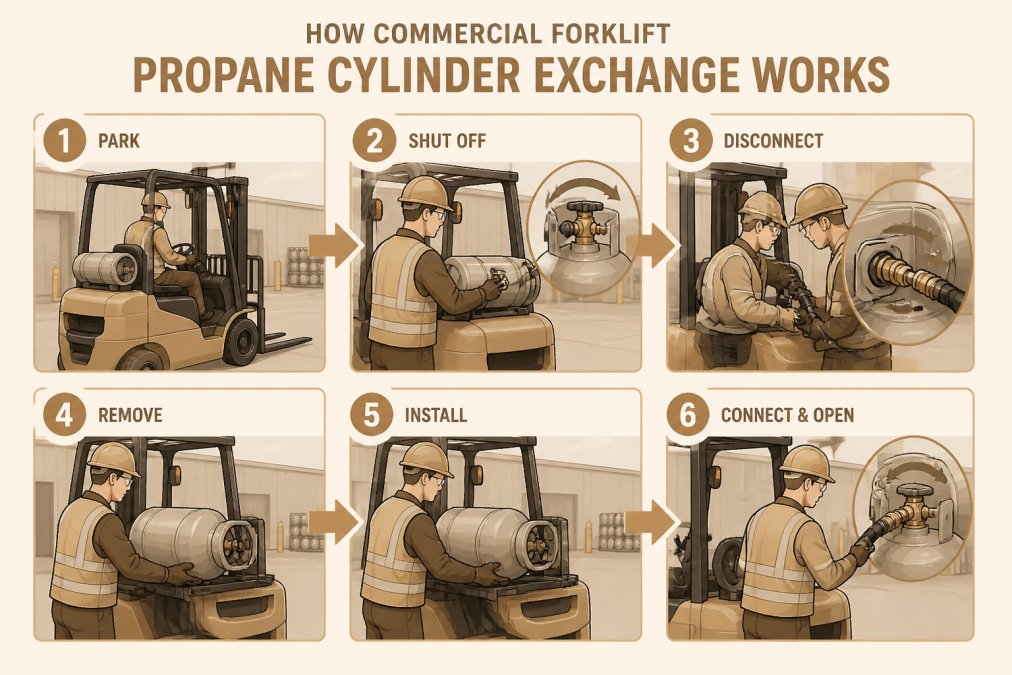
A commercial forklift propane cylinder exchange is the process of swapping an empty or depleted propane tank with a full one on-site, eliminating the need to refill tanks off-premises. A delivery driver arrives with a full cylinder and removes the empty one from your forklift. The empty tank goes back to the supplier for refilling and inspection, while you get an immediately usable replacement. No waiting for refills. No trips to a fuel station. Your equipment stays operational.
What makes this approach particularly efficient for commercial operations is the scheduled nature of deliveries. Most providers offer daily, weekly, or monthly cycles based on your usage patterns. Discount Propane, for instance, provides flexible scheduling that adapts to your actual consumption, so you’re not locked into rigid delivery windows that don’t match your operational needs.
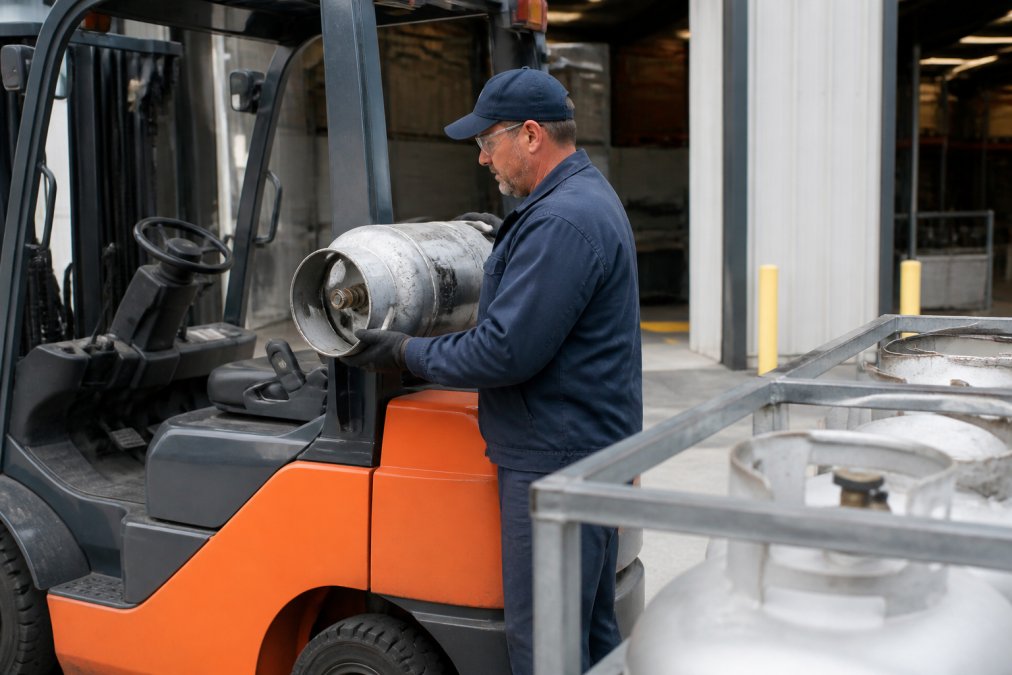
Standard commercial forklift tanks come in 33-pound capacities, typically made of aluminum or steel. Each cylinder is DOT certified and inspected before delivery to ensure safety compliance. The exchange model means you never own the cylinders, you’re leasing them as part of the service. This removes the burden of tank maintenance and certification from your operation, as the supplier handles all inspections and compliance requirements.
Bulk Propane Delivery vs Cylinder Exchange for Forklifts
The choice between bulk propane delivery and cylinder exchange fundamentally changes how you manage fuel logistics.
Bulk propane delivery involves a tanker truck delivering propane directly into a large stationary tank on your property. You’re responsible for tank ownership, maintenance, inspections, and storage space. This approach works well for operations with high, consistent fuel consumption and permanent facilities.
Cylinder exchange uses portable tanks swapped on a schedule. You don’t own the cylinders, and the supplier manages all tank maintenance and compliance. This model suits operations with variable fuel needs, limited storage space, or those that relocate equipment frequently.
Bulk systems require less frequent interaction but demand dedicated on-site storage and ongoing tank certification. Cylinder exchange requires more frequent deliveries but eliminates ownership responsibilities entirely. For construction sites that move equipment between locations, cylinder exchange is clearly superior. Cost considerations differ too: bulk delivery typically involves lower per-unit fuel costs for high-volume users but higher upfront tank and installation costs, while cylinder exchange spreads costs across smaller, frequent deliveries.
Many operations find that cylinder exchange works better for forklifts specifically because you can swap tanks in seconds without shutting down operations.
Forklift Propane Tank Safety Regulations and Compliance
Propane cylinder safety is mandated by federal regulation. The Department of Transportation (DOT) sets baseline standards for propane cylinder manufacturing, testing, and certification. Every commercial propane cylinder must be DOT certified and requires periodic inspection and requalification.
The National Fire Protection Association (NFPA) publishes NFPA 58, the standard for propane handling and storage. Most state and local fire codes reference NFPA 58, making it effectively mandatory in your jurisdiction.
For forklifts specifically, OSHA requirements apply to the equipment itself and how you handle fuel. Propane-powered forklifts must have properly functioning fuel shut-off systems, pressure relief valves, and safety interlocks. Your maintenance program needs to verify these systems work correctly.
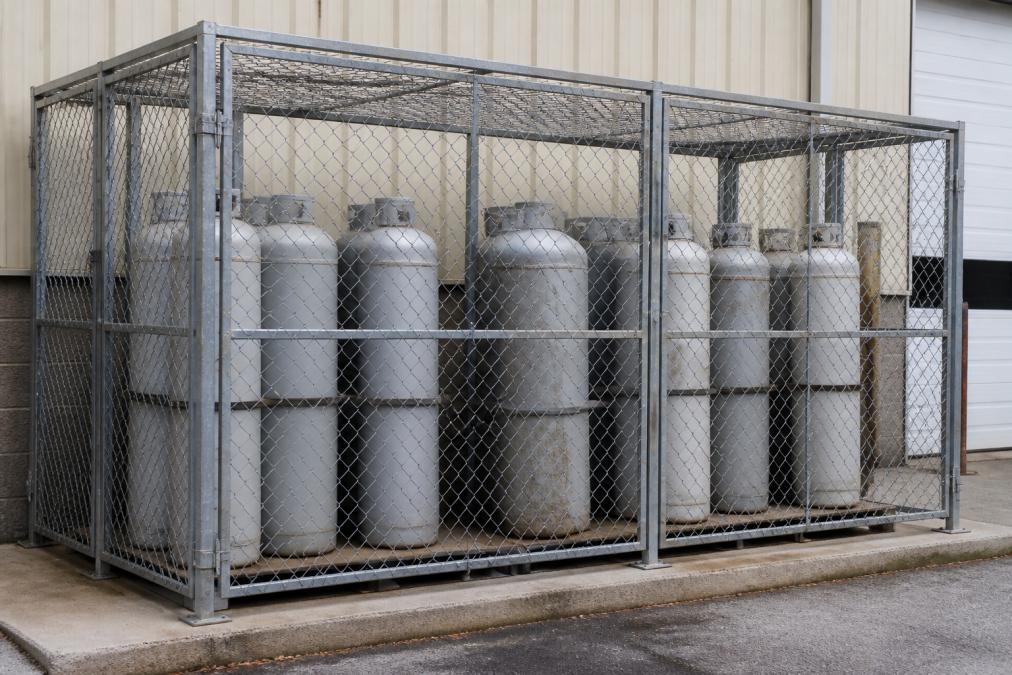
Cylinder storage must comply with regulations. Propane cylinders must be stored upright in well-ventilated areas, away from ignition sources, and protected from physical damage. A galvanized lockable storage cage is the standard solution, keeping cylinders organized, preventing unauthorized access, and protecting them from impact damage.
Relief valves must be tested annually to ensure they open at the correct pressure. When you use a cylinder exchange service like Discount Propane, the supplier handles these inspections as part of their service. Keep records of cylinder inspections, maintenance performed on your forklifts, and delivery dates to demonstrate compliance.
Commercial Propane Cylinder Storage Requirements
Cylinders must be stored upright on level ground. Horizontal storage can damage the internal dip tube and create safety hazards during use.
Ventilation is critical. Propane is heavier than air and can accumulate in low spots, creating an explosion hazard if it encounters an ignition source. Storage areas must have natural or mechanical ventilation to prevent gas buildup.
Cylinders must be at least 10 feet away from any open flame, electrical equipment, or other ignition source (nfpa.org). A galvanized lockable storage cage protects cylinders from impact, weather exposure, and unauthorized access. The cage should have a roof or cover to keep rain and snow off the cylinders, preventing rust and valve damage.
Avoid storing cylinders in direct sunlight for extended periods or near heat sources, as propane expands when heated. Capacity planning determines how many cylinders you need on-site. A typical operation maintains 2-3 full cylinders on hand while others are in use, ensuring you never run out of fuel during delivery delays.
Scheduling Delivery and Managing Fuel Usage
Track your propane usage over several weeks to establish baseline consumption. Note how many cylinders you use per week, which days consumption is highest, and whether usage fluctuates seasonally. This data shapes your delivery schedule.
Most suppliers offer three delivery models: automatic, will-call, and fixed-cycle. Automatic delivery means the supplier monitors your tank levels and delivers before you run out. Will-call means you contact the supplier when you need fuel. Fixed-cycle means you get deliveries on a predetermined schedule.
Automatic delivery works well if your consumption is predictable. Discount Propane offers online account management where you can see your usage history and adjust delivery preferences. Will-call delivery gives you maximum flexibility but requires discipline, when the gauge shows one full cylinder’s worth of fuel remaining, call for delivery. Fixed-cycle delivery works for operations with stable, predictable consumption but can result in overstock or understock.
Check gauges regularly and don’t wait until a forklift stops running to realize you’re out of fuel. Seasonal adjustments matter: construction sites often see increased propane use in winter and decreased use in summer. Ask your supplier about same-day or emergency delivery availability for unexpected spikes.
Benefits of Propane for Forklift Operations
The primary advantage of propane-powered forklifts is operational continuity. A forklift with an empty propane cylinder takes 60 seconds to swap for a full one (osha.gov). Battery-electric forklifts require 8-12 hours of charging, forcing you to maintain spare equipment or accept downtime (osha.gov).
Propane forklifts perform consistently across temperature ranges. Battery-electric forklifts lose capacity in cold weather, while propane maintains consistent performance regardless of temperature.
Maintenance requirements are lower than diesel alternatives. Propane burns cleaner than diesel, producing less engine carbon buildup. Over the life of equipment, this translates to lower maintenance costs and less unexpected downtime.
Propane prices are generally more stable than diesel, allowing you to budget fuel costs with reasonable confidence. Propane also produces fewer emissions than diesel, making it the compliant choice for operations in environmentally sensitive areas.
Getting Started With Forklift Propane Cylinder Exchange
First, assess your current fuel consumption by counting how many cylinders your operation uses per week and noting any seasonal variation. This data determines what delivery schedule you’ll need.
Next, evaluate your storage space and setup. Do you have room for a storage cage with 3-5 cylinders on-site? Is the location well-ventilated and away from ignition sources? Most operations find suitable storage areas without major renovations.
Contact a propane supplier and discuss your needs. Discount Propane offers online pricing and scheduling tools that let you see costs and delivery options before committing. Confirm the supplier provides DOT-certified cylinders and handles all compliance inspections.
Set up your delivery schedule. Most suppliers recommend starting with weekly or bi-weekly deliveries while you establish consumption patterns. Train your team on cylinder safety and exchange procedures. Establish a monitoring system for fuel levels by assigning someone to check gauges daily and alert management when levels drop to your predetermined threshold.
Finally, keep records of all deliveries, inspections, and maintenance to demonstrate compliance and track costs and usage patterns over time.
Getting started with commercial forklift propane cylinder exchange removes operational friction and improves fleet reliability. The key is matching your delivery schedule to actual consumption patterns and working with a supplier that provides transparency and flexibility. Discount Propane’s upfront online pricing and easy scheduling make it straightforward to get started without hidden fees or complicated contracts.
Frequently Asked Questions
Q: What is the difference between propane cylinder exchange and refilling for forklifts?
A: Cylinder exchange swaps your empty tank for a full one during delivery, eliminating downtime and inspection hassles. Refilling involves taking your cylinder to a station or waiting for a technician to refill on-site. Exchange is faster and more convenient for commercial fleets. Many businesses prefer exchange programs because they reduce operational interruptions.
Q: What are the OSHA requirements for storing forklift propane cylinders?
A: OSHA requires propane cylinders to be stored upright in a well-ventilated area, away from flammable materials and heat sources. Cylinders must be secured in a storage cage or rack to prevent tipping. They cannot be stored indoors except in approved, ventilated storage areas. Temperature should not exceed 120°F. Regular inspections ensure valve integrity and safety. A DOT-certified cylinder must be re-certified every 12 years. Consult your propane supplier about compliance requirements specific to your facility.
Q: How do I know if my forklift propane cylinder is safe to use?
A: Check for a DOT certification stamp on the cylinder showing the last inspection date. Cylinders must be re-certified every 12 years. Inspect the valve for leaks, corrosion, or damage before each use. Listen for hissing sounds indicating a leak. Never use a cylinder with a damaged valve or visible dents. Most commercial exchange programs include safety inspections as part of their service, so you receive only certified, inspected cylinders.
Q: What delivery options are available for commercial forklift propane cylinder exchange?
A: Most providers offer daily, weekly, or monthly scheduled delivery based on your usage. Some offer will-call service where you request delivery as needed. Automatic delivery programs monitor your usage and schedule replenishment before you run low. Your supplier can help assess your consumption to recommend the best schedule, reducing the risk of fuel interruption while avoiding excess inventory.
This article was written using GrandRanker