
Last Updated: November 5, 2026
Quick Summary
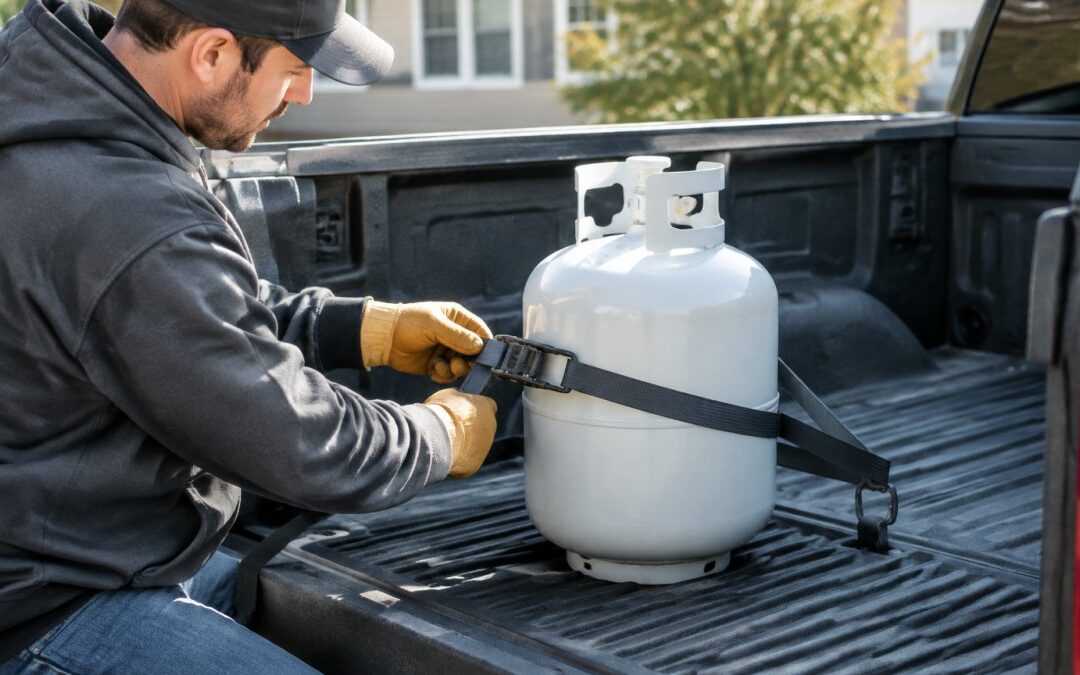
To learn how to safely transport a propane tank, inspect the cylinder for damage, close the valve clockwise until snug, and fit the protective cap. Then load the tank upright and secure it with straps, a stabilizer base, or a seat belt so it cannot tip or roll, keeping the vehicle ventilated.
- Check the requalification date stamped on the collar and reject any cylinder that smells like gas.
- Transporting a cylinder with the valve open is the top cause of gas release in a vehicle.
- Never put a cylinder in a sealed trunk; keep it in the cabin and crack a window.
- In a truck bed, stand the tank upright and strap it at the top and bottom.
- If a cylinder leaks, stop safely, kill ignition sources, ventilate, and call 911 from upwind.
Table of Contents
- Step 1: Inspect the Cylinder Before You Load It
- Step 2: Close the Valve and Cap the Cylinder
- Step 3: Load the Cylinder Upright and Secure It
- How to Transport Propane Tanks in a Truck Bed
- How to Transport a Propane Tank in a Car or SUV
- DOT Regulations on Transporting Propane Tanks
- What to Do If a Cylinder Leaks During Transport
- Order Propane for Delivery Instead of Hauling It Yourself
- Frequently Asked Questions
Step 1: Inspect the Cylinder Before You Load It
Learning how to safely transport a propane tank starts before you lift it. A quick inspection catches the problems that turn a routine errand into an emergency.
Look the cylinder over in good light. Check the body for rust, deep dents, or gouges. Run your hand along the bottom ring for rot.
- Check the requalification date stamped on the collar
- Look for dents, cracks, or heavy rust
- Confirm the valve turns freely
- Reject any cylinder that smells like gas
Fire officials advise securing cylinders upright during transport, and that guidance starts with knowing your tank is fit to travel, as reported by WHSV’s report on fire officials’ propane transport tips.
A common mistake is skipping this check because the tank “worked fine last time.” Rust hides at the base, where you never look.
Step 2: Close the Valve and Cap the Cylinder
Close the cylinder valve tightly before the tank moves. A closed valve is the single most important step in the whole process.
Turn the valve clockwise until it stops. Don’t force it. Then fit the protective plug or valve cap if your cylinder has one.
- Turn the valve clockwise until snug
- Fit the protective plug or cap
- Never lift a cylinder by the valve
- Keep the cap on until you reach your destination
The valve cap is worth keeping on during a bumpy drive, since a valve that opens against a toolbox is a serious hazard.
Watch out: transporting a cylinder with the valve open is the top cause of gas release in a vehicle. Close it every time.
Step 3: Load the Cylinder Upright and Secure It
Load the cylinder upright and strap it so it cannot tip or roll. This is where most people get lazy, and it’s where accidents happen.
Set the tank in a vertical position. Then secure it with straps, bungee cords, or a seat belt. The goal is zero movement.
Choosing the Right Propane Tank Transport Holder
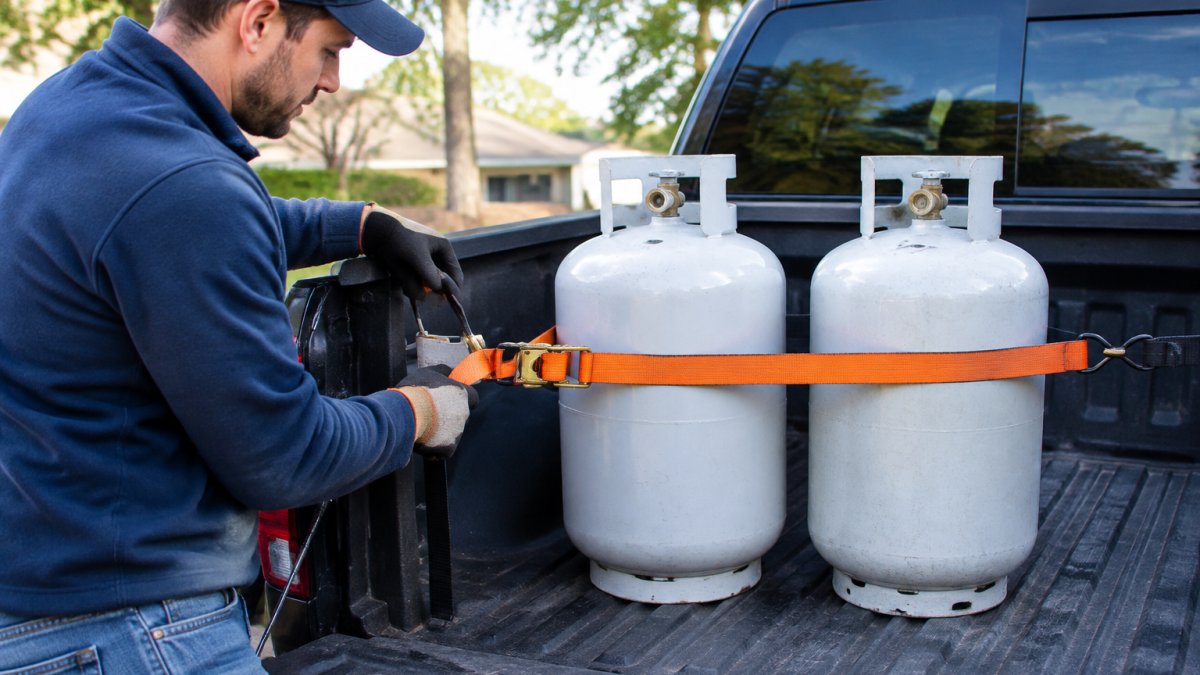
A propane tank transport holder keeps the cylinder upright and locked in place. Options range from simple straps to molded bases that fit the tank’s foot ring.
- Ratchet straps: cheap, strong, and easy to tighten
- Tank stabilizer bases: hold the cylinder vertical on a flat floor
- Cylinder brackets: bolt to a truck bed or trailer
- Seat belt: a workable backup for a car
Pick one that stops both tipping and rolling. A loose tank is a hazard even if it’s upright.
A transport holder keeps the cylinder upright and locked in place; here are the options the article lists.
| Option | What it does |
|---|---|
| Ratchet straps | Cheap, strong, and easy to tighten |
| Tank stabilizer bases | Hold the cylinder vertical on a flat floor |
| Cylinder brackets | Bolt to a truck bed or trailer |
| Seat belt | A workable backup for a car |
How to Transport Propane Tanks in a Truck Bed
A truck bed is one of the better places to haul a cylinder, but only if you secure it. Open air gives you ventilation, which is a real advantage.
Stand the tank upright against the cab or a bed wall. Strap it at the top and bottom. Don’t let it slide toward the tailgate.
- Keep the cylinder away from the exhaust and heat
- Don’t lay it on its side
- Block it so it can’t roll into tools
- Drive directly to your destination
Tossing the tank in loose and relying on gravity to keep it upright is a risk, since a hard stop can tip it onto its side.
How to Transport a Propane Tank in a Car or SUV
A car or SUV is an enclosed space, so ventilation and securing matter more than in a truck bed. The right procedure changes with the body style, and most guides skip that difference.
Start with the same pre-load checks: valve closed, cap on, cylinder upright, and no smell of gas. Then match the method to the vehicle.
Sedan
Never put a cylinder in the trunk. A trunk is sealed from the cabin, so a slow leak collects where you cannot see or smell it, and heat builds fast. Keep the cylinder in the cabin instead: set it upright on the rear floor behind the front passenger seat, run the seat belt through the collar, and buckle it. Leave a rear window cracked an inch or two for airflow. If the cylinder will not fit upright on the floor, do not lay it down to make it fit, use a different vehicle.
SUV or Crossover
An SUV gives you more room but also a large enclosed cargo area. Keep the cylinder in the open cabin, not in a sealed cargo box or under a tonneau-style cover. Set it upright on the floor behind a seat, strap it to a seat bracket or run the seat belt through the collar, and crack a window on the same side. Do not put it in the way of a folding third row that could crush it.
Hatchback or Wagon
Treat the hatch area like a trunk: it is open to the cabin, so it is workable, but only if the cylinder is upright and strapped. Use a cargo strap or a stabilizer base so it cannot roll into the rear glass or a child seat. Crack a rear window. Keeping the cylinder upright and secured is one part of loading cargo safely, and the same care matters when a vehicle itself is being loaded onto a car hauler.
Minivan
A minivan is the easiest enclosed vehicle to use because the floor is flat and low.
Across all four, the rules are the same: upright, capped, strapped, ventilated, out of direct sun, and removed as soon as you arrive.
Watch out: a cylinder that rides on a seat without a strap can slide into the footwell on a hard stop and land valve-first, which is exactly the failure the cap is meant to prevent.
DOT Regulations on Transporting Propane Tanks
Propane cylinders moved on public roads are subject to transportation rules. For personal vehicles, the core practices are keeping the cylinder upright, closed, and secure.
Larger or commercial loads can face stricter requirements than personal grill-tank transport. If you’re moving cylinders for a job site, check the current requirements before you load.
- Keep the valve closed and capped
- Secure the cylinder against movement
- Don’t transport a leaking or damaged cylinder
- Follow the requalification date on the collar
For quick answers on compliance and delivery questions, our Frequently Asked Questions (FAQ) page covers the details. For official rules, check the DOT hazardous materials guidance before hauling anything beyond a standard grill tank.
What to Do If a Cylinder Leaks During Transport
A leak during transport is an emergency, and the response is a sequence, not a single action. For the full step-by-step emergency response, see Steps to Take During a Propane Gas Leak. Work through it in order.
- Stop safely. Pull as far off the roadway as you can, away from traffic, buildings, and storm drains. Put the vehicle in park, set the parking brake, and shut off the engine.
- Kill ignition sources. Do not smoke, do not use a phone near the cylinder, and do not operate power windows, locks, or a cigarette lighter. Those switches can spark. Step away from the vehicle before you make any call.
- Ventilate. Open the windows and doors from outside if you can do so without reaching near the cylinder, then move upwind and well back. Propane is heavier than air, so it collects low, stay out of low spots, ditches, and the vehicle’s footwells.
- Decide on the valve. If you can reach the valve safely and the cylinder is intact, close it clockwise until snug. If the cylinder is damaged, hissing loudly, or the valve will not close, leave it alone.
- Call for help. From a safe distance upwind, call 911 and tell them a propane cylinder is leaking in or near a vehicle. If the leak is small and you closed the valve, you can still have the cylinder checked before you reload it.
Do not try to drive away with a leaking cylinder in the vehicle. Do not put a leaking cylinder back in an enclosed cabin.
Watch out: a phone or key fob used right next to a leaking cylinder can arc and ignite the gas, move away first, then call.
Order Propane for Delivery Instead of Hauling It Yourself
The safest transport is the one you never do. Delivery removes the loading, strapping, and driving risk entirely.
At Discount Propane, you can see pricing online before you order, and fuel can be delivered to your door.
- Check prices before you commit, with no obligation
- Schedule fast, flexible delivery online
- Pay by card, cash on delivery, or Zelle
- Manage your account from your phone or PC
Delivery makes sense for homeowners, contractors, and job sites that need a steady supply. If you’re switching from hauling your own, our Long Island propane delivery and refill services show what’s available, and you can order online. Not sure who to pick? Read our guide on how to choose a reliable propane delivery provider.
Frequently Asked Questions
Is it okay to transport propane tanks laying down?
No. A propane cylinder should stay in an upright, vertical position the whole time it is in a vehicle. Laying a cylinder on its side puts stress on the valve assembly and can let liquid propane reach the valve opening instead of vapor. Fire officials advise securing the cylinder upright during transport. If a cylinder has been on its side, stand it upright and let it settle before connecting it to a grill or appliance.
Can you transport a 20 lb propane tank on its side?
You should not. A 20 lb grill tank is small enough to fit in a trunk or back seat, which tempts people to lay it down, but the valve is the weakest point on the cylinder. Keep it vertical, close the valve, and thread on the protective plug or cap if your cylinder has one. Strap it so it cannot roll or tip, and crack a window for ventilation.
How do you secure a propane tank in a truck bed?
Stand the cylinder upright against the front of the bed or a side wall, then strap it with a ratchet strap or bungee cord rated for the load. A propane tank transport holder or stabilizer ring keeps the base from sliding. Do not let the cylinder rest against loose tools or cargo that can shift into it. Drive directly to your destination and unload the tank as soon as you arrive.
What should you do if you smell propane while driving?
Pull over in a well-ventilated spot away from traffic and ignition sources, shut off the engine, and get everyone out. Do not light anything or use a phone near the vehicle. If it is safe to reach, close the cylinder valve. If the leak continues, leave the cylinder where it is, keep people away, and call the fire department. A leaking or damaged cylinder should never stay in an enclosed vehicle.
Hauling a propane tank safely comes down to a few habits: inspect it, close the valve, keep it upright, and strap it down. Skip a step and you’re gambling with your vehicle and your safety. If you’d rather skip the risk, Discount Propane makes it simple with transparent online pricing, easy scheduling, and flexible payment. Get started with Discount Propane and keep your tank full without ever loading one yourself.
