
Last Updated: November 5, 2026
Quick Summary
The most cost-effective temporary heating for a construction site depends on matching the heater to the space, fuel supply and job length, not just the cheapest rental rate. Electric units suit small enclosed areas, direct-fired heaters suit open ventilated structures, and indirect-fired heaters suit finished or occupied spaces.
- Fuel costs can exceed the rental bill on a long job, so factor them in.
- Ask rental suppliers whether delivery, fuel, setup and minimum periods are included.
- Undersizing a heater usually backfires because it runs continuously at full fuel burn.
- Sealing the envelope and zoning heat cuts fuel use, often more than a more efficient heater.
- Revisit heater sizing when the building envelope closes, since the heat load drops.
Table of Contents
- Top Temporary Heating Options for Construction Sites
- Temporary Electric Construction Heaters: When They Make Sense
- Direct-Fired and Indirect-Fired Heaters Compared
- Temporary Construction Heaters for Rent: Rental Versus Purchase
- Construction Heater Operating Costs and Fuel Consumption
- Temporary Heating Solutions for Large Spaces
- Choosing Your Heater: A Site Checklist Before You Order
- Frequently Asked Questions
Cost-effective temporary heating for a construction site is less about the cheapest heater and more about matching the equipment to the space, the fuel supply and the length of the job. Contractors often make the same mistake: they compare rental rates and skip the fuel bill. A weekly rental figure is only part of the story, and the fuel and setup costs often decide which option actually costs less over a project.
This guide walks through the main options, how each one behaves on a job site, and what to check before you order.
Top Temporary Heating Options for Construction Sites
Most temporary construction heating falls into three groups: electric, direct-fired and indirect-fired units. Each group converts energy into heat differently, and each suits different conditions. Portable and industrial heater equipment generally covers all three.
Start by identifying the space, the power supply and the fuel supply available on site. Those three factors narrow the field quickly. A fully enclosed interior with reliable power points toward electric units. An open structure with no electrical service usually points toward fuel-fired equipment.
Temporary Electric Construction Heaters: When They Make Sense
Electric heaters are often the simplest choice for smaller, enclosed work areas. They produce no combustion exhaust, so they avoid the ventilation and carbon monoxide concerns that come with fuel-fired units. Electric heaters generally suit smaller, enclosed environments.
The trade-off is power. Electric units need adequate amperage and a reliable connection, and running several large units from a single temporary circuit can overload it. For a finishing phase inside a closed building, an electric unit is often the cheapest option per hour of use because it avoids fuel deliveries altogether.
WATCH OUT: Electric heaters in an open or drafty structure lose heat fast. Run the numbers on the enclosed space before you order a fleet of electric units.
Direct-Fired and Indirect-Fired Heaters Compared
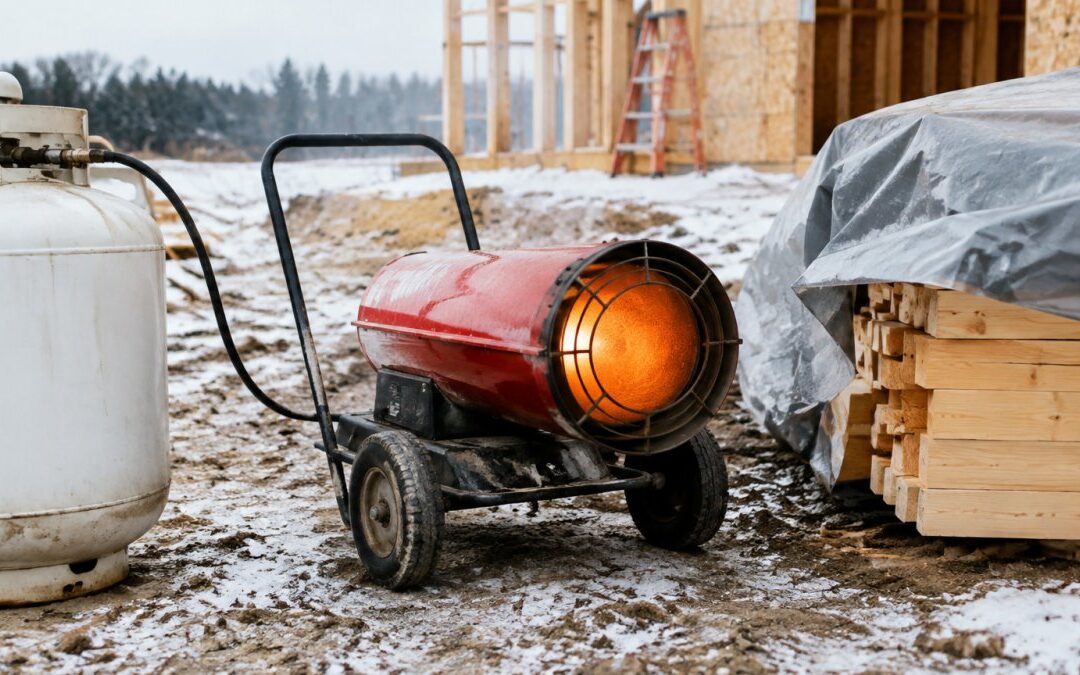
Direct-fired heaters burn fuel and release the combustion products straight into the work area. They are generally efficient and relatively inexpensive to run. The catch is that the exhaust, including moisture and carbon dioxide, goes into the space you are heating. That matters for concrete curing, finish work and indoor air quality, so direct-fired units are best reserved for ventilated, open structures.
Indirect-fired heaters burn fuel in a sealed chamber and push heated air through ducting. The exhaust leaves the building, which makes them the better choice for occupied or finished spaces. They cost more to rent or buy and need more setup, but they protect materials and workers.
| Heater type | Fuel | Best use | Main drawback |
|---|---|---|---|
| Electric | Electricity | Small, enclosed areas | Power capacity limits |
| Direct-fired | Propane, natural gas, diesel | Open, ventilated structures | Exhaust enters the workspace |
| Indirect-fired | Propane, natural gas, diesel | Finished or occupied spaces | Higher cost and setup |
Temporary Construction Heaters for Rent: Rental Versus Purchase
For most contractors, renting makes more sense than buying on a single job.
A common pattern is to build a simple break-even model before you call a supplier.
Weekly rental rates vary with heater size, fuel type, delivery distance, and season. Request a quote from your rental supplier for current pricing.
Before you accept any rental rate, ask what it includes. The line items that most often surprise contractors are:
- Delivery and pickup. Round-trip freight on a large indirect-fired unit can add a meaningful fixed cost to a short rental.
- Fuel. Some rentals arrive dry and you supply propane or diesel; others include a full tank and charge for refills. Confirm which.
- Setup and ducting. Indirect-fired units need duct runs and sometimes a temporary power drop; ask whether labor is included.
- Minimum rental period. Many yards bill a minimum of a week even for a two-day pour, and holiday weeks may bill at a higher rate.
- Damage and cleaning. Concrete dust and job-site grime can trigger cleaning fees on return.
Purchasing can make sense for a contractor who runs heat across many projects every winter, or who needs a specific unit available on short notice.
A middle path many contractors use is to rent the large indirect-fired units for finished-space work and own a small fleet of direct-fired and electric units for routine localized warming. That keeps capital exposure low while covering the jobs that come up repeatedly.
Discount Propane offers commercial propane delivery and refill services across Long Island.
Construction Heater Operating Costs and Fuel Consumption
Rental price alone does not show what a heater costs to run. Fuel is the cost that scales with every hour the unit fires, and on a long job it can exceed the rental bill. The way to control it is to size the heater to the actual heat load and then cut the heat loss the heater has to overcome.
Size the heat load first
A practical sizing method starts with the building envelope and works in four steps:
- Calculate the volume. Multiply the enclosed floor area by ceiling height. A 40 ft by 60 ft enclosure with a 14 ft ceiling is 33,600 cubic feet.
- Estimate the temperature lift. Subtract the expected outdoor design temperature from your target indoor temperature. Heating a 33,600 cubic foot shell from 20°F to 60°F is a 40°F lift.
- Apply a heat-loss factor. A tight, insulated enclosure loses far less heat than an open frame. A common rule of thumb for temporary construction heat is roughly 1 to 2 BTUH per cubic foot per 10°F of temperature lift for a reasonably tight enclosure, rising toward 3 to 5 BTUH for an open or drafty structure. Treat these as planning factors, not engineering values, a tight building lands near the low end and a frame with open bays near the high end.
- Add a margin. Add 15 to 25 percent for door openings, air leakage, and cold-soaked materials.
Running the numbers on the example: 33,600 cubic feet times a 40°F lift, divided by 10, times a mid-range factor of 2 BTUH, gives about 268,800 BTUH before margin, roughly 320,000 BTUH with a 20 percent cushion. That is the number to match against heater output, not the square footage alone.
Watch out: undersizing a heater to save on rental cost usually backfires, because an undersized unit runs continuously, burns fuel at full rate, and still never reaches the target temperature.
Convert output to fuel cost
Once you know the required BTUH, estimate fuel burn. Fuel burn depends on the heater’s rated output and the propane energy content, so calculate consumption against the specific heater’s rating and current propane pricing from your supplier. Diesel and natural gas carry different energy content and prices, so rerun the arithmetic with the fuel you plan to burn. Our guide on how to calculate commercial propane consumption walks through the arithmetic step by step.
Cut the load before you buy more heat
The cheapest BTU is the one you never have to produce. Prep work can cut fuel use considerably, often more than choosing a more efficient heater:
- Seal the envelope. Close doors, tape poly over window openings, and hang temporary tarps across unfinished bays. Air sealing alone can cut the heat load substantially on a frame that would otherwise be open to the wind.
- Zone the heat. Run heaters only in the areas being worked, not the whole structure. A crew finishing one floor does not need heat on three.
- Use thermostats and controls. A thermostat that cycles the burner holds temperature instead of letting the unit run flat out, and it stops the crew from overheating the space to stay warm near a draft.
- Plan fuel deliveries against the schedule. A tank that runs low mid-shift forces an emergency delivery or a shutdown, and both cost more than a scheduled refill.
Also check cost as the project changes. A structure that is open in the framing stage needs far more heat than the same space after windows and doors are installed, so the heat load you calculated in December may be half that by February. Revisit the sizing when the envelope closes and you may be able to drop to a smaller heater or run the large one less.
Temporary Heating Solutions for Large Spaces
Large open spaces, such as a warehouse shell or a multi-story frame, need heat distributed over a big volume. Here, the number of heaters matters as much as their size. Spreading several mid-sized units around the floor often heats the work area more evenly than one large heater in a corner.
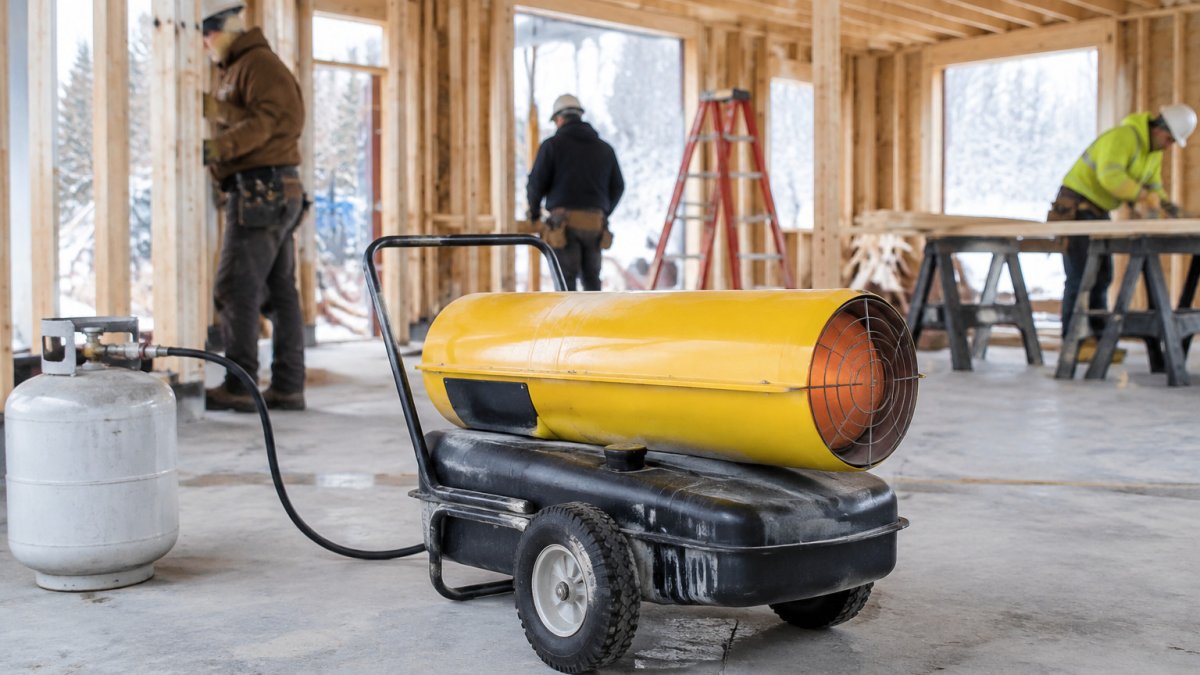
Heat distribution also depends on airflow. Fans and ducting can move warm air to where the crew is working.
Be realistic about the square footage a single unit can cover. Many large-space jobs need a combination of direct-fired units for the open bays and indirect-fired units for areas that must stay clean.
An enclosed structure gets the same heating treatment: the more of the building you seal, the less fuel you burn.
Choosing Your Heater: A Site Checklist Before You Order
Before you place an order, work through this checklist:
- Measure the enclosed square footage and note any large openings.
- Confirm the power supply for electric units and the fuel supply for fuel-fired units.
- Decide whether the space is open (direct-fired may suit) or occupied (indirect-fired is safer).
- Estimate the weekly rental cost and the fuel use over the planned hours.
- Confirm delivery, setup and minimum rental terms with the supplier.
- Check the fuel tank size and refill schedule for the job’s duration.
- Plan ventilation and carbon monoxide monitoring for any fuel-fired unit.
Once you know your fuel needs, the tank size question comes next. Our guide on which propane tank size you need for temporary heating helps you match capacity to the load. For a workshop-scale space, read how to calculate propane tank size for workshops.
Discount Propane offers propane delivery and refill services across Long Island. You can see current propane prices on our website before you commit, with no obligation to order.
Frequently Asked Questions
What is the cheapest portable heating to run?
Operating cost depends on fuel price, heat output, and how long the heater runs. Electric heaters are often simplest to set up where power is available, while fuel-fired units can be more economical for large open areas because they produce more heat per dollar of fuel. Compare the fuel cost per hour of runtime for each option, and factor in how well the enclosure holds heat. Discount Propane’s pricing depends on quantity, delivery dates, and location, so check its website for current prices or request a quote before deciding.
Is it cheaper to rent or buy a temporary construction heater?
Renting usually makes sense for short or uncertain project durations, because it avoids upfront purchase costs and maintenance. Buying can be more economical when heaters will run across many months or several projects. Rental rates vary by heater size and rental term, and fuel is typically a separate ongoing expense. Actual rental costs depend on the specific equipment, rental term, and conditions, so request a quote from your supplier.
What type of temporary heater works best for a large construction space?
Large open spaces generally need higher heat output, so fuel-fired units such as direct-fired propane heaters are commonly used because they deliver substantial BTU capacity. Indirect-fired heaters vent combustion gases outside and are often preferred where air quality matters. Electric heaters suit smaller or well-enclosed areas better. Match heat output to the square footage and insulation of the space, and confirm ventilation requirements before placing any combustion heater indoors.
How do you safely use temporary heaters on a construction site?
Keep heaters at least the distance recommended by the manufacturer from combustible materials, and place them where they will not be knocked over. Ensure adequate ventilation for combustion heaters, and use carbon monoxide monitors in enclosed areas. Refuel only when the heater is off and cool, and inspect hoses and connections regularly. Follow the manufacturer’s instructions and any applicable OSHA guidance for temporary heating equipment on your job site.
