
Last Updated: October 23, 2026
Quick Summary
Improving energy efficiency on temporary construction sites starts with a one-week energy audit that logs every fuel and power user, run hours and where waste hides. From that baseline, right-size generators to peak simultaneous load, zone heating, cut idling and track a small set of KPIs against targets.
- Walk the site at night with a flashlight to spot lights and heaters left running in empty areas.
- Size generators to peak simultaneous load plus a 20 to 25 percent margin, not double the nameplate sum.
- Heat only occupied zones and set thermostats lower at night and on weekends.
- Shut off engines when machines sit more than a few minutes and stagger startup to avoid demand spikes.
- A common first target is a 5 to 10 percent cut in fuel per workday from idling and heating setbacks.
Table of Contents
- Why Energy Efficiency Matters on Temporary Construction Sites
- Step 1: Run a Construction Site Energy Audit First
- Step 2: Right-Size Temporary Construction Site Power
- Step 3: Choose Energy-Efficient Construction Equipment
- Step 4: Improve Temporary Construction Site Heating
- Step 5: Cut Idling and Manage Loads
- Step 6: Track Energy Use With Targets and KPIs
- Common Mistakes That Waste Energy on Site
- Frequently Asked Questions
Why Energy Efficiency Matters on Temporary Construction Sites
Energy efficiency on temporary construction sites means getting the same work done with less fuel and electricity, and it starts with one uncomfortable fact: most site energy is wasted, not used.
Why does it matter? Site energy also has an environmental cost, and research on energy efficiency at building sites shows that both drivers and barriers to improvement sit with the people running the site, not the technology.
The good news: most fixes are operational, not capital projects.
Step 1: Run a Construction Site Energy Audit First
A construction site energy audit is a simple count of what uses power, for how long, and where waste hides. It takes a day and costs nothing but time.
Here is how to run one:
- List every fuel and power user: heaters, generators, lighting, compressors, lifts.
- Log run hours for each item over one typical week.
- Note what runs when nobody is working.
- Record where power comes from: grid hookup, generator, or both.
That log becomes your baseline. Without it, you cannot prove savings or spot the worst offenders. Most sites find the biggest waste in heating and idling, not in heavy equipment.
Walk the site at night with a flashlight. Lights left on in empty trailers and heaters running in finished areas show up fast, and nobody argues with what they can see.
Step 2: Right-Size Temporary Construction Site Power
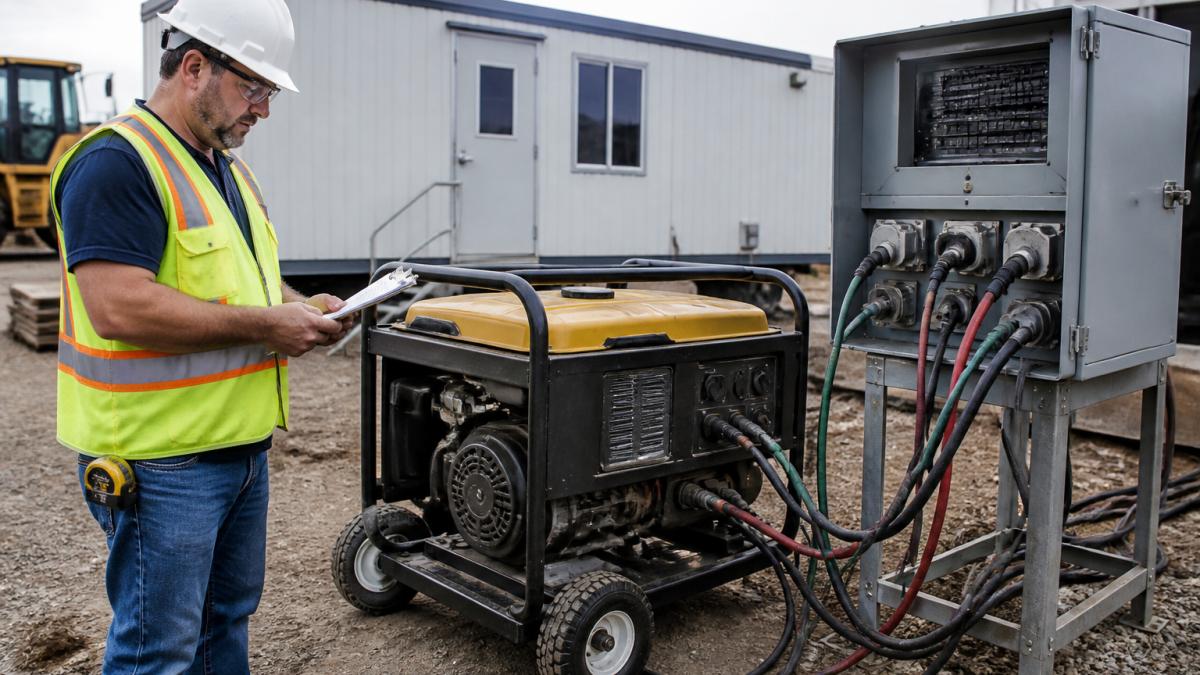
Temporary construction site power is usually oversized, and oversized generators burn fuel at partial load, which is the least efficient way to run them. Match supply to actual demand, and match the power source to the load profile, not to habit.
Build a real load profile, not a nameplate sum
Most site teams size generators by adding up every tool’s rating and doubling it. That is how you end up with a 200 kW unit carrying a 40 kW load at 20 percent, the worst efficiency band for a diesel generator. Do this instead:
- From your audit log, list each load with its rated draw and its actual run hours per day.
- Separate continuous loads (heaters, pumps, compressors, lighting) from intermittent loads (welders, lifts, chop saws, chargers).
- Identify the peak simultaneous load, the worst realistic moment when the big draws overlap, not the sum of everything on site.
- Add a safety margin of roughly 20 to 25 percent for startup surges and future tools, not 100 percent.
- Compare that peak to the generator’s rated output at your expected load factor, not its standby rating.
A common pattern is a site that needs 35 to 50 kW of continuous load but is running a 150 kW diesel unit. Dropping to a 60 kW unit, or splitting across two 30 kW units that can be staged, typically cuts fuel burn per delivered kilowatt-hour substantially because the generator runs closer to its efficient band.
Choose the right power source for the load
There is no single best temporary power source; there is a best source for each load profile. Weigh them honestly:
- Grid connection (temporary service): Cheapest per kWh where a utility drop is available and permitted, and the lowest on-site emissions. The trade-offs are lead time for the utility connection, monthly service charges, and the fact that a single outage stops the site. Best for long-duration sites with steady loads and reliable utility access.
- Diesel generators: Highest power density and best for heavy continuous loads and high-altitude or cold starts. Downsides are fuel logistics, noise, maintenance intervals, and higher particulate and NOx emissions. Best for short, high-load phases and remote sites.
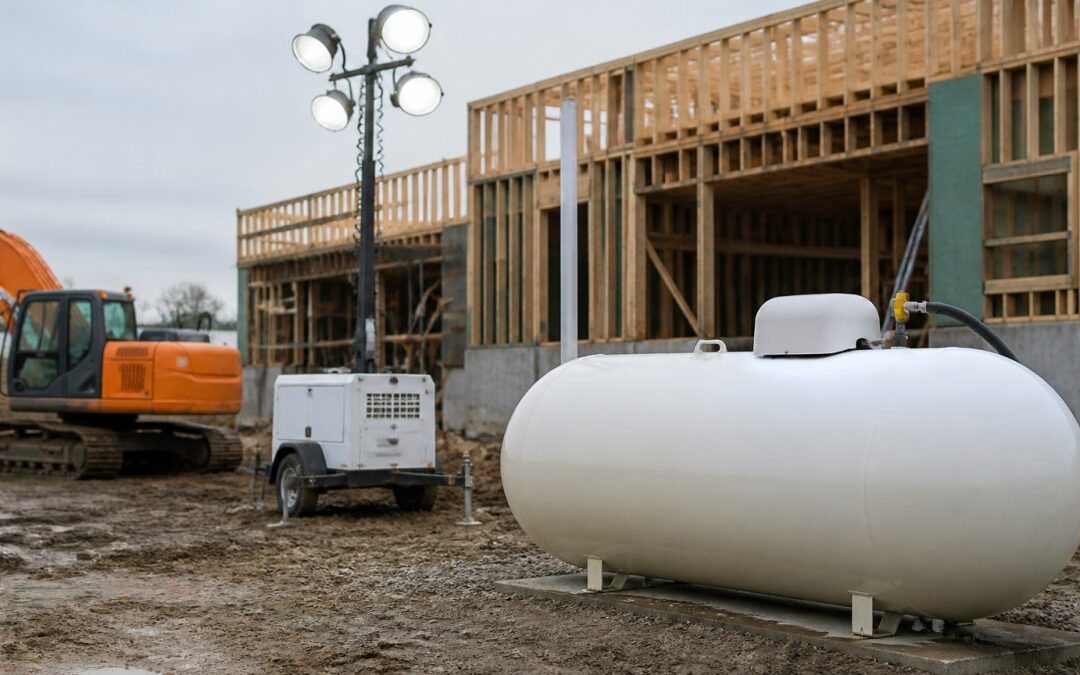
- Propane generators: Cleaner burn, lower maintenance, and no fuel degradation in storage, which matters on sites where fuel sits for weeks. Propane has lower energy density per gallon than diesel, so plan tank capacity and delivery cadence around that. Best for mid-size loads, cold-weather sites, and where emissions or fuel storage are concerns.
Right-size in practice
Use the audit numbers to size your setup:
- Add up peak simultaneous load, not the sum of every tool’s rating.
- Add a modest safety margin, not double.
- Split loads across two smaller units if demand swings during the day.
Arrange fuel supply before the site opens, not the week the tanks run dry. Reliable propane delivery for construction sites keeps heaters and generators running without daily refueling runs.
Ask your generator supplier for the fuel consumption curve at 25, 50, 75, and 100 percent load. If they cannot produce it, that is a sign the unit is not the right fit for a site that will run at partial load most of the day.
Step 3: Choose Energy-Efficient Construction Equipment
Energy-efficient construction equipment cuts fuel use through better matching, not bigger engines. The main lever is choosing the right power source for each job.
What most guides miss: generator fuel choice changes both cost and emissions. Propane burns cleaner than diesel and needs less maintenance, while diesel wins on heavy continuous loads. If you are weighing the two, this comparison of propane generators vs diesel generators for business lays out the trade-offs.
Other equipment choices that pay off:
- Use electric tools where grid power is available.
- Pick the smallest machine that does the job.
- Rent efficient models for short jobs instead of hauling old units.
Step 4: Improve Temporary Construction Site Heating
Temporary construction site heating is often the largest single fuel cost in cold months, and it is the easiest place to waste money. Heat only the spaces people are working in.
Practical controls:
- Zone the site. Heat occupied areas, not the whole shell.
- Set thermostats lower at night and on weekends.
- Seal openings near heaters so warm air stays put.
Sizing matters as much as fuel choice. Our guide to propane for construction site heaters covers safe sizing and placement for job site units.
Running a heater in an unvented, sealed space is a carbon monoxide risk. Follow the manufacturer’s ventilation requirements every time, and never block a unit’s air intake to “get more heat.”
Step 5: Cut Idling and Manage Loads
Idling is the quiet budget killer. Equipment left running during breaks, lunch, and shift changes burns fuel for zero output.
Set simple rules and enforce them:
- Shut off engines when machines sit more than a few minutes.
- Stagger startup so you do not spike peak demand.
- Run compressors and lifts only when needed.
Load management also means scheduling heavy draws together. Running the welder, compressor, and heater at once forces a bigger generator to run inefficiently. Spreading them out lets a smaller unit carry the site.
Step 6: Track Energy Use With Targets and KPIs
Energy monitoring turns good intentions into numbers you can manage. Set a few targets, check them weekly, and translate them into dollars and emissions so the crew and the project manager see the same scoreboard.
Pick a small set of site-specific KPIs
Track these, and no more than these, at first:
- Fuel delivered per week, by type, the simplest proxy for site energy spend.
- Generator run hours versus actual work hours, a ratio near 1.0 means the generator is running only when work is happening; a ratio well above 1.0 exposes idle runtime.
- Heating fuel per square foot of conditioned space per week, lets you compare zones and catch a heater left on in an empty trailer.
Turn the baseline into targets
Your one-week audit log is the baseline. Set targets as percentage reductions against it, not as absolute numbers pulled from a textbook:
- Establish the baseline for each KPI over one full work week.
- Set a first target that is achievable, a common pattern is a 5 to 10 percent reduction in fuel per workday in the first month by fixing idling and heating setbacks alone.
- Review weekly and reset the target only after two consecutive weeks of hitting it.
- Post the numbers where the crew sees them; sites that track fuel use tend to tighten up without being told twice.
Translate savings into cost and payback
This is the step most site teams skip, and it is the one that gets measures funded. For each candidate measure, estimate:
- Annual or project fuel savings: baseline fuel volume minus expected fuel volume after the measure, times the delivered fuel price per gallon.
- Implementation cost: equipment rental or purchase, labor to install controls, any utility connection fees.
- Simple payback: implementation cost divided by savings per month. A measure that pays back inside the project duration is an easy yes; one that does not may still be worth it for emissions or compliance reasons, but say so explicitly.
A worked pattern: if a site burns 500 gallons of diesel a week at partial load and right-sizing plus idling controls cuts that by 15 percent, that is 75 gallons a week, roughly 300 gallons a month, multiplied by your delivered price per gallon gives the monthly savings, and divided into the cost of the smaller generator rental gives a payback period in months.
To set targets, you need real consumption figures. This guide on how to calculate commercial propane consumption walks through the math step by step.
A KPI without a dollar figure is a hobby. Convert every metric into cost per workday and emissions per phase, and the efficiency conversation changes from opinion to arithmetic.
Common Mistakes That Waste Energy on Site
The same handful of mistakes show up on almost every site. Fix these first.
| Mistake | What It Costs | Fix |
|---|---|---|
| Oversized generator | Fuel burned at partial load | Right-size from the audit |
| Heaters running in empty areas | Wasted fuel all night | Zone and set back thermostats |
| Equipment idling at breaks | Fuel for zero output | Shut-off rule, weekly checks |
| No baseline data | No way to prove savings | One-week energy log |
| Emergency refueling runs | Downtime and higher cost | Scheduled bulk delivery |
One more: buying fuel in small, frequent top-offs. Bulk delivery usually beats repeated small orders, and our breakdown of whether bulk propane delivery is cost effective for contractors explains when it pays.
The cheapest energy is the energy you never burn. Audit first, right-size second, and track everything after.
Frequently Asked Questions
How can construction sites reduce energy consumption?
Start with a site energy audit to find where fuel and electricity go. Then right-size temporary power so generators run near their efficient load, switch to LED lighting and controlled heating, and cut engine idling. Setting simple targets and tracking fuel use each week keeps savings visible. Together these steps can lower both fuel bills and emissions without slowing the schedule.
What uses the most energy on a construction site?
Temporary power generation, site heating, lighting, and diesel equipment typically dominate. Generators running at low load waste fuel, and unsealed temporary enclosures force heaters to run longer. Idling trucks and lifts add up too. An energy audit that logs generator hours, heater run time, and lighting schedules will show which category is largest on your site, so you fix the biggest cost first.
How can contractors improve the efficiency of temporary site heating?
Match heater size to the space, seal openings, and use thermostatic controls instead of running heaters continuously. Zone heating so only occupied areas are warmed, and schedule heat around work hours. Choosing the right fuel and delivery setup, such as scheduled propane delivery for job site heaters, avoids emergency refills and lets you plan usage. These steps cut fuel consumption while keeping crews comfortable.
How should contractors monitor energy use on a construction site?
Record fuel deliveries, generator run hours, and electricity use weekly, then compare against a baseline from your energy audit. Set targets such as gallons per workday or kilowatt-hours per square foot of temporary space. Review the numbers at toolbox talks and adjust equipment or schedules when usage drifts. Simple logs or a shared spreadsheet are enough to spot waste early and prove savings.
Site energy waste is a choice, and so is fixing it. Discount Propane makes the fuel side simple: check real-time prices online before you order, schedule delivery in minutes, and pay by PCI-compliant credit card, cash on delivery, or Zelle, with no commitment required. Get started with Discount Propane and keep your site fueled without the guesswork.
