
Table of Contents
- Bulk Propane Delivery vs Cylinder Exchange: Which Fits Your Job Site?
- The Real Cost Breakdown: Bulk Pricing vs Retail Refill Costs
- Commercial Propane Tank Rental Rates: What Contractors Actually Pay
- How Bulk Delivery Reduces Downtime and Boosts Job Site Productivity
- Propane Heating System Conversion Costs: Is Switching Worth It?
- Managing Seasonal Price Volatility with Fixed-Rate Contracts
- Safety and Compliance: What Contractors Need to Know About On-Site Storage
- Conclusion: Making the Bulk Propane Decision for Your Operation
- Frequently Asked Questions
Last Updated: September 12, 2026
Bulk Propane Delivery vs Cylinder Exchange: Which Fits Your Job Site?
For contractors weighing whether bulk propane delivery is cost effective, the short answer is yes, with conditions. Bulk delivery wins when a site burns enough fuel to justify a tank and scheduled refills, while cylinder exchange stays cheaper for small, short-duration jobs. This guide from Discount Propane breaks down the real numbers, the fees nobody quotes upfront, and how to decide which model fits your operation.
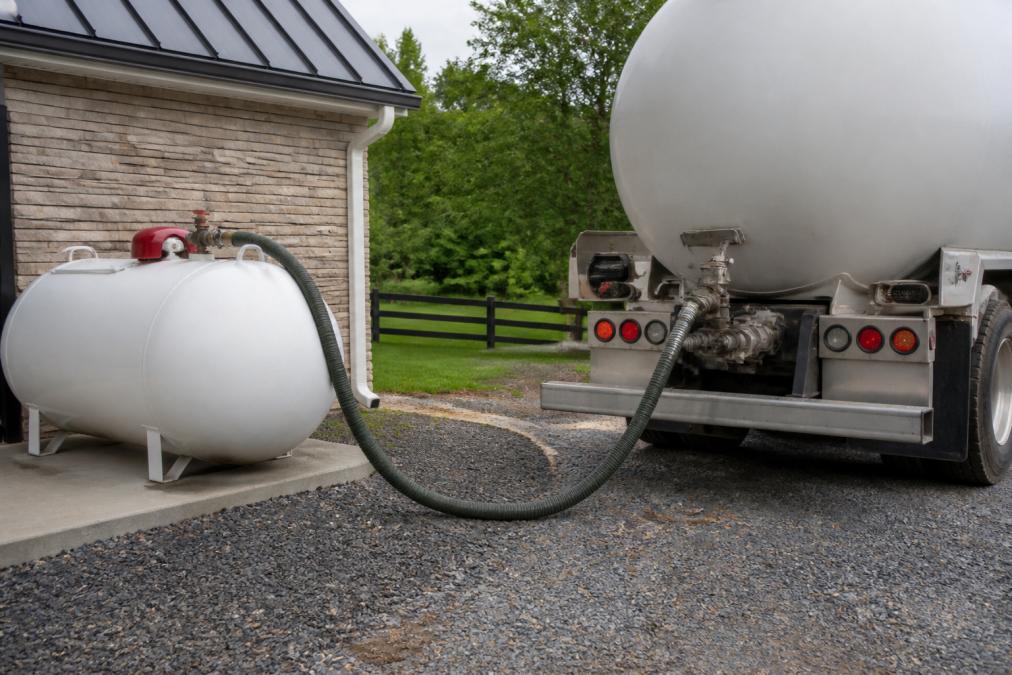
Bulk propane delivery is the practice of refilling a permanently installed on-site tank from a delivery truck rather than swapping portable cylinders. The economics hinge on volume: the more gallons a site consumes, the more the per-gallon rate and labor savings favor bulk.
When Cylinder Exchange Still Makes Sense
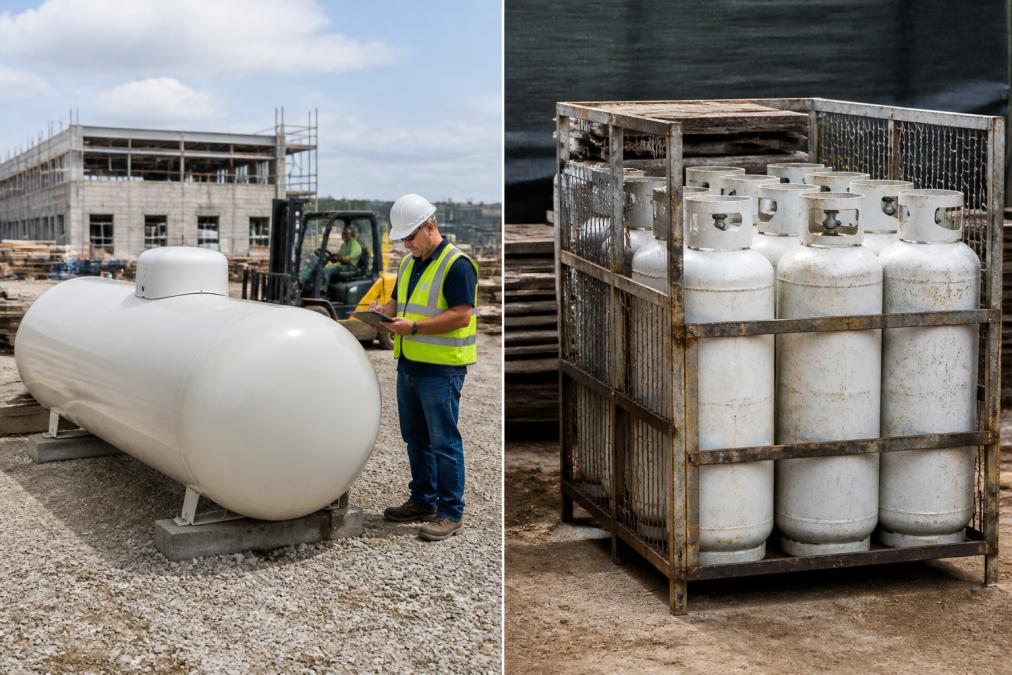
Cylinder exchange makes sense for short pours, punch-list work, and sites without room for a tank. A common mistake is switching to bulk before a job generates enough runtime to cover tank rental and delivery minimums. If a crew runs a single heater for two weeks, cylinders usually win.
When Bulk Delivery Beats Cylinder Exchange
Bulk delivery beats cylinder exchange once fuel consumption becomes predictable and continuous. Scheduled refills remove the crew member who drives to a supplier, and larger tank capacity means fewer run-outs during a cold snap. For multi-month builds, that shift alone changes job site logistics.
| Factor | Cylinder Exchange | Bulk Tank Delivery |
|---|---|---|
| Best for | Short jobs, tight sites | Long builds, high runtime |
| Upfront cost | Low | Tank and setup cost |
| Per-gallon rate | Higher retail rate | Lower volume rate |
| Refill frequency | Frequent swaps | Scheduled deliveries |
| Labor | Crew handles cylinders | Supplier handles fill |
The Real Cost Breakdown: Bulk Pricing vs Retail Refill Costs
Bulk pricing vs retail refill costs is where the math gets interesting, and where most comparisons stop too early. Retail cylinder refills carry a higher cost per gallon because you pay for handling, swapping, and small-volume logistics. Bulk delivery spreads those costs across a full tank, so the per-gallon rate drops as volume rises.
The catch is that the sticker rate is not the real rate. Delivery surcharges, hazmat fees, and tank rental agreements all change the effective number. Contractors who track fuel consumption against total invoiced gallons, not the advertised rate, make better procurement decisions.
The Effective Per-Gallon Formula
Most competitors stop at “bulk is cheaper per gallon.” That is only half the equation. The number that actually hits your job cost is the effective per-gallon rate:
Effective per-gallon rate = (fuel charges + delivery surcharges + hazmat fees + tank rental + minimum-delivery penalties + after-hours fees) ÷ total gallons delivered
Run that formula on your last three invoices. A common pattern is that the advertised rate looks competitive, but once tank rental and a small-drop surcharge are folded in, the effective rate on a low-volume site can land close to, or above, what cylinder exchange would have cost. The formula is what turns a vague “bulk is cheaper” claim into a number you can defend in a bid.
Hidden Fees That Inflate Your Per-Gallon Rate
- Delivery surcharges: typically triggered when a route is long, a drop is small, or the site sits outside a standard delivery zone. Often quoted as a flat trip charge rather than a per-gallon add.
- Hazmat fees: tied to transporting and handling regulated fuel. These are usually a flat line item per delivery, so they hurt small drops disproportionately, a 100-gallon drop absorbs the same hazmat charge as a 500-gallon drop.
- Tank rental agreements: monthly or annual charges separate from fuel. A larger tank lowers refill frequency but raises the rental line, so the two move in opposite directions.
- Minimum delivery charges: applied when a tank is not filled to capacity. If your site only burns 40% of tank capacity between scheduled stops, you may pay a full-tank minimum anyway.
- Emergency or after-hours fees: common during peak seasonal demand, when crews need a fill outside the normal route window.
Why Small Drops Are the Silent Budget Killer
Flat fees do not scale with volume. A hazmat charge, a trip charge, and a minimum-delivery penalty are the same dollar amount whether you take 100 gallons or 500 (phmsa.dot.gov). That means the effective per-gallon rate on a small drop can be dramatically higher than the advertised rate, and contractors who only compare sticker prices never see it.
The practical fix is to size the tank so each scheduled delivery lands near full capacity. That single decision spreads the flat fees across more gallons and pulls the effective rate down without renegotiating anything.
Signing a tank rental agreement without reading the removal and minimum-use clauses is the most expensive mistake contractors make. Some agreements lock in annual fees even when a site sits idle, so the tank costs money whether or not it holds fuel.
A Worked Example
Say a site takes a 250-gallon drop. The advertised rate is one number, but the invoice also carries a trip charge, a hazmat line, and a prorated month of tank rental. Divide the total invoice by 250 gallons and compare that to the cylinder-exchange price your crew was paying. If the effective rate is not clearly lower, the site is not yet a bulk candidate, and the fix is usually a bigger tank or a longer delivery interval, not a different supplier. Optimizing these logistics often reveals that applying similar bulk purchasing strategies to other site essentials can further consolidate overhead costs.
Commercial Propane Tank Rental Rates: What Contractors Actually Pay
Commercial propane tank rental rates depend on tank size, site access, and contract length, so there is no single national figure. A larger tank lowers refill frequency and can improve the volume rate, but it also carries a higher rental line. The trade-off is straightforward: pay more for capacity, or pay more in deliveries.
Contractors should ask three questions before signing: what the rental includes, whether the rate changes with consumption, and what removal costs if the site closes early. Pricing for Discount Propane’s own service depends on quantity, dates, and delivery, so check the current pricing page.
How Bulk Delivery Reduces Downtime and Boosts Job Site Productivity
Downtime reduction is the benefit contractors underestimate most. Every cylinder swap pulls a worker off task, and every run-out stalls heaters or equipment until a refill arrives. Bulk delivery converts those interruptions into a scheduled event that happens whether or not anyone is watching the gauge.
The productivity gain compounds across a project. Fewer supply runs mean fewer truck trips, less fuel consumption tracking by hand, and more predictable job site logistics. For operations running forklifts or temporary heat, that reliability is worth more than a few cents per gallon.
Track gallons per operating hour for two weeks before choosing a tank size. That single number tells you the refill frequency you need and prevents both run-outs and oversized tank rental fees.
Propane Heating System Conversion Costs: Is Switching Worth It?
Propane heating system conversion costs vary widely by system type, building size, and existing infrastructure, so treat any flat estimate with suspicion. A conversion typically involves a new appliance, line work, and a tank or supply arrangement, and the payback depends on what you were burning before.
For contractors advising clients, the honest framing is that conversion is a capital decision, not a fuel decision. The operating savings show up over years, while the upfront cost lands in one budget cycle. Compare the full installed cost against projected annual energy expenditure before recommending a switch.
Managing Seasonal Price Volatility with Fixed-Rate Contracts
Seasonal demand drives propane market volatility, and that volatility hits contractors hardest in winter when sites cannot afford a delay. Fixed-rate contracts and fuel hedging are the two tools that blunt it. A fixed-rate contract locks a per-gallon price for a set term, while hedging manages exposure across a longer horizon.
Neither is free. Fixed-rate contracts often carry a slightly higher base rate in exchange for price stability, and they may include usage minimums. The right choice depends on how much budget certainty your operation needs versus how much you are willing to pay for it.
| Strategy | What It Does | Best For | Watch Out For |
|---|---|---|---|
| Fixed-rate contract | Locks per-gallon price for a term | Budget stability | Usage minimums |
| Spot pricing | Pay current market rate | Flexible, low-volume sites | Winter spikes |
| Fuel hedging | Manages long-term exposure | Large annual volume | Complexity, fees |
| Pre-buy | Pays ahead for winter gallons | Predictable seasonal use | Storage and timing |
Safety and Compliance: What Contractors Need to Know About On-Site Storage
On-site storage is regulated, and ignoring the rules is a liability problem, not just a paperwork one. Tank placement, clearance distances, and signage requirements are set by code, and requirements differ by tank size and installation type. The NFPA 58 Liquefied Petroleum Gas Code is the standard most jurisdictions build their propane rules around.
Most cost-focused articles skip this entirely. That is a mistake, because a compliance failure can cost more than any per-gallon savings, in fines, shutdowns, or an incident that ends a project. Here is what actually applies to a contractor running propane on a job site.
The Two Rulebooks That Apply
- NFPA 58 governs how propane is stored, handled, and installed. It sets tank separation distances from buildings, property lines, and ignition sources; it addresses container placement, piping, and relief-valve venting. Local fire codes typically adopt NFPA 58 and may add stricter amendments.
- OSHA governs worker safety around the fuel. Under the general industry and construction standards, propane is a hazardous material that triggers requirements for employee training, hazard communication, and safe handling procedures (osha.gov). Workers who handle or work near the tank need to know shutoff locations and emergency response steps.
What Contractors Actually Have to Do
- Confirm permitting before the tank is set. Placement and installation generally require a permit and inspection. Setting a tank first and asking questions later is how projects get red-tagged.
- Respect clearance distances. NFPA 58 sets minimum separation between the tank and buildings, property lines, and ignition sources, and the required distance scales with tank size. A tank that fits a small site may not meet clearance for a larger one.
- Keep documentation on site. Permits, inspection records, and supplier documentation should live with the job file, not in a truck that leaves at the end of the day.
- Train crews on shutoff procedures. Everyone who works near the tank should know where the shutoff is and what to do if they smell gas.
- Maintain signage and access. Tanks need to be accessible for delivery and marked per code so emergency responders can identify them.
Why This Belongs in the Cost Conversation
Compliance is a cost line, not a footnote. A supplier that handles permitting support, correct tank sizing for clearance, and documentation during installation removes a large share of that burden, and prevents the far larger cost of a failed inspection or a mid-project shutdown. When you compare suppliers, ask what compliance support is included. It is often worth more than a few cents per gallon.
The cost-effectiveness question is really a volume question. Bulk delivery pays off when a site’s fuel consumption is high and steady enough to justify a tank, scheduled refills, and the rental line that comes with them, and it only stays cost-effective if the installation clears code the first time.
Conclusion: Making the Bulk Propane Decision for Your Operation
Discount Propane was built to remove that guesswork. You can see propane prices before ordering, schedule fast and flexible delivery without commitment, and manage your account securely from a PC or phone, with PCI-compliant credit card processing plus cash on delivery or Zelle. Get a propane price from Discount Propane and compare the real number against your current fuel spend.
Frequently Asked Questions
Is buying propane in bulk cheaper for construction projects?
Bulk propane delivery typically lowers your cost per gallon because you are buying larger volumes at wholesale rates rather than paying retail refill prices on individual cylinders. For construction projects running heaters or equipment daily, the volume discount can be significant. However, the total savings depend on your consumption rate, tank rental fees, and whether delivery surcharges apply. Contractors should calculate their monthly usage and compare the fully loaded bulk rate against cylinder exchange costs before committing to a contract.
What are the hidden costs of bulk propane delivery for contractors?
Common hidden costs include hazmat fees, delivery surcharges for remote or difficult-access job sites, tank rental agreements that lock you into annual terms, and minimum usage requirements that trigger penalties if you fall short. Some contracts also include automatic price adjustments tied to market volatility without a cap. Ask for a full fee schedule in writing before signing, and confirm whether the quoted per-gallon rate includes all regulatory and logistics charges.
What volume of propane usage justifies a bulk delivery contract?
As a general rule, contractors using more than 500 gallons per month across a job site or multiple sites benefit most from bulk delivery contracts. Below that threshold, cylinder exchange may remain more practical because you avoid tank rental fees and minimum delivery requirements. If your usage fluctuates seasonally, a bulk contract with flexible delivery scheduling can still make sense during peak months. Track your fuel consumption for two to three months to establish a baseline before deciding.
How do commercial propane tank rental rates work?
Commercial propane tank rental rates vary by tank size, installation requirements, and contract length. Most suppliers charge an annual rental fee that covers the tank, regulator, and basic maintenance. Some companies waive the rental fee if you commit to a minimum annual volume. Always clarify whether the rental agreement includes tank monitoring, emergency refills, and removal costs at the end of the contract. Rates depend on tank capacity, site accessibility, and your supplier’s pricing structure, so request a written quote.
How does bulk propane delivery impact job site productivity?
Bulk propane delivery reduces downtime by ensuring a consistent fuel supply without someone needing to swap cylinders or make emergency retail runs. Scheduled deliveries mean your heaters and equipment stay running, which keeps crews working through cold snaps. Fewer supply interruptions also reduce the risk of project delays tied to equipment shutdowns. For sites running multiple heaters or propane-powered forklifts, on-site storage with automatic refills eliminates the labor hours spent managing fuel inventory manually.