
Table of Contents
- Why Professional Propane System Inspection Matters
- What to Expect During a Propane Inspection
- Finding and Vetting a Qualified Propane Technician
- Propane System Inspection Checklist for Homeowners
- Understanding Propane System Inspection Cost
- What to Do After Your Inspection
- Frequently Asked Questions
Last Updated: October 17, 2026
Why Professional Propane System Inspection Matters
A propane system inspection is a comprehensive safety evaluation of your gas lines, appliances, and fuel delivery infrastructure to identify potential hazards before they become dangerous.
Most homeowners don’t think about their propane system until something goes wrong. Professional inspectors catch problems early: corroded piping, loose fittings, damaged regulators, and improper ventilation that you can’t see or smell.
The stakes are real. A gas leak might go unnoticed for weeks. Improperly connected appliances can produce carbon monoxide (the CDC). Pressure fluctuations can damage your system.
Schedule your propane system inspection before the heating season begins, not during it. Winter demand means longer wait times, and you don’t want to discover problems when you need heat most.
What to Expect During a Propane Inspection
A thorough propane system inspection follows a structured process that examines every component from the tank to the appliances. Understanding what happens during the visit helps you prepare and recognize quality work.
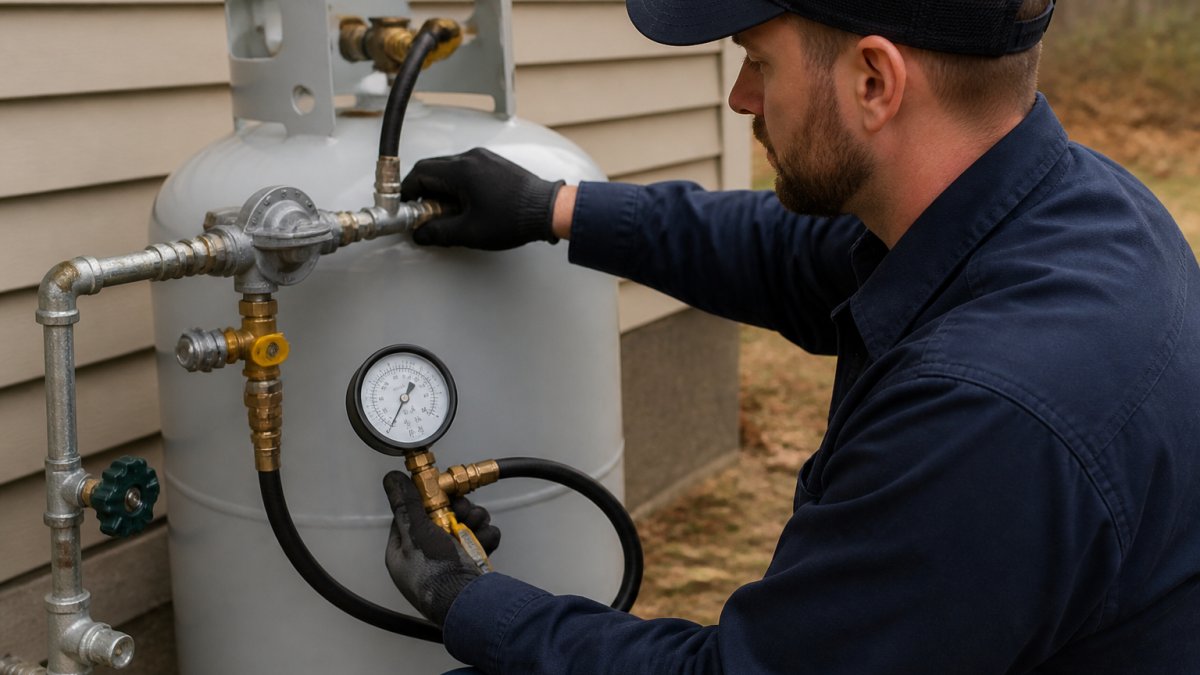
The inspector arrives with diagnostic tools: pressure gauges, leak detection equipment, and sometimes specialized cameras to examine inaccessible piping.
Gas Line and Piping Assessment
Your gas lines carry fuel from the tank to every appliance in your home. The inspector checks for visible corrosion, damage, or improper installation. They examine connections at the tank, along the exterior and interior runs, and at each appliance connection point.
The technician also verifies that piping is sized correctly for your system’s demand. Undersized lines create pressure drops that reduce appliance performance. Oversized lines are wasteful and can trap condensation that damages the system.
Gas Appliance Connections and Safety
Each appliance, your furnace, water heater, stove, or dryer, must be properly connected and vented. The inspector checks that connections are tight and corrosion-free.
Venting is critical. Appliances that burn gas produce combustion byproducts including carbon monoxide (the EPA). These must exit safely through proper vents to the outside. The inspector ensures vent pipes are clear, properly angled, and undamaged. Blocked or damaged vents create dangerous indoor air quality problems.
Leak Detection and Pressure Testing
This is where specialized equipment becomes essential. The inspector uses a leak detection device, usually an electronic sniffer or soap solution, to identify even tiny leaks at every connection point. Many small leaks produce no smell and go undetected for months.
Pressure testing measures whether your system holds pressure over time. The technician isolates sections of your piping and tank, applies a test pressure, and watches for drops that indicate leaks. This test catches problems that visual inspection alone would miss.
Never attempt DIY pressure testing or leak detection. Improper testing can damage your system or create safety hazards. A qualified technician has the right equipment and knows safe procedures.
Finding and Vetting a Qualified Propane Technician
Not every handyperson who works with gas is qualified to inspect propane systems. Because propane is stored under pressure and burned in appliances that can produce carbon monoxide, the person you hire needs specific training, credentials, and insurance. This section walks through how to verify each one before you book.
Credentials to Confirm
Start with the credentials that are commonly recognized in the propane trade:
- National Propane Gas Association (NPGA) certification. NPGA offers training and certification programs for propane professionals, including the Certified Employee Training Program (CETP). Ask which CETP modules the technician has completed, especially the ones covering residential systems and appliance connection.
- State or local licensing. Many states and municipalities require a license for propane or gas service work. Requirements vary widely, so check with your state’s licensing board or your local building department. Ask for the license number and verify it directly with the issuing agency rather than relying on a business card.
- EPA Section 608 certification. This is required for handling refrigerants, not propane itself, but some technicians hold it as part of broader HVAC work. Treat it as a supplement, not a substitute, for propane-specific training.
- Manufacturer training. Technicians who service specific appliance brands often complete manufacturer training. If your furnace or water heater is a particular brand, ask whether the technician has been trained on it.
Insurance and Business Verification
A reputable inspector should carry both general liability insurance and workers’ compensation coverage. Ask for a certificate of insurance and confirm the policy is current. If a technician is injured on your property and the company does not carry workers’ compensation, you could face liability. Also confirm the business is registered in your state and has a physical address and phone number you can verify.
Questions to Ask Before Booking
A short phone interview separates thorough inspectors from quick-visit operations. Ask:
- What does your standard residential propane inspection include, and what costs extra?
- Do you perform a pressure test, and is it included in the quoted price?
- How long does the inspection typically take for a home with [number] appliances?
- Will I receive a written report, and what does it cover?
- What happens if you find a leak or a safety issue during the visit?
- Can you provide references from recent residential inspections?
A thorough inspection of a typical home takes roughly one to two hours depending on the number of appliances and the length of the piping runs. Be cautious of anyone who quotes a 20-minute visit or refuses to put the scope in writing. Establishing this level of professional rigor is a standard practice that should extend to all home inspection services performed throughout your property.
Red Flags
- No verifiable license number or insurance certificate.
- A quote that is dramatically lower than others without a clear reason.
- Refusal to provide a written report or to itemize what the inspection covers.
- Pressure to approve repairs on the spot without a written estimate.
- No experience with residential propane systems specifically.
Getting Referrals
Ask neighbors, your propane supplier, and local HVAC contractors for referrals. Your propane supplier often knows which local technicians regularly service residential systems and can tell you who has a good reputation. Check online reviews for patterns rather than single complaints, and confirm that reviewers describe residential propane work rather than only commercial or new-installation projects.
Verify credentials before the visit, not after. A few minutes on your state licensing board’s website and a request for a certificate of insurance will tell you more than any sales pitch.
Propane System Inspection Checklist for Homeowners
Use this checklist to prepare for your inspection and verify the technician covers essential ground.
| Inspection Component | What Gets Checked | Why It Matters |
|---|---|---|
| Propane tank exterior | Rust, corrosion, damage, proper grounding | Tank integrity prevents leaks |
| Shutoff valve | Accessibility, function, no corrosion | Emergency shutoff must work |
| Regulator | Pressure output, corrosion, proper mounting | Maintains safe operating pressure |
| Gas lines | Corrosion, damage, proper support, sizing | Prevents leaks and pressure loss |
| Connections | Tightness, corrosion, proper fittings | Loose fittings are primary leak source |
| Appliance venting | Clear, undamaged, proper slope, sealed | Prevents carbon monoxide buildup |
| Pilot lights | Ignition, flame color, stability | Blue flame indicates complete combustion |
| Pressure test | System holds pressure over time | Detects slow leaks |
| Leak detection | Soap test or electronic sniffer at all joints | Catches invisible leaks |
| Safety shutoffs | Accessible, function tested | Emergency response capability |
Before the technician arrives, make sure they can access your propane tank, water heater, furnace, and any other gas appliances. Clear space around the tank so they can inspect all sides. Have your system’s documentation available if you have it.
A complete propane system inspection covers tank condition, all piping and connections, every appliance connection, venting integrity, and pressure testing. Anything less is incomplete.
Understanding Propane System Inspection Cost
Inspection pricing varies with system complexity, the number of appliances, and local market rates. A basic residential propane system inspection commonly falls in the range of $150 to $400, but that range only makes sense once you know what is included. The sections below break down the cost factors and how to compare quotes.
What Drives the Price
- Number of appliances. A home with a furnace and water heater costs less to inspect than one with a furnace, water heater, range, dryer, and a pool heater. Each appliance adds connection and venting checks.
- Piping length and accessibility. Long exterior runs, buried lines, or piping in crawlspaces and attics take more time and may require specialized tools.
- Pressure testing. Some providers include a pressure test in the base price; others charge it as an add-on. Confirm before booking.
- Tank condition and access. A tank that is difficult to reach or surrounded by debris takes longer to inspect.
- Age and condition of the system. Older systems with corrosion or previous repairs may require more detailed evaluation.
- Travel and after-hours fees. Remote locations and emergency or weekend visits often carry surcharges.
What a Standard Inspection Typically Includes
A standard residential inspection usually covers the tank exterior, regulator, shutoff valve, visible piping and connections, appliance connections, venting, and a leak check at accessible joints. Pressure testing and camera inspection of inaccessible piping are sometimes included and sometimes billed separately. Ask each provider to list what is included in writing so you can compare quotes on equal terms.
Comparing Quotes
Get at least two or three quotes and compare them line by line rather than on total price alone. A lower quote that excludes pressure testing or a written report may cost more once those are added. Ask each provider to confirm:
- Whether pressure testing is included.
- Whether a written report is provided.
- Whether the quote covers all appliances.
- Whether there are travel or after-hours charges.
Repair Costs If Problems Are Found
If the inspection identifies problems, repair costs depend on scope. Minor items such as tightening fittings or replacing a short section of flexible connector are relatively inexpensive. Larger work such as replacing corroded piping, installing a new regulator, or correcting venting can run from several hundred to a few thousand dollars depending on the extent of the work and local labor rates. Get a written estimate before authorizing any repair, and consider a second opinion for major work.
Budgeting for Ongoing Inspections
Most systems benefit from an inspection every one to two years. Budgeting for a routine inspection as part of annual home maintenance is more predictable than facing emergency repairs. Some propane suppliers offer inspection reminders or can recommend qualified local technicians, which can simplify scheduling.
Compare inspection quotes on scope, not just price. Confirm whether pressure testing and a written report are included, and get repair estimates in writing before approving work.
What to Do After Your Inspection
Once the inspection is complete, you’ll receive a report detailing findings and recommendations.
If the inspector identifies safety issues, active leaks, improper venting, or pressure problems, these require immediate attention.
Keep your inspection report for your records. It documents your system’s condition at a specific point in time.
Schedule your next inspection based on your system’s age and condition.
Professional propane system inspection protects what matters most: your family’s safety and your home’s reliable heating.
Frequently Asked Questions
What qualifications should a qualified propane technician have?
A qualified propane technician should hold a valid propane license issued by your state and carry certification from organizations like the Propane Gas Association. They should have documented experience with residential and commercial propane systems, maintain current liability insurance, and be able to provide references from previous inspections. Ask to see their credentials before hiring, this ensures they understand safety codes, leak detection procedures, and proper testing protocols for your propane system.
How often should I schedule a propane system inspection?
Most propane system inspections should happen annually, ideally before the heating season begins. However, schedule an inspection immediately if you notice a gas odor, suspect a leak, experience appliance malfunctions, or after extreme weather events. If you’re converting from oil to propane or installing new appliances, a professional inspection is essential before use. Frequency may increase for older systems or those with a history of issues.
What does a propane system inspection cost?
Propane system inspection costs vary based on system complexity, the number of appliances, and your location. Contact your local propane provider or qualified technician for a specific quote based on your system’s size and condition.
What should I do if an inspection finds a propane leak or safety hazard?
If an inspection identifies a propane leak or safety issue, your technician will document findings in a detailed report. For minor issues like loose fittings, the technician can often repair them immediately. For serious hazards like damaged piping or regulator problems, you’ll need professional repair before using the system. Never attempt DIY repairs on propane systems. Follow your technician’s recommendations, obtain written repair estimates if needed, and schedule repairs promptly to restore safe operation of your propane system.