
Table of Contents
- Why Property Owners Question Traditional Propane Tank Rental
- Propane Tank Ownership Pros and Cons
- Is Propane Cheaper Than Heating Oil for Residential Use
- Cylinder Exchange and Refill Programs as Propane Tank Alternatives
- How to Switch Propane Suppliers Without Ownership Complications
- Online Pricing and Transparent Delivery Models
- Comparing Your Propane Tank Alternatives: Key Differences
- Frequently Asked Questions
Last Updated: September 22, 2026
Why Property Owners Question Traditional Propane Tank Rental
Many Long Island homeowners and contractors are reconsidering traditional propane tank rental. The standard model, leasing a tank and paying monthly service fees, locks you into one supplier with limited flexibility and opaque pricing. The core frustration: you don’t own the equipment, can’t easily switch providers, and have no control over rate changes.
Propane tank alternatives exist, and they’re worth understanding before you commit to another year of traditional rental. Some options eliminate the tank ownership question entirely. Others shift the economics in your favor. A few give you genuine pricing transparency, something rare in the propane industry.
This guide breaks down your real options: ownership versus renting, cylinder exchange programs, switching suppliers without complications, and transparent pricing models.
Propane Tank Ownership Pros and Cons
Tank ownership is a fundamentally different financial and operational arrangement with hidden costs and legal requirements worth understanding upfront.
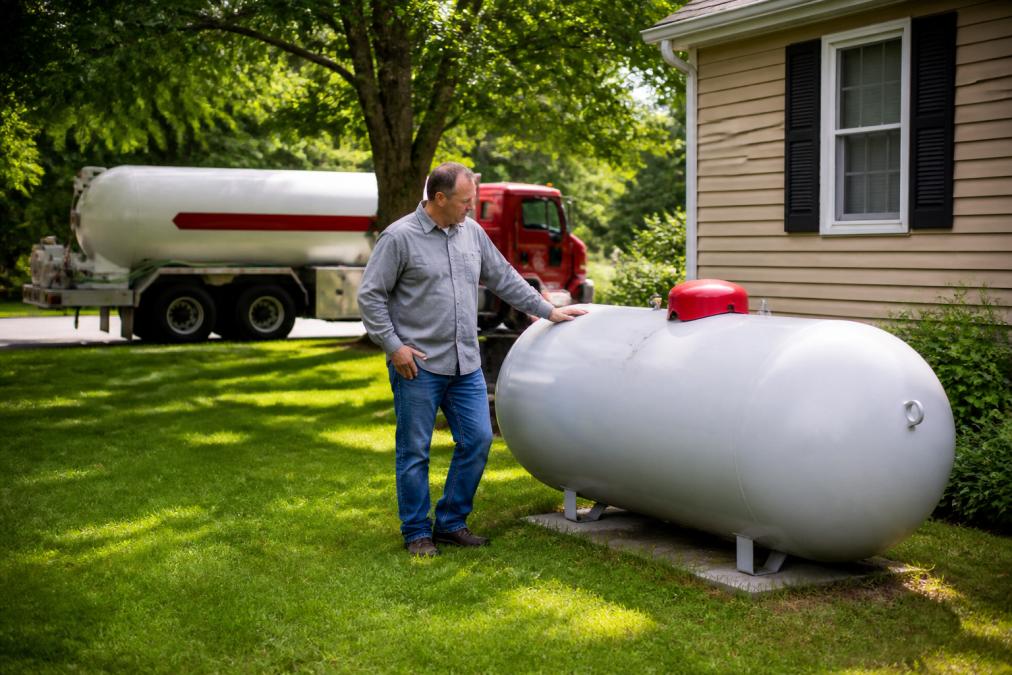
The financial case for ownership: You eliminate monthly rental fees and can refill from any provider, creating genuine supplier competition and pricing flexibility.
Legal and zoning requirements: Compliance with relevant safety standards and local regulations is required; municipalities often have restrictions on tank placement, size, and screening. Contact your local building department for information before purchasing. Some suppliers handle permits as part of installation.
Insurance implications: Tank ownership requires homeowners insurance notification. Before buying, confirm with your agent: (1) Does your policy cover owned tanks? (2) Are there coverage limits? (3) Will your premium increase? Get written confirmation.
Maintenance and inspection responsibility: You must pay for inspections and annual leak testing. Tank replacement costs vary depending on type. Rental tanks are inspected by suppliers at no extra cost.
Ownership eliminates recurring rental fees and locks in supplier choice, but requires upfront capital, ongoing maintenance responsibility, zoning compliance, and insurance coordination. Renting offers simplicity and predictable monthly costs, but limits your flexibility and supplier options. Ownership makes sense for long-term residents with regular propane use; renting suits those with uncertain timelines or light usage.
Is Propane Cheaper Than Heating Oil for Residential Use
Propane typically delivers more heat per unit than heating oil and burns cleaner, reducing maintenance costs. Many homeowners report lower heating bills after switching, though savings vary by market. Propane prices fluctuate like heating oil, but Long Island’s developed infrastructure often means more supplier competition. Conversion requires professional installation; over time, efficiency gains can often justify the cost.
Cylinder Exchange and Refill Programs as Propane Tank Alternatives
Cylinder exchange programs suit seasonal or light propane use. You exchange empty cylinders for full ones at retail locations, paying only for propane used, no monthly rental fees or ownership. Convenient for backup heating or job site use, but expensive for regular or high-volume needs.
propane safety standards and regulations
How to Switch Propane Suppliers Without Ownership Complications
Switching suppliers is supposed to be simple. In practice, it’s where many propane customers discover the hidden friction in traditional rental arrangements. A clear, step-by-step process prevents costly delays and contract traps.
Step 1: Review your current rental agreement. Before contacting a new supplier, read your existing contract carefully. Look for:
- Automatic renewal clauses: Most rental agreements renew automatically for another year unless you provide written notice 30-60 days before expiration. Missing this deadline locks you in for another billing cycle. Mark your calendar now if your renewal date is approaching.
- Early termination fees: Some contracts charge a penalty if you cancel before the renewal date. Fees typically range from $100-$500, depending on your contract and supplier. If your contract has an early termination fee, factor this into your cost comparison with a new supplier.
- Tank removal or decommissioning charges: If you’re renting an underground tank, your supplier may charge $200-$800 for tank removal and site restoration. Above-ground tank removal typically costs less ($100-$300) but varies by supplier and tank condition.
- Deposit or prepayment balances: Check whether you’ve paid a deposit or have a prepaid balance. You’re entitled to a refund, but you may need to request it in writing.
If your contract is unclear or you can’t locate it, call your current supplier and request a copy. Ask them directly: “What notice period do I need to provide to cancel without penalty?” and “Are there any removal or decommissioning fees?” Get the answers in writing via email.
Step 2: Contact your new supplier and confirm service availability. Not all propane companies serve all areas. Call or visit the website of your prospective new supplier and confirm they deliver to your address. Provide:
- Your current propane usage (check your recent invoices for gallons used annually)
- Your tank size and type (above-ground or underground)
- Your preferred delivery schedule (automatic, on-demand, or budget billing)
Ask the new supplier whether they’ll refill your existing tank or install their own equipment. If you own your tank, most suppliers will refill it at no additional charge. If you’re renting from your current supplier, the new supplier will typically install their own tank, which simplifies the transition.
Request a written quote that includes:
- Current propane price per gallon
- Delivery fee (if applicable)
- Tank installation cost (if they’re installing new equipment)
- Any contract terms or automatic renewal clauses
Step 3: Provide formal notice to your current supplier. Once you’ve selected a new supplier, send written notice to your current supplier. Email or certified mail works; avoid relying on phone calls alone, as there’s no record.
Your notice should state:
- Your account number
- Your service address
- Your requested cancellation date (typically 30-60 days from the date of notice, per your contract)
- A request for final invoice and any deposit refund
- Instructions for tank pickup (if applicable)
Example: “I am providing notice of cancellation of my propane service effective [date 30-60 days from today].
- Your new supplier can deliver and activate service on or before your cancellation date with the old supplier
- Your old supplier picks up their tank after the new supplier’s installation is complete
- If you own your tank, confirm the new supplier will refill it before the old supplier’s final delivery
Common pitfalls to avoid:
- Not providing written notice: Phone calls don’t create a record. Always send written notice via email or certified mail.
- Missing the renewal deadline: If your contract renews before you switch, you’re locked in for another year. Check your contract now and set a calendar reminder.
- Underestimating removal costs: Ask about removal fees upfront. Some suppliers bundle removal into a final charge that surprises customers.
- Switching during peak season: Winter is peak propane season. Suppliers are busier, and delays are more likely. If possible, switch in fall or spring.
- Not confirming the new supplier’s service area: Some suppliers serve only certain zip codes. Confirm before committing.
Many rental agreements include automatic renewal clauses. Your contract may renew for another year unless you provide written notice 30-60 days before expiration. Missing this deadline can lock you in for another billing cycle. Check your agreement now and mark your calendar with the renewal date and the notice deadline.
If you own your tank, switching is cleaner. Your new supplier can refill your existing equipment or, if they prefer different equipment, they’ll install their own while you keep your tank. This is one reason tank ownership appeals to customers who plan to stay in place long-term and want maximum flexibility.
Online Pricing and Transparent Delivery Models
Traditional propane suppliers often quote prices over the phone or require in-person estimates. You don’t know the exact cost until the truck arrives or the invoice comes. This lack of transparency frustrates customers who want to compare options or budget accurately.
Comparing Your Propane Tank Alternatives: Key Differences
| Alternative | Best For | Key Advantage | Main Limitation |
|---|---|---|---|
| Tank Ownership | Long-term residents, high-volume users | Eliminates rental fees, supplier choice | Upfront installation cost, maintenance responsibility |
| Cylinder Exchange | Seasonal use, small heating needs | No ownership, simple logistics | Expensive for regular use, limited volume |
| Traditional Rental | Simplicity, short-term needs | Predictable monthly cost, supplier handles maintenance | Locked into one supplier, limited flexibility |
| Online Transparent Pricing | Price-conscious customers | See costs before ordering, easy switching | May require more self-service |
New York State propane safety regulations
Frequently Asked Questions
Which is better, buying or renting a propane tank?
Buying works best if you plan to stay in your home long-term and want to avoid monthly rental fees. Renting suits short-term residents or those avoiding upfront installation costs. Ownership eliminates annual service charges but requires maintenance responsibility and initial capital. Renting offers flexibility but locks you into a supplier’s pricing. Compare your timeline, budget, and propane usage frequency to decide.
What are the alternatives to propane tank exchange?
Beyond traditional tank exchange, you can choose cylinder refill programs, automatic bulk delivery with owned tanks, or metered propane systems. Cylinder refills work for smaller residential needs, while automatic delivery suits homes with consistent heating demands. Metered systems provide on-demand supply without storage concerns. Each alternative reduces reliance on fixed rental agreements and offers different convenience levels depending on your usage patterns.
Can I switch propane suppliers if I own my tank?
Yes, tank ownership gives you supplier flexibility. You own the equipment, so you can contract with any licensed propane provider for delivery and service. Switching is simpler than breaking a rental agreement. However, verify that your new supplier accepts third-party tanks and confirm any transfer fees or inspections required. Get written confirmation before switching to avoid service gaps during winter months.
What are the hidden costs of propane tank rental agreements?
Annual service charges, tank inspection fees, delivery minimums, and early termination penalties are common hidden costs. Some suppliers charge de-registration fees when you leave, while others impose usage minimums. Price volatility can spike your per-gallon costs without notice. Always request a complete fee schedule in writing before signing. Transparent providers display pricing upfront online, eliminating surprise charges at delivery.
Choosing the right propane arrangement isn’t just about price, it’s about control and convenience. If you’re tired of opaque pricing and limited supplier options, transparent alternatives exist. Discount Propane offers upfront, real-time online pricing so you can see costs before ordering and schedule delivery on your terms. Get a propane price quote today and see how transparent pricing actually works.