
Table of Contents
- Start With a Home Efficiency Audit
- How Propane Heating Works and Where Efficiency Is Lost
- Use a Propane Furnace Maintenance Checklist
- How to Seal Air Leaks in a Home
- Find the Best Thermostat Settings for Propane Heat
- How to Lower Propane Heating Costs With Insulation and Duct Sealing
- Use Sunlight and Window Treatments for Passive Heat
- Conclusion
- Frequently Asked Questions
Last Updated: October 17, 2026
Start With a Home Efficiency Audit
The fastest way to learn how to improve home heating efficiency with propane is to find where the heat is escaping before you spend a dollar on upgrades. Audit first, fix second. A walk-through with a notepad and a thermal leak detector takes about an hour.
Work through the house in this order:
- Attic and crawlspace – check insulation depth and look for daylight.
- Exterior doors – feel for drafts along the frame and under the threshold.
- Windows – test for rattling glass and loose weatherstripping.
- Ductwork – look for disconnected joints and torn insulation in unconditioned space.
- Furnace and water heater – note the age, filter condition, and venting.
- Thermostat – confirm the schedule matches when people are actually home.
Write down what you find. Rank each item by cost to fix and how much heat it likely wastes. Cheap fixes come first.
A lit incense stick is the cheapest leak detector you own. Hold it near door frames and window edges on a windy day. If the smoke wavers, you have a leak worth sealing.
That list becomes your budget for the rest of this guide. The U.S. Department of Energy home energy assessment guide walks through a more detailed version of the same process if you want a professional-grade audit.
| Audit Area | Fix Cost | Typical Effort | Priority |
|---|---|---|---|
| Door weatherstripping | Low | 1 hour | High |
| Window caulk and seals | Low | 2 hours | High |
| Attic insulation | Medium | 1 day | High |
| Duct sealing | Medium | Half day | Medium |
| Furnace tune-up | Low to medium | Service call | High |
| Thermostat reprogramming | Free | 20 minutes | High |
How Propane Heating Works and Where Efficiency Is Lost
Propane heating works by burning fuel in a furnace or boiler to warm air or water, then distributing that heat through ducts or pipes.
Modern propane furnaces are rated by annual fuel use efficiency (AFUE), which tells you how much fuel becomes usable heat.
Distribution is the second leak. Ducts running through cold attics or crawlspaces lose heat before it reaches a room.
The third loss is the house itself. Air leaks and thin insulation let warm air escape and cold air creep in.
Heating efficiency is simply the share of fuel energy that reaches your rooms as usable heat. Every fix in this guide targets one of those three loss points.
Use a Propane Furnace Maintenance Checklist
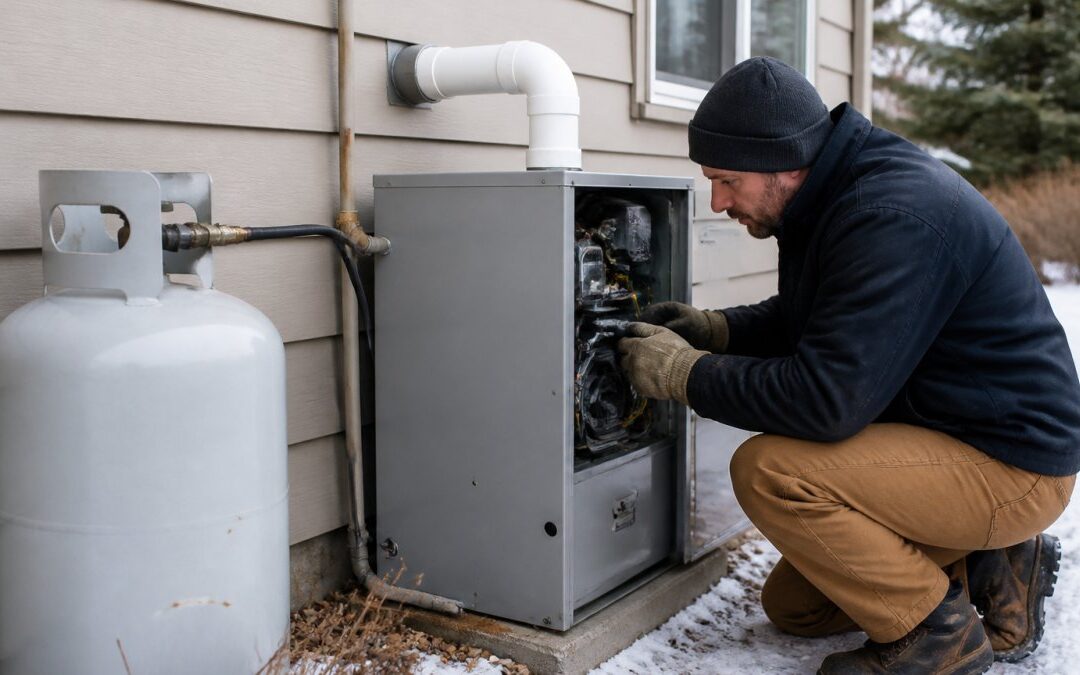
A propane furnace maintenance checklist keeps your equipment running near its rated efficiency and catches small problems before they become expensive ones. Most tasks are simple, and one annual service call covers the rest.
Run through this list each fall:
- Replace or clean the air filter every 1-3 months
- Clear dust and debris from return vents and registers
- Check the flue and vent pipe for blockages or corrosion
- Confirm the pilot or electronic ignition works cleanly
- Listen for unusual rumbling, clicking, or short cycling
- Book a professional tune-up that includes a combustion analysis
- Test carbon monoxide detectors and replace batteries
Combustion analysis is the step most homeowners skip. A technician measures how cleanly the furnace is burning fuel and adjusts the air mixture. A furnace burning too rich wastes propane and can produce carbon monoxide. The EPA guidance on combustion safety and indoor air explains why this matters for any fuel-burning appliance.
Never block or tape over the furnace vent or fresh-air intake to “stop a draft.” A blocked flue can push carbon monoxide back into the home. Fix the draft at the door or window instead.
How to Seal Air Leaks in a Home
Knowing how to improve home heating efficiency with propane starts with sealing air leaks, the highest-return, lowest-cost step on this list.
Start with the biggest offenders:
- Weatherstripping – apply a fresh strip around exterior door frames and sweeps along the bottom.
- Caulk – seal gaps where window frames meet siding and where pipes pass through walls.
- Foam gaskets – fit behind switch plates and outlet covers on exterior walls.
- Door sweeps – replace worn sweeps so the door closes tight to the threshold.
- Chimney and vent dampers – close them when the fireplace is not in use.
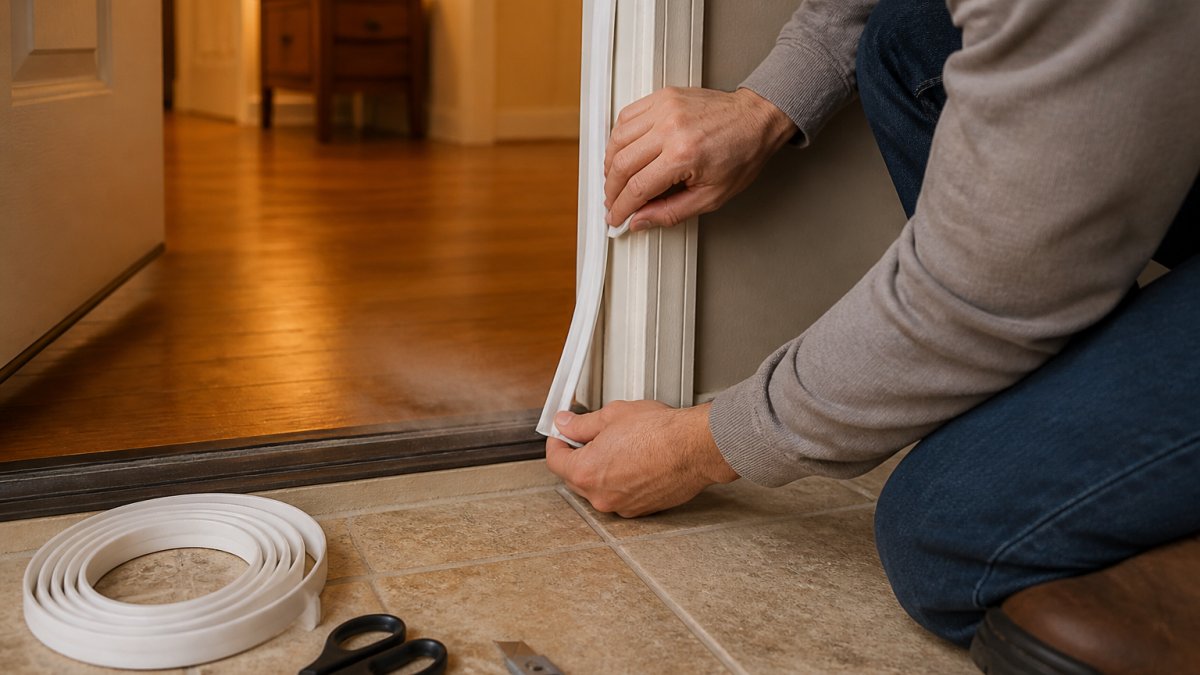
Work on a windy day so you can feel each leak as you go. The ENERGY STAR guide to air sealing lists the common leak points room by room.
Small gaps add up. A home with several unsealed doors and windows forces the heating system to work harder all winter, and that shows up directly on your fuel use.
Find the Best Thermostat Settings for Propane Heat
The best thermostat settings for propane heat keep the house comfortable while cutting the hours the furnace runs. Set it lower when people are asleep or away, and warmer only when rooms are in use. The U.S.
A practical schedule looks like this:
- Morning (wake-up): 68°F
- Daytime (home): 68°F
- Away (work or school): 60-62°F
- Night (sleep): 62-64°F
A programmable or smart thermostat does this automatically so nobody has to remember. Avoid big swings. Cranking the heat to 75°F does not warm the house faster; it just runs the furnace longer.
Keep the thermostat away from direct sun, drafts, and heat from lamps or appliances. A thermostat reading a false temperature will run the system wrong all day.
How Much Propane a Setback Actually Saves
Propane furnaces are rated by AFUE, and a typical older unit runs around 80% AFUE while a modern high-efficiency model reaches 90-98% AFUE. The fuel savings from a thermostat setback scale with how long the furnace stays off. Each 1°F of setback over an eight-hour period can reduce heating fuel use by roughly 1-3%, depending on outdoor temperature and home tightness.
To translate that into gallons, track your tank. If you burn 500 gallons in a heating season and a setback cuts fuel use by 8%, you save about 40 gallons. At a delivered propane price, that is roughly $100 to $140 per season from a free schedule change.
Pair the Schedule With Degree-Day Tracking
Heating degree days (HDD) measure how cold a day was relative to a 65°F base. Your propane supplier or a local weather service can give you monthly HDD totals. Divide gallons used by HDD for the same period to get gallons per degree day. If that number creeps up while the weather is similar, the furnace, ducts, or envelope has lost efficiency and needs attention. This is the simplest fuel-use tracking method available to a homeowner and it turns thermostat changes into measurable results.
Every degree you lower the thermostat for eight hours saves fuel. Set a schedule once, track gallons per degree day, and leave it alone for the season.
How to Lower Propane Heating Costs With Insulation and Duct Sealing
Lowering propane heating costs comes down to keeping heat inside the building envelope and inside the ducts. Insulation slows heat loss through walls, attics, and floors. Duct sealing stops heated air from leaking before it reaches a room. The U.S.
Target these areas first:
- Attic floor – add insulation if it sits below the recommended depth for your climate zone. The DOE recommends R-49 to R-60 for attics in cold climates and R-38 to R-49 in moderate zones.
- Crawlspace and rim joists – seal and insulate where cold air enters. Rim joists are a common leak point that many homeowners overlook.
- Duct joints – seal with mastic or approved HVAC tape, then wrap runs in unconditioned space with duct insulation rated for the temperature.
- Water heater – insulate the tank and the first few feet of hot water pipe if the tank is warm to the touch.
Duct leaks matter more than most homeowners expect. A duct run through a cold attic can lose a large share of its heat before the register. Sealing those joints and wrapping the ducts keeps that heat in the living space.
Payback Estimates for Common Upgrades
Air sealing and attic insulation can pay back in two to four heating seasons in cold climates, while duct sealing in unconditioned space often pays back in one to three seasons. Exact payback depends on local propane prices, climate, and how leaky the home is. Use your gallons-per-degree-day number from the thermostat section to estimate savings: if a fix cuts fuel use by 10% and you spend $1,500 per season on propane, that is $150 per year, so a $450 air-sealing project pays back in about three seasons.
Propane-Specific Safety and Ventilation
Efficiency work changes how a house breathes, and that matters for any fuel-burning appliance. Before tightening a home, confirm that the propane furnace and water heater have adequate combustion air and that the flue is drafting properly. A professional combustion analysis and a carbon monoxide test are the right checks. Install carbon monoxide alarms on every level and outside sleeping areas, and test them monthly.
The DOE insulation and duct sealing resources covers recommended insulation levels by climate zone. Match the fix to your home type: a drafty older house needs different work than a newer, tighter build, and a home with ducts in unconditioned space should prioritize duct sealing before adding attic insulation.
Tightening a home without confirming proper venting can trap carbon monoxide. Have a technician verify combustion air and flue draft before and after major air-sealing work.
Use Sunlight and Window Treatments for Passive Heat
Passive solar heat is free heat from the sun, and it works best with south-facing windows. Open curtains and blinds on sunny winter days to let sunlight warm the rooms. Close them at night to hold that heat in.
A simple daily routine:
- Morning: open south-facing curtains and blinds
- Afternoon: keep sunlit rooms open until the sun drops
- Evening: close all window treatments to trap heat
- Night: draw heavier curtains over drafty windows
Window treatments act as a layer of insulation. Cellular shades and heavy drapes slow heat loss through glass. For older single-pane windows, a clear plastic film kit adds another barrier at low cost.
This is the cheapest efficiency upgrade on the list, and it pairs well with a lower thermostat setting during daylight hours. Sun on the glass does real work for a few hours a day.
Conclusion
Most homes lose heat in the same handful of places, and the fixes are within reach for any homeowner willing to spend a weekend on them. Audit first, seal the drafts, tune the furnace, and insulate where it counts.
When it is time to refill the tank, Discount Propane makes the next step simple. See current prices online before you order, schedule delivery in a few clicks, and pay by credit card, cash on delivery, or Zelle through a secure account. Get a propane price today and keep your heating budget predictable all season.
Frequently Asked Questions
Which is more efficient, gas or propane?
Propane and natural gas furnaces carry similar AFUE ratings, often 90% or higher for condensing models. Propane delivers about 91,500 Btu per gallon, so it burns hot and works well in cold weather. The better choice depends on what fuel is available where you live. On Long Island, where natural gas lines do not reach every street, propane heating efficiency can match gas when the furnace is maintained and the home is sealed.
What thermostat setting can help reduce propane use?
Set the thermostat to 68°F when you are home and awake, then lower it 7°F to 10°F for eight hours while you sleep or are away. A programmable or smart thermostat makes this automatic. Each degree you lower the setting for a sustained period trims fuel consumption. Avoid large setbacks with a heat pump, but a propane furnace handles them fine and recovers quickly.
Can sealing air leaks reduce propane heating costs?
Yes. Drafts around doors, windows, and penetrations force the furnace to run longer to hold temperature. Weatherstripping, caulk, and outlet gaskets are low-cost fixes a homeowner can do in a weekend. Pair them with duct sealing using mastic or UL 181 tape, since leaky ducts in unconditioned space waste heated air before it reaches rooms. Together these steps lower the energy load and stretch every gallon of propane.
How often should a propane furnace be serviced?
Schedule professional service once a year, ideally in early fall before the heating season. A technician cleans the burners, checks the heat exchanger for cracks, tests combustion with a analyzer, and verifies airflow. Between visits, change or clean the filter every one to three months. Regular tune-ups keep propane heating efficiency near the rating on the unit and catch safety issues before they become expensive repairs.