
Table of Contents
- Above Ground vs Underground Propane Tanks: Quick Comparison
- Propane Tank Installation Requirements: What You Need to Know
- Cost of Burying a Propane Tank: Installation and Long-Term Expenses
- Durability, Corrosion Protection, and Lifespan
- How to Read Propane Tank Gauge and Monitor Your Supply
- Safety, Regulations, and Clearance Requirements
- Property Aesthetics and Long-Term Value Impact
- Which Tank Type Is Right for You?
- Frequently Asked Questions
Last Updated: September 29, 2026
Above Ground vs Underground Propane Tanks: Quick Comparison
Choosing between above ground vs underground propane tank installation is one of the biggest decisions homeowners and contractors make when setting up propane systems. The choice affects your budget, maintenance schedule, property aesthetics, and long-term operational costs. At Discount Propane, we help customers navigate this decision with transparent pricing and straightforward guidance.
The core difference is straightforward: above-ground tanks sit on your property where you can see them, while underground tanks are buried below the frost line to hide them from view. But the real differences go much deeper. Installation expenses, maintenance accessibility, corrosion protection requirements, regulatory compliance, and property value impact all shift dramatically depending on which direction you go.
Below, we’ll walk you through the technical requirements, cost breakdowns, durability factors, and safety regulations for both options so you can make the choice that fits your specific situation.
Above-ground tanks cost significantly less to install but remain visible. Underground tanks hide the eyesore but require excavation, specialized anti-corrosion coatings, and higher upfront expenses. The right choice depends on your budget, property layout, and aesthetic priorities.
Propane Tank Installation Requirements: What You Need to Know
Above-ground and underground propane tank installations follow different site preparation procedures, regulatory pathways, and safety protocols. Understanding what each requires helps you budget accurately and avoid costly surprises.
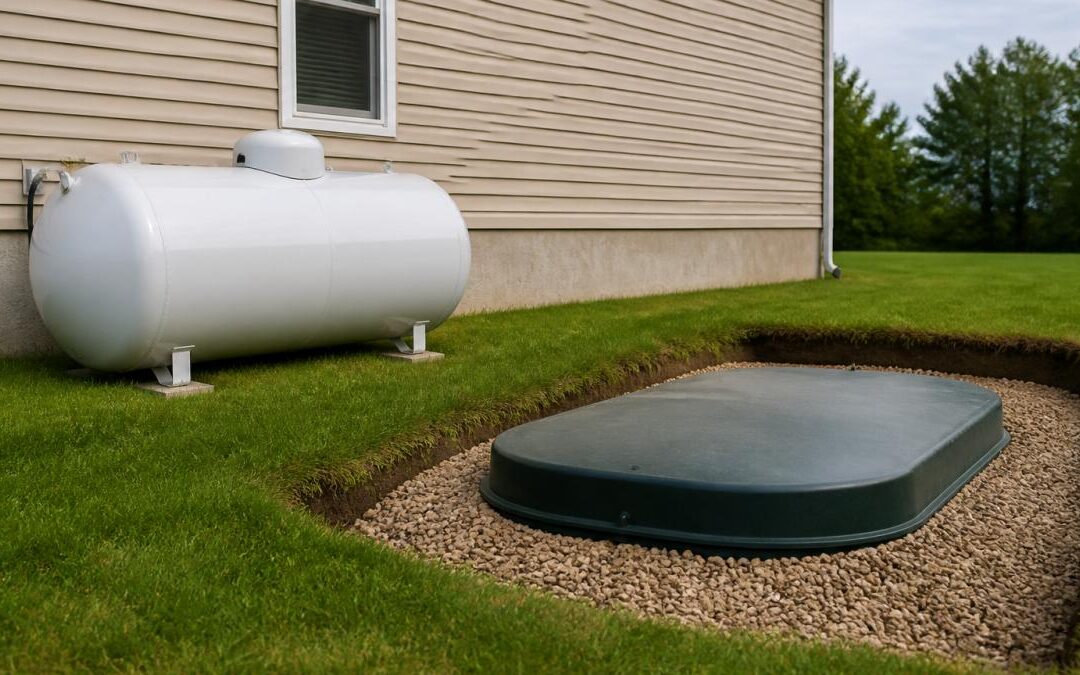
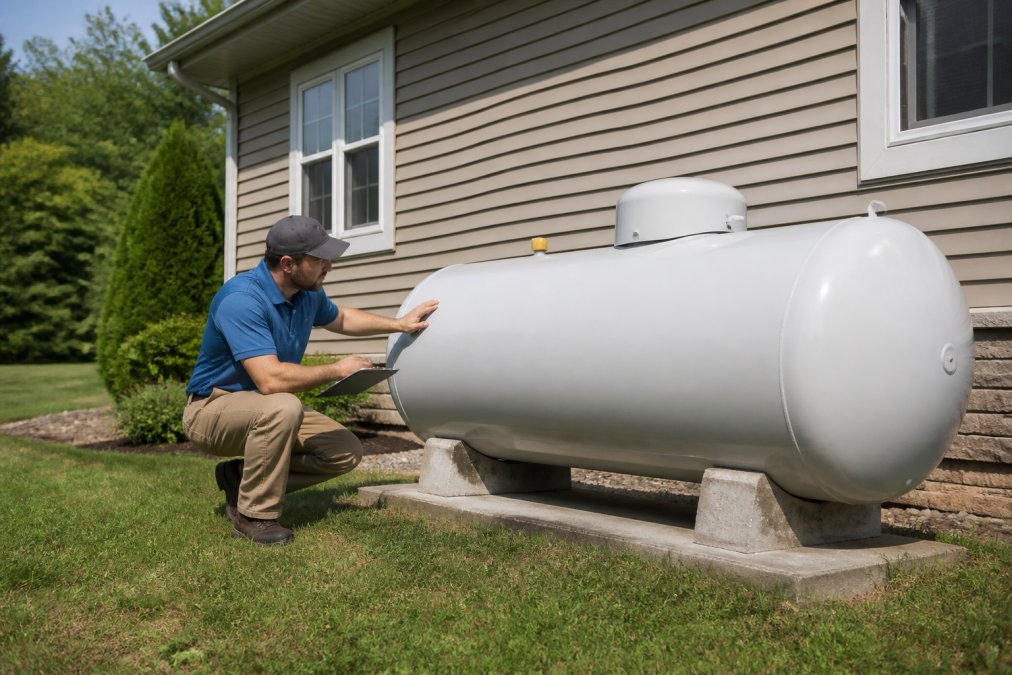
Above-ground tank installation requires a level, stable foundation. Most installations use concrete pads or gravel bases positioned on your property. You need clearance distance from structures, windows, and doors, typically 10 feet minimum from your home’s foundation, though local codes vary. The tank sits in plain sight, making it accessible for routine maintenance and refill deliveries. Technicians can inspect the tank, check valves, and monitor pressure gauges without excavation work.
Underground tank installation requires significant site preparation. A contractor must excavate a hole below the frost line, typically 4 to 6 feet deep depending on your region’s winter freeze depth. The excavation itself adds days to the project timeline and requires heavy equipment. Once the hole is dug, the tank gets placed, backfilled with soil, and covered. The site must also account for water table conditions and soil acidity, both of which affect corrosion protection needs. After backfilling, the area can be landscaped, seeded, or paved over.
The key difference: above-ground tanks need a prepared surface; underground tanks need prepared subsurface conditions. This distinction drives most of the cost and timeline differences between the two approaches.
Before choosing underground installation, verify your water table depth with a site survey. High water tables can complicate excavation and increase corrosion risk, sometimes making above-ground installation the better choice despite aesthetic preferences.
Cost of Burying a Propane Tank: Installation and Long-Term Expenses
Installation costs represent the largest upfront expense difference between above ground vs underground propane tank options. Above-ground systems typically cost thousands of dollars less to install because they avoid excavation, specialized equipment, and subsurface site preparation.
Above-ground tank installation involves foundation preparation, tank delivery, basic safety checks, and connection to your home’s heating system. The process typically takes one day. You pay for the tank itself, the foundation materials, and labor for setup and system connection.
Underground tank installation includes excavation, equipment rental, specialized anti-corrosion coatings, backfilling, site restoration, and system connection. Excavation alone can take 2-3 days depending on soil conditions. You also pay for sacrificial anode bags, a corrosion protection method that must be replaced periodically. The total installation cost runs substantially higher, often several thousand dollars more than above-ground alternatives.
Long-term maintenance costs also differ. Above-ground tanks require visual inspections and valve checks but no excavation for routine work. Underground tanks require periodic inspection of the anti-corrosion system, anode replacement every 5-10 years (which involves excavation), and potential soil remediation if leaks occur.
| Expense Category | Above-Ground | Underground |
|---|---|---|
| Foundation/Excavation | Minimal | Extensive |
| Tank Cost | Standard | Standard |
| Corrosion Protection | Basic | Specialized coatings + anodes |
| Installation Labor | 1 day | 2-3 days |
| Routine Maintenance | Low-cost access | Requires excavation |
| Anode Replacement | N/A | Every 5-10 years |
Discount Propane provides transparent pricing on propane delivery regardless of tank type. Check our pricing page to see current rates and schedule a delivery without commitment.
Durability, Corrosion Protection, and Lifespan
Propane tank longevity depends heavily on corrosion protection and environmental exposure. Both above-ground and underground tanks can last 20-30 years or longer, but the corrosion risks differ significantly.
Above-ground tanks face weather exposure, rain, snow, temperature swings, and UV radiation. Modern tanks use galvanized steel or specialized coatings to resist surface corrosion. The main vulnerability is rust formation where moisture collects. Regular inspection catches early corrosion before it becomes structural. Because the tank is visible and accessible, you can spot problems immediately.
Underground tanks avoid weather exposure but face soil contact and moisture exposure year-round. Soil acidity, salt content, and groundwater all accelerate corrosion if the tank lacks proper protection. Underground installations require specialized anti-corrosion coatings and sacrificial anode bags. The anode material corrodes preferentially, protecting the tank itself, but anodes must be replaced every 5-10 years to maintain protection.
Thermal stability also matters. Underground tanks maintain more consistent temperatures because soil insulates them from seasonal swings. Above-ground tanks experience wider temperature ranges, which can affect propane vapor pressure and system performance. For most residential applications, this difference is minor, but it matters in extreme climates.
The buried environment makes corrosion inspection difficult. You can’t see the tank’s exterior condition without excavation. Many underground tank failures go undetected until leaks develop, which is why anode replacement on schedule is critical.
Neglecting underground anode replacement is the leading cause of premature tank failure. A corroded underground tank can leak into soil, requiring expensive excavation and remediation. Budget for anode replacement every 5-10 years as routine maintenance.
How to Read Propane Tank Gauge and Monitor Your Supply
Monitoring your propane tank level prevents running out of fuel during heating season. Reading the gauge accurately helps you schedule refills before supply gets critically low.
Above-ground tanks have a visible float gauge on the side. The gauge shows a percentage from 0-100%, indicating how full the tank is. A simple glance tells you the current level. Most gauges use a mechanical float mechanism that rises and falls with the liquid propane level inside. Reading is straightforward: the indicator position shows your remaining supply.
Underground tanks also have gauges, but access requires locating the fill pipe or inspection port. Some underground installations use remote gauges that display tank level inside your home or on your phone. This convenience feature helps you track supply without going outside.
Best practice for both types: schedule refill when the gauge reads 25-30%. Don’t wait until the tank empties completely, which can introduce air into the system and affect performance. During winter heating season, check your gauge weekly or biweekly depending on usage.
Modern propane delivery services, including Discount Propane, offer automatic delivery scheduling. You can view your tank status online and schedule refills on your timeline, no need to monitor the gauge constantly. Our transparent pricing shows you costs before delivery, and flexible payment options including credit card, cash on delivery, and Zelle make the process straightforward.
Safety, Regulations, and Clearance Requirements
Both above-ground and underground propane tanks must meet strict safety regulations. ASME standards govern tank construction, and local fire codes establish clearance distances and installation requirements.
Above-ground tanks require specific clearance distances from structures, windows, doors, and property lines. Minimum clearance is typically 10 feet from your home’s foundation, though codes vary by jurisdiction. Tanks must be positioned away from high-traffic areas and protected from vehicle impact. Safety relief valves must point downward and away from occupied spaces. Regular visual inspection is required to catch corrosion or valve damage.
Underground tanks must be buried below the frost line to prevent freezing and structural damage.
Request a site survey before deciding on underground installation. The survey identifies frost line depth, water table elevation, and soil conditions, all factors that affect feasibility and cost. Some properties aren’t suitable for underground tanks due to high water tables or difficult soil conditions.
Property Aesthetics and Long-Term Value Impact
The visual impact of your propane tank can affect property appeal and resale value, though the effect is often overstated.
Which Tank Type Is Right for You?
Choosing between above ground vs underground propane tank installation comes down to your priorities, budget, and property conditions.
Frequently Asked Questions
Is it better to install a propane tank above ground or underground?
The choice depends on your priorities. Above-ground tanks cost significantly less to install, require simpler maintenance access, and are easier to monitor. Underground tanks offer better aesthetics, protect the tank from weather and damage, and maintain property curb appeal. For budget-conscious homeowners, above-ground wins. For those prioritizing landscape appearance and long-term protection, underground is preferable. Consider your site conditions, local regulations, and whether you plan to stay in the home long-term.
What are the main maintenance differences between above ground and buried tanks?
Above-ground tanks require regular visual inspections for corrosion, rust, or damage since they’re exposed to weather. You can easily check the gauge and access the tank for service calls. Underground tanks need professional inspections via excavation to assess corrosion protection and anode bag condition. Both require annual safety checks, but above-ground tanks are simpler for homeowners to monitor independently. Underground tanks depend more heavily on cathodic protection systems to prevent corrosion in soil.
How long does a propane tank last above ground versus underground?
Above-ground tanks typically last 20-30 years with proper maintenance, though weather exposure can accelerate corrosion. Underground tanks can last 30-40 years or longer when properly protected with anti-corrosion coatings and sacrificial anodes, since they’re shielded from temperature swings and UV damage. Longevity for both depends on water table conditions, soil acidity, regular inspections, and maintenance. Underground tanks buried below the frost line experience more stable conditions but require more intensive monitoring for hidden corrosion.
What clearance distances are required by safety regulations?
ASME standards and local fire codes typically require above-ground tanks to be at least 10 feet from buildings, property lines, and ignition sources. Underground tanks must be buried below the frost line (depth varies by region) and maintain specific distances from structures. Exact clearance distances depend on tank size, local jurisdiction, and whether you’re in a residential or commercial zone. Contact your local building department or fire marshal for specific requirements in your area before installation.