
Last Updated: November 4, 2026
Quick Summary
How to decommission an underground oil tank means pumping out remaining oil, cleaning the tank, and then either removing it or filling it in place. Check local permit rules first, then test the soil for contamination before finishing the job and keep records of the closure.
- Pump out all remaining oil and sludge before cleaning the tank.
- Triple-rinse the tank, then cap the fill and vent lines.
- Full removal lets a contractor directly inspect the excavation floor and sidewalls.
- Abandonment in place is usually not allowed if the tank is leaking.
- Get a written quote that itemizes soil sampling, disposal, and closure report fees.
Table of Contents
- What Decommissioning an Underground Oil Tank Involves
- Removal or Abandonment in Place: Choosing the Right Method
- Underground Oil Tank Permit Requirements and Who Can Do the Work
- Step-by-Step: Pumping, Cleaning and Decommissioning the Tank
- Underground Oil Tank Removal Cost and Cost Drivers
- Getting Your Oil Tank Abandonment Certificate and Closure Records
- Schedule Your Tank Work and Plan Your Next Fuel Supply
- Frequently Asked Questions
What Decommissioning an Underground Oil Tank Involves
Learning how to decommission an underground oil tank means taking it out of service safely and legally. Homeowners often face this question when they switch to propane heat or sell a home with an old tank in the yard. Done right, the process protects your property, your neighbors, and the soil beneath your lawn.
A tank that sits unused is still a risk. Leftover oil can seep into the ground over time.
Decommissioning usually includes these core steps:
- Pumping out remaining oil and sludge
- Cleaning and rinsing the inside of the tank
- Removing the tank, or filling it in place
- Checking the surrounding soil for contamination
- Keeping records of the work and any closure paperwork
Most of the risk comes from skipping the soil check. Confirm the ground is clean before you finish the job.
Removal or Abandonment in Place: Choosing the Right Method
There are two legal paths for decommissioning a residential heating oil tank: full removal or abandonment in place (also called closure in place). The right choice depends on site access, tank condition, contamination history, local rules, and your plans for the property. Removal is often considered the safer default when any doubt exists, because it lets you visually confirm the soil and reduces future disclosure concerns. Learn how underground oil tank removal is done on Long Island.
Full removal
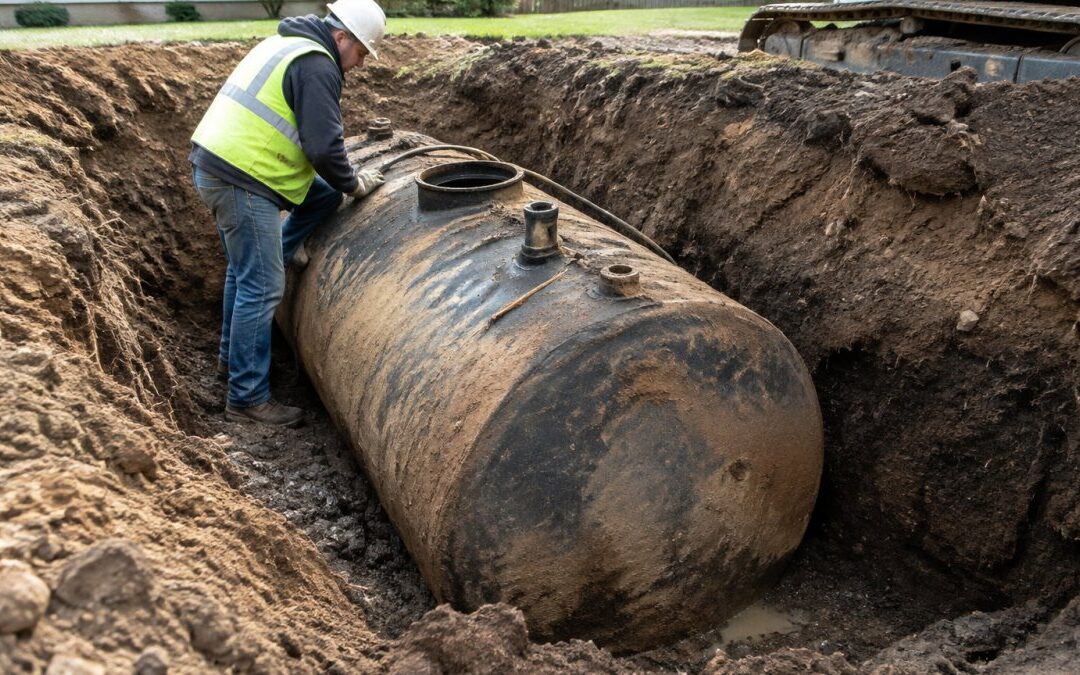
Full removal means excavating the tank, pumping and cleaning it, hauling it off-site, and backfilling the hole. It is the only method that lets a contractor and a soil lab directly inspect the excavation floor and sidewalls. Costs depend on tank size, access, and soil conditions. For a quote based on your property, contact Discount Propane through its website.
Abandonment in place
Abandonment in place means pumping, cleaning, and filling the tank with an approved material, commonly sand, foam, or a cement slurry, then capping the fill and vent lines. Filling a tank in place is usually faster and less disruptive, but it is not always allowed. A leaking tank, a tank under a driveway or structure, or a site with known contamination typically cannot be abandoned in place.
A practical decision framework
Work through these questions in order. The first “yes” usually points to removal.
- Is there any evidence of a leak? Staining, oil odor, dead vegetation over the tank, or a failed tank test means removal and soil sampling, not abandonment.
- Is the tank accessible for excavation? Tight side yards, decks, driveways, or mature trees can make removal expensive or impractical, but they do not automatically make abandonment legal.
- Do local rules allow abandonment in place? Some states and municipalities prohibit it outright, require a specific fill material, or require a licensed contractor and a closure report. Confirm before you choose.
- Are you selling or refinancing soon? Buyers, lenders, and insurers often ask for removal documentation. Abandonment records are acceptable in many transactions, but removal removes the question entirely.
- What is the tank’s condition? A sound steel or fiberglass tank with no corrosion history is a better candidate for abandonment than a tank of unknown age or one that has been out of service for years.
Watch out: Do not let a contractor talk you into abandonment in place solely because it is cheaper. If the tank later leaks, the fill material can complicate investigation and increase remediation cost.
Side-by-side trade-offs
| Factor | Full removal | Abandonment in place |
|---|---|---|
| Typical cost (clean soil) | $1,500-$3,500 | $700-$1,000 |
| Soil verification | Direct excavation inspection | Limited; sampling around tank only |
| Disruption | Excavation, backfill, restoration | Minimal surface work |
| Future disclosure | Tank gone; records still needed | Tank remains; records still needed |
| Allowed when leaking | Yes, with remediation | Usually no |
Choose removal if the tank leaks, if access allows excavation, or if you plan to sell soon. Choose abandonment in place only when the tank is sound, local rules permit it, and you have written confirmation from the authority having jurisdiction.
Underground Oil Tank Permit Requirements and Who Can Do the Work
Permit and licensing rules for underground heating oil tanks vary by state, county, and municipality. There is no single national procedure, so the first job is to identify the authority having jurisdiction (AHJ) for your address and confirm what it requires before anyone digs, pumps, or fills the tank. Local codes often dictate specific safety standards for replacing heating systems, ensuring that the transition away from buried tanks aligns with modern efficiency and environmental mandates.
How to verify local rules
Use this sequence to pin down the requirements for your property:
- Call your municipal building or code office. Ask whether a permit is required for tank removal or abandonment in place, and request the application form and fee schedule in writing.
- Contact your state environmental agency’s tank program. Many states regulate heating oil tanks under a separate program from commercial underground storage tanks. Ask whether the work must be reported, whether a licensed contractor is required, and what closure documentation is accepted.
- Ask your homeowner’s insurance carrier. Some policies exclude or surcharge properties with an active or abandoned tank; a written confirmation of coverage after decommissioning is worth having.
- Check disclosure requirements. Many states require sellers to disclose the presence of an underground tank and any known releases. Confirm what records you will need to retain.
Many states publish a tank fact sheet or homeowner guide that lists the authority having jurisdiction, the required forms, and the accepted fill materials. Request the current version rather than relying on a contractor’s summary.
Contractor vetting checklist
Hiring a qualified contractor is the single biggest lever on whether the job is done legally and safely. Confirm each of the following in writing before signing:
- License and registration. Ask for the contractor’s state license number and verify it with the state agency.
- Insurance. Request a certificate of general liability and pollution liability coverage. Tank work can disturb contaminated soil, and pollution coverage matters if a release is discovered.
- Scope of work. The written scope should specify pumping, cleaning method (for example, triple rinse), line capping, removal or fill material, soil sampling locations, lab analysis, disposal facility, and who files the closure report.
- Disposal documentation. Ask for the name of the approved disposal facility and confirm the contractor will provide manifests or receipts for the tank, oil, sludge, and rinse water.
- Soil sampling plan. Confirm the number and depth of samples, the lab that will analyze them, and whether the contractor or a separate environmental consultant will interpret results.
- Permit responsibility. Decide in writing whether the contractor pulls the permit or you do. Either way, confirm who pays the fee and who schedules the inspection.
Watch out: A quote that omits soil sampling, disposal fees, or the closure report is not comparable to one that includes them. Ask each bidder to itemize those line items so you can compare like with like.
Timing rules to confirm
Some regulators impose timelines on tanks that have been out of service. Confirm the specific deadline and form with your state tank program, because the trigger date and the extension process differ by jurisdiction.
Step-by-Step: Pumping, Cleaning and Decommissioning the Tank
If you want to know how to decommission an underground oil tank safely, work through these steps in order. Each one builds on the last.
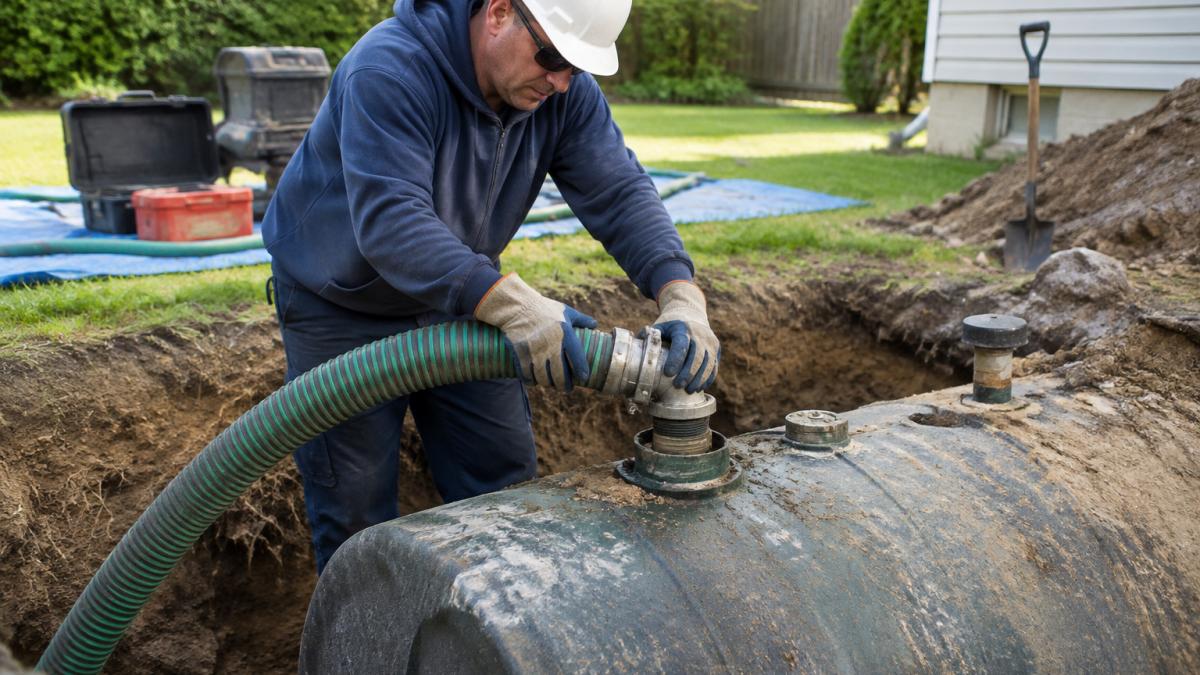
- Get the permit. Secure any municipal permit before anyone digs or drains the tank.
- Hire a qualified contractor. Confirm licensing and ask for a written scope of work.
- Pump out the oil. Remove all remaining heating oil from the tank.
- Clean the tank. Scrape out sludge and rinse the interior.
- Cap the lines. Close off the fill and vent lines.
- Remove or fill the tank. Excavate and haul it away, or fill it according to code.
- Test the soil. Take soil samples under and around the tank.
- File the paperwork. Submit any required closure report to the state.
Weather and soil conditions can affect how long the work takes.
Pumping out remaining oil and sludge
Pumping comes first because oil left in a tank is the main source of spills. A licensed crew uses a vacuum truck or pump to empty the tank completely. Sludge at the bottom often takes the most time to remove.
Keep the pumped oil and sludge out of the ground. Your contractor should dispose of both at an approved facility, not on your property. Check for signs of leaks before you decommission.
Triple-rinsing and capping the fill and vent lines
After pumping, the tank is rinsed to remove the last traces of oil. A common method is a triple rinse, where the tank is filled with clean water, drained, and repeated. Your contractor should give you the rinse and disposal records.
Next, cap the fill line and vent line. This stops rain, dirt, or pests from getting inside. Confirm the caps are secured before the tank is removed or filled.
Underground Oil Tank Removal Cost and Cost Drivers
Costs depend on tank size, depth, soil conditions, and whether contamination is found. Costs rise if the soil is contaminated, so get a written quote that accounts for your site conditions.
Main cost drivers include:
- Tank size and condition
- Depth and access to the tank
- Soil testing and lab fees
- Cleanup if a leak is found
- Permit and disposal fees
Tank decommissioning costs depend on your site and your local contractor. Get a written quote before work begins.
Getting Your Oil Tank Abandonment Certificate and Closure Records
Once the work is done, you need proof that it was done properly. Ask your contractor for a closure report, soil test results, and any official abandonment certificate your state issues. Learn the signs of soil contamination from heating oil.
Keep these records. Buyers, lenders, and insurers may ask for them. A missing certificate can delay a home sale or cause problems with insurance.
Schedule Your Tank Work and Plan Your Next Fuel Supply
Start by confirming your local permit rules and getting written quotes from licensed contractors. Book the work before the heating season.
If you are moving from oil to propane, plan the switch before you remove the old tank. Read a guide to safely switching from oil to a propane tank. Discount Propane can help you schedule propane delivery and manage your account online. Check current propane prices on our site.
Frequently Asked Questions
How much does it cost to decommission an underground oil tank?
Costs vary with tank size, access, soil condition and whether contamination is found. Costs depend on tank size, access, and soil conditions. Contamination testing and remediation can add substantially to the total. For a quote based on your property, contact Discount Propane through its website.
Do you need a permit to decommission an oil tank?
In most jurisdictions, yes. Local municipal permits are typically required before removal or abandonment in place, and state environmental departments may require a closure report or remedial action report if soil is affected. Requirements differ by state and town, so check with your local building or fire department before any work begins. A licensed contractor can usually handle the permit filings as part of the project.
What documents should I receive after an oil tank is decommissioned?
Ask for written closure documentation from the contractor, including the disposal record for the tank, the cleaning and fill confirmation, and any soil sample results. Where a local authority or state agency oversees the work, you should also receive the official abandonment certificate or closure letter. Keep these records with your property file, because buyers, lenders and insurers often request them when you sell or refinance the home.
Can you sell a house with an underground oil tank?
Yes, but you generally must disclose the tank and its status, and buyers or their lenders may ask for proof that it was properly closed. A tank that is leaking or contaminated can complicate or delay a sale. Having a documented removal or abandonment certificate in hand makes the transaction far smoother.
