
Table of Contents
- Understanding Underground Storage Tanks and Why Removal Matters
- Signs Your Property Has a Leaking or Failing Oil Tank
- Abandoning Oil Tank in Place vs. Removal: Which Option Is Right for You
- Permitting Requirements and Environmental Compliance for Long Island
- Step-by-Step Underground Oil Tank Removal Process
- Oil Tank Removal Cost Estimate: What to Budget
- Soil Testing After Oil Tank Removal: Process and Standards
- Real Estate Disclosure and Property Value Implications
- Frequently Asked Questions
Last Updated: October 1, 2026
Understanding Underground Storage Tanks and Why Removal Matters
An underground storage tank (UST) is a container buried beneath the ground that stores petroleum products, typically heating oil. Most older homes on Long Island rely on these tanks to supply fuel for residential heating systems. Understanding what you have beneath your property is the first step toward safe removal.
Check your property deed or old heating bills if you’re unsure whether you have a UST. Many homes built before the 1980s have buried tanks that previous owners may have abandoned in place.
Signs Your Property Has a Leaking or Failing Oil Tank
Catching a failing tank early saves money and prevents environmental damage. Many homeowners are unaware of buried tanks on their property, especially if they inherited the home from a previous owner.
How to Locate an Underground Oil Tank on Your Property
Check for a fill cap or vent pipe in your yard. Walk around the perimeter of your home, especially near the foundation. Look for a 2-inch diameter metal or plastic pipe protruding from the ground, the vent pipe. Nearby you’ll find a fill cap labeled “FUEL” or “OIL.”
Visual Signs of a Leaking or Failing Tank
Once you’ve located the tank, watch for these warning signs:
- Soil discoloration around the tank area, dark stains, oily patches, or areas where grass won’t grow
- Unusual petroleum odors near the tank location, basement, or yard
- Heating system failures or difficulty maintaining fuel pressure
- Oil spots in the yard, driveway, or foundation
- Rust or corrosion on exposed tank components
- Rising heating costs without explanation
- Visible tank settling or ground depression above the tank location
Ignoring a leaking tank can result in costly soil remediation ($5,000-$25,000+), property value loss of 10-20%, and potential liability if contamination spreads to neighboring properties. Act quickly.
Abandoning Oil Tank in Place vs. Removal: Which Option Is Right for You
You have two choices: tank abandonment in place or full removal. Each option has trade-offs.
| Option | Cost | Environmental Risk | Real Estate Impact | Best For |
|---|---|---|---|---|
| Abandonment in place | Lower | Remains buried | Disclosure required | Budget-conscious sellers |
| Full removal | Higher | Eliminated | Cleaner records | Long-term owners, future sales |
Permitting Requirements and Environmental Compliance for Long Island
Long Island operates under strict environmental protection rules overseen by the New York Department of Environmental Conservation (DEC), with additional local requirements from Nassau and Suffolk County. Before work begins, contact your local health department or building department for permits for tank removal and soil testing, which typically take 5-10 business days to process.
Don’t skip permitting. Unpermitted work can result in fines, property liens, and failed real estate transactions.
Step-by-Step Underground Oil Tank Removal Process
The removal process follows a structured sequence. Understanding each step helps you plan timing and budget.
Step 1: Site Assessment and Tank Inspection
A licensed contractor visits your property, locates the tank, and inspects it for size, condition, contents, corrosion, leaks, and damage. They determine tank material and age, identify vent lines and fill pipes, and photograph everything for documentation. This inspection typically costs $150-$300 and takes 1-2 hours.
Step 2: Obtain Permits and Schedule the Work
After inspection, your contractor files permit applications with the local building department, including site plans, tank specifications, and contractor certifications. Approval takes 5-10 business days; most removal jobs complete within 1-2 days.
Step 3: Drain and Decommission the Tank
The contractor pumps all remaining oil and sludge from the tank, disposes of it as hazardous waste, and purges vapors. This step takes 2-4 hours and prevents environmental contamination during excavation.
Step 4: Excavation and Tank Removal
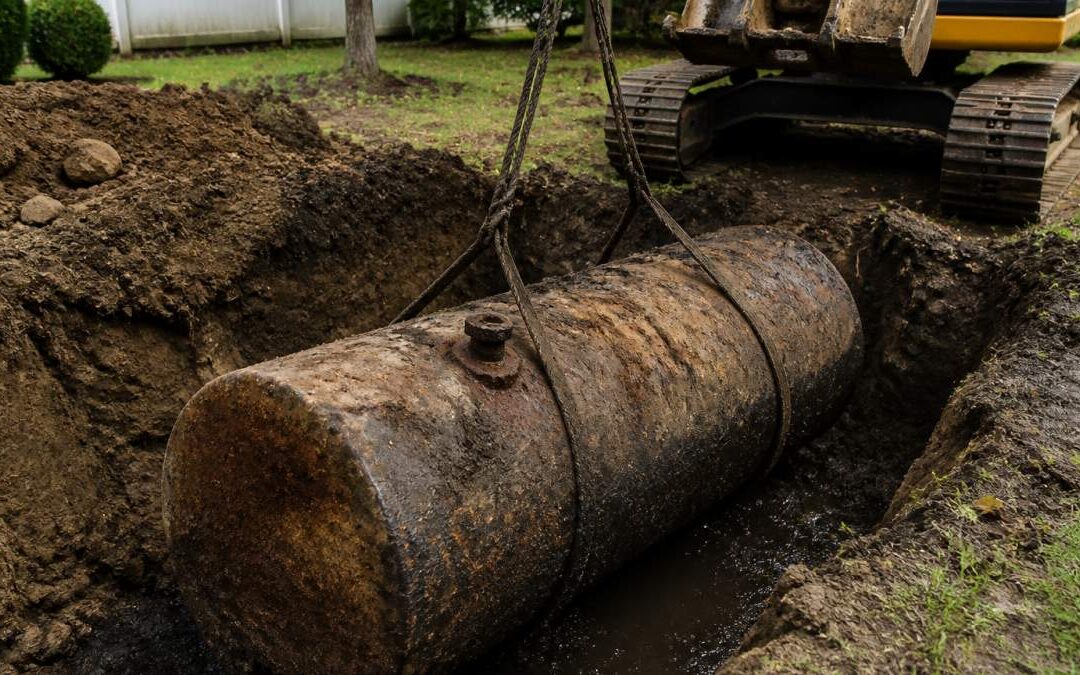
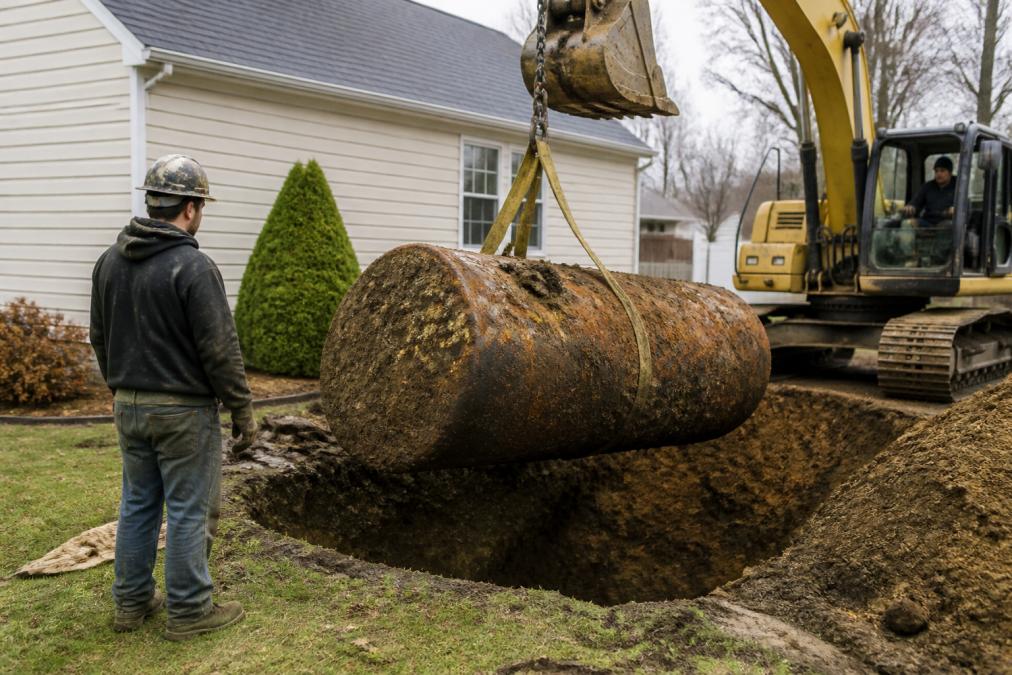
Heavy equipment (excavator or backhoe) carefully digs around the tank, exposes it fully, disconnects all piping, and lifts it from the ground for proper disposal or recycling. Excavation typically takes 4-6 hours depending on soil conditions.
Step 5: Soil Testing and Contamination Assessment
Once the tank is removed, soil samples are collected from the excavation area and sent to a certified laboratory for analysis of petroleum contamination, heavy metals, and other hazardous substances. Testing takes 5-10 business days and determines whether remediation is needed.
Step 6: Backfill and Site Restoration
After testing, the excavation pit is backfilled with clean soil, compacted in layers to prevent settling, and graded to original condition. If contamination is found, remediation occurs before backfill, either by removing contaminated soil or treating it in place.
Request copies of all soil test results and permits. You’ll need these documents for future property sales or insurance claims.
Oil Tank Removal Cost Estimate: What to Budget
Costs vary based on tank size, location, soil conditions, and contamination levels. Most homeowners budget between $1,500 and $5,000 for standard removal without contamination.
Typical Removal Costs
Basic removal (no contamination): $1,500-$3,500
- Tank inspection and permitting
- Draining and decommissioning
- Excavation and extraction
- Soil testing (clean results)
- Backfill and site restoration
Removal with minor contamination: $3,500-$8,000
- All of the above, plus
- Excavation of contaminated soil
- Off-site disposal of contaminated material
- Additional soil testing and remediation verification
Removal with significant contamination: $8,000-$25,000+
- Extensive excavation
- Professional remediation (soil treatment, vapor extraction, or in-situ remediation)
- Multiple rounds of soil testing
- Specialized equipment and extended timeline
Factors that increase costs: large tanks (over 1,000 gallons), deep burial (more than 4 feet), contaminated soil requiring remediation, difficult soil conditions, proximity to structures or utilities, and additional site restoration.
Does Your Homeowners Insurance Cover Oil Tank Removal and Contamination?
This is the question most homeowners ask too late. The answer is: it depends on your policy and when the contamination occurred.
How to Check Your Coverage
-
Review your homeowners insurance policy for the “pollution exclusion” clause. This typically excludes coverage for environmental contamination.
-
Call your insurance agent and ask specifically: “Does my policy cover underground oil tank leaks, soil contamination, or remediation costs?” Get the answer in writing.
-
Ask about your policy’s effective date. Some policies cover contamination only if it occurred after the policy was issued. Older leaks may not be covered.
-
Inquire about “sudden and accidental” coverage. If your policy includes this rider, it may cover an unexpected tank rupture but not gradual corrosion.
-
Check if you have environmental liability coverage. This is rare in standard homeowners policies but may be available as an add-on.
Filing an Insurance Claim for Tank Contamination
If you believe your policy covers tank contamination:
-
Document the discovery. Take photos of soil discoloration, odors, or tank damage. Record the date you first noticed the problem.
-
Notify your insurer immediately. Do not delay. Most policies require prompt notice of potential claims.
-
Provide soil testing results. Once testing is complete, submit the lab report to your insurer. This proves contamination exists and quantifies the scope.
-
Request a coverage determination in writing. Ask the insurer to confirm whether the claim is covered and what percentage they will pay.
-
Keep all receipts and invoices. Document every cost associated with removal and remediation.
Important: Most insurance claims for tank contamination are denied because the contamination is classified as gradual pollution rather than sudden and accidental. If your claim is denied, you have the right to appeal or consult an insurance attorney.
Financial Assistance and Grants
While homeowners insurance rarely covers tank removal, some state and local programs offer financial assistance:
-
New York State Department of Environmental Conservation (DEC): Administers the Remedial Action Workplan (RAW) program, which may provide cost-sharing for environmental remediation on residential properties. Eligibility varies by location and contamination severity.
-
County health departments: Some Nassau and Suffolk County programs offer grants or low-interest loans for environmental cleanup on residential properties.
-
Federal tax credits: In limited cases, environmental remediation costs may qualify for deductions. Consult a tax professional.
Do not assume your homeowners insurance covers tank removal or contamination. Call your agent before work begins. If coverage is denied, explore state and local grant programs, they may offset costs significantly.
Soil Testing After Oil Tank Removal: Process and Standards
Soil testing is mandatory in most cases and follows environmental protection agency standards and DEC guidelines. Samples are collected from multiple locations, sealed with chain-of-custody documentation, and sent to a certified laboratory for analysis. Results are compared against DEC remediation standards. Testing typically takes 5-10 business days. If contamination is found below cleanup thresholds, no further action is required.
Real Estate Disclosure and Property Value Implications
Selling a property with a buried oil tank requires disclosure of the tank’s presence and condition. Buyers may demand removal before closing, lenders often require it, and title insurance may exclude environmental coverage. Removing the tank before listing simplifies the sale, eliminates buyer concerns, and commands better prices. If you plan to sell within 5 years, removal now saves headaches and costs far less than price reductions or failed sales.
Frequently Asked Questions
How much does it cost to remove an underground oil tank on Long Island?
Underground storage tank removal costs depend on tank size, depth, soil conditions, and whether contamination is found. Pricing varies significantly based on whether backfill and soil remediation are needed. Contact a licensed contractor for a site-specific estimate. Many homeowners choose to convert to propane after removing an oil tank to avoid dealing with future underground tank issues.
Is it better to abandon an oil tank in place or remove it completely?
Abandoning an underground storage tank in place leaves it buried but requires decommissioning: draining sludge, filling with inert material, and capping the vent and fill pipes. Complete removal excavates the tank entirely, allowing soil testing and contamination assessment. Removal is often required for real estate transactions, provides peace of mind, and eliminates future liability. Abandonment may be permitted if the property isn’t being sold and soil testing shows no contamination.
What happens if soil contamination is discovered during tank removal?
If soil sampling reveals petroleum contamination, remediation becomes necessary. The extent depends on contamination levels and groundwater proximity. Minor contamination may require soil excavation and disposal; significant contamination may need professional remediation. Environmental Protection Agency and New York Department of Environmental Conservation standards guide cleanup levels. Costs increase substantially, making pre-removal soil testing and professional assessment critical for budgeting.
Do I need a permit to remove an underground oil tank on Long Island?
Yes. Nassau and Suffolk County require permits for underground storage tank removal. You must file applications with the local health department or DEC-authorized contractor. Permit requirements include site assessment reports, removal plans, and soil testing protocols. Licensed contractors handle permit applications, but homeowners should verify local requirements. Unpermitted removal can result in fines and property sale complications.
Removing an underground oil tank protects your property, your environment, and your wallet. The process is manageable when you work with licensed contractors and follow local regulations. If you’re considering converting from oil heating to propane, Discount Propane offers transparent pricing and fast delivery scheduling. Get a propane price quote today and explore a cleaner, more efficient heating solution for your Long Island home.