
Quick Summary
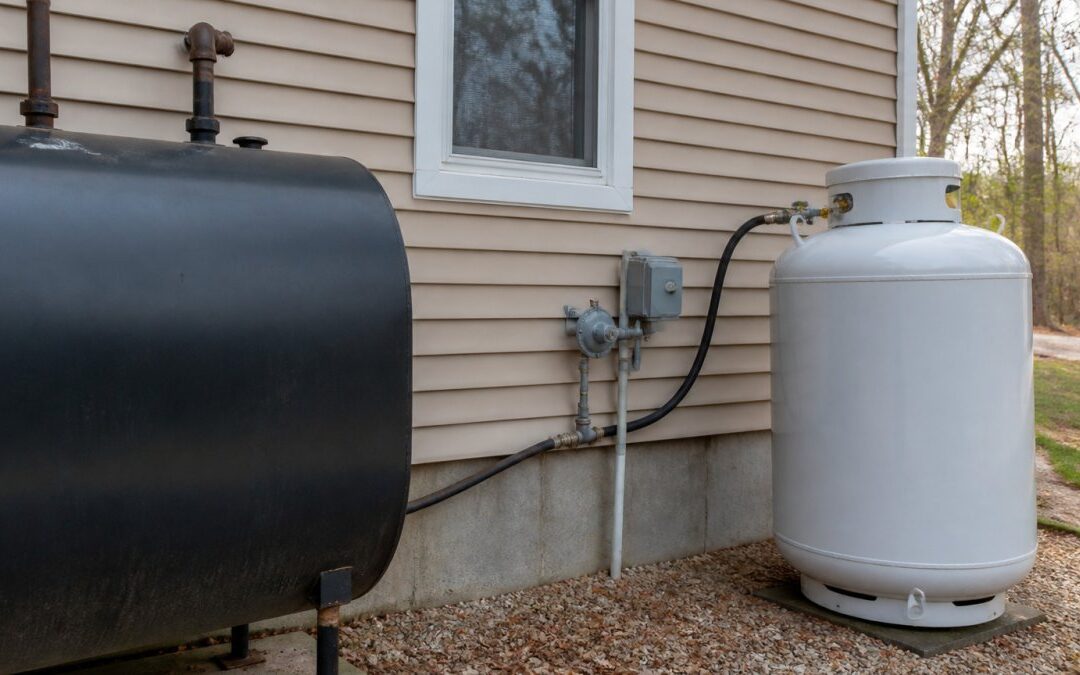
Switching from oil to propane is a multi-step project: the heating appliance, fuel tank and local approvals must line up before the first delivery. Many homeowners find the planning stage takes longer than the physical work, so start with an inspection of your current equipment.
- Ask a licensed HVAC contractor to inspect your oil furnace or boiler and confirm conversion approval.
- Replacement is often better when the appliance is old or near the end of its service life.
- Never drain or remove an oil tank before you have a plan for the new propane system.
- Propane tanks must never be placed in a crawl space, basement or garage.
- Get a site visit and written load calculation before buying a tank.
Table of Contents
- Why Switching From Oil to Propane Takes Planning
- Can Your Oil Furnace or Boiler Be Converted to Propane?
- Propane vs. Oil Heating Costs: What to Compare
- Propane Tank Installation Requirements: Sizing, Siting and Clearances
- Permits, Inspections and Codes to Check Before You Start
- Safe Oil Tank Removal When Switching to Propane
- Commissioning Checks Before Your Propane System Goes Live
- Scheduling Your Switch From Oil to Propane With Discount Propane
- Frequently Asked Questions
Why Switching From Oil to Propane Takes Planning
Switching from oil to propane is a multi-step project, not a single phone call.
Most homeowners find the planning stage takes longer than the physical work. That is normal. Taking time up front helps you avoid delays and safety problems later.
Watch out: Do not drain, remove or cut into an oil tank before you have a plan for the new propane system.
Can Your Oil Furnace or Boiler Be Converted to Propane?
Not every oil furnace or boiler can simply be converted to run on propane. To check whether your current equipment is a good fit, see our renewable propane compatibility with existing furnaces guide.
The first step is to ask a licensed HVAC contractor to inspect your equipment. Bring the make, model and serial number of your current unit.
Replacement is often the better choice when the appliance is old or near the end of its service life.
Propane vs. Oil Heating Costs: What to Compare
Comparing heating costs means looking at more than the price per gallon. Pricing for both fuels changes with the market, the season and the size of your order. For that reason, this guide does not list fixed prices.
Compare these items when you build your estimate:
- Fuel price per gallon, quoted by each supplier
- Efficiency of your current appliance and the new one
- Cost of the conversion or replacement work
Contact Discount Propane for current pricing and a quote for your home. Pricing depends on quantity, dates and delivery details.
Propane Tank Installation Requirements: Sizing, Siting and Clearances
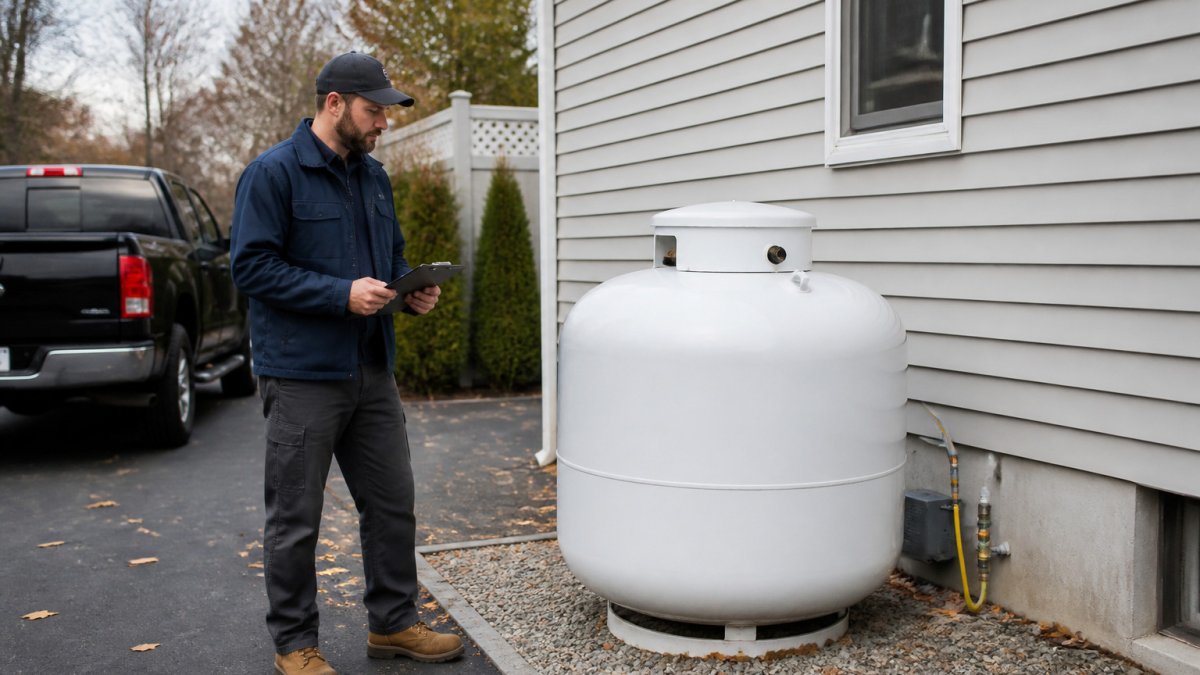
A propane tank must be sized, placed and spaced according to safety rules. The right tank size depends on how much heat your home needs and how often the tank will be refilled. Your installer will run the calculation, but you should understand what goes into it so you can sanity-check the quote.
How tank sizing actually works
Sizing is not a guess based on square footage. An installer typically works through four inputs:
- Connected load, the total Btu per hour of every propane appliance (furnace or boiler, water heater, range, dryer, generator). The nameplate rating of the appliance is what counts.
- Design temperature, the coldest expected outdoor temperature for the area, which drives how hard the furnace runs on the coldest day.
- Delivery interval, how often you want refills. A tank sized for a 30-day fill cycle is smaller than one sized for a full heating season.
The right tank size depends on the load calculation for your home, so treat any rule of thumb as a starting point rather than a guarantee.
Clearance distances you should expect
Local fire codes set minimum separation distances from buildings, property lines, ignition sources and air intakes, and the tank must never be placed in or under an enclosed space where leaking vapor can collect.
Your local fire authority can require greater distances than NFPA 58, and some jurisdictions add screening, bollard, or setback rules. The installer confirms the exact figures for your lot; the ranges above are what to expect, not a substitute for the permit drawing.
Never place a propane tank in a crawl space, basement, garage, or any enclosed area. Propane is heavier than air and will pool at the lowest point, creating an explosion hazard.
Delivery access and the fill point
A tank that cannot be reached by the delivery truck is a tank that cannot be filled. Before the tank is set, walk the route with the installer and confirm:
- The truck can turn around and park within hose reach of the fill valve. Confirm the hose reach with your supplier.
- The fill valve is accessible without moving vehicles, fences, or landscaping.
- The ground is firm enough for a loaded truck, especially in spring thaw.
Above-ground vs. underground
Above-ground tanks cost less to install, are easier to inspect, and are the default for most homes. To compare the two placement options in detail, read our above ground vs underground propane tank pros and cons. Underground tanks are sometimes chosen for aesthetics or where setbacks are tight, but they cost more, require corrosion protection and anchoring, and are harder to service.
Sizing, siting, and delivery access are decided together. Get a site visit and a written load calculation before you buy a tank, a tank that is the wrong size or in the wrong spot is expensive to fix after installation.
::: Optimizing your fuel storage layout often provides the ideal opportunity to integrate a tankless water heater installation into your home heating system for improved efficiency.
The article’s key sizing, siting and access points are summarised below for quick reference.
| Item | Value | Note |
|---|---|---|
| Usable capacity | About 80% of water capacity | Leaves room for vapor expansion |
| Example tank | 500 gallons holds about 400 usable | Above-ground tank example |
| Connected load | Total Btu per hour of all appliances | Use appliance nameplate ratings |
| Design temperature | Coldest expected outdoor temperature | Drives furnace load on the coldest day |
| Delivery interval | 30-day cycle vs. full season | Sets how large the tank should be |
| Tank location | Never in crawl space, basement or garage | Propane pools at the lowest point |
| Fill access | Truck must reach the fill valve | Check hose reach with supplier |
| Above-ground tanks | Cheaper, easier to inspect | Default choice for most homes |
Permits, Inspections and Codes to Check Before You Start
Most propane installations need permits and inspections. Rules are set by state and local authorities, and sometimes by the local fire department or utility.
Start by contacting your local building department and fire authority. Ask which permits apply to a fuel change, a tank installation and an oil tank removal.
Common items to check include:
- Building permit for the heating system change
- Tank installation permit from the fire authority
- Inspection before the system is turned on
Local authorities decide which edition of the applicable propane storage and handling code applies to you.
Safe Oil Tank Removal When Switching to Propane
Removing an oil tank is part of most switches, but “removal” means different things depending on where the tank sits and what your state and town allow. Oil tanks can leak for years, and leftover oil can contaminate soil and groundwater. A careful decommissioning protects your property, your neighbors, and your ability to sell the home later.
First, find out what kind of tank you have
The safe path depends on whether the tank is above ground or buried:
- Above-ground tank (indoor or outdoor), usually the simplest to drain, cut up, and recycle. Most jurisdictions allow removal once the tank is emptied and purged.
- Underground storage tank (UST), subject to stricter rules. Many states require notification, soil testing, and sometimes a licensed tank contractor to pull the tank and sample the excavation.
- Tank in a basement or crawl space, often removed in place after draining, but confirm local rules; some jurisdictions allow abandonment with the tank filled with an inert material.
The safe decommissioning sequence
- Stop using the tank and document the fuel level. Have a licensed oil company pump out the remaining oil. Keep the receipt, it proves the tank was emptied before work began.
- Purge and clean the tank. Residual sludge and vapor are the explosion risk. A qualified contractor purges the tank before any cutting or removal.
- Remove or abandon according to local rules. If removal is required, the tank is cut up and hauled to a scrap or hazardous-waste facility. If abandonment in place is allowed, the tank is typically filled with sand, foam, or an inert slurry and the fill and vent lines are capped and documented.
- Test the soil if the tank was underground. Most states and many towns require soil sampling around a UST to confirm no release occurred. If contamination is found, cleanup is a separate, regulated project.
- Keep the paperwork. Retain the pump-out receipt, the removal or abandonment record, soil test results, and any permits. Buyers and lenders routinely ask for these during a home sale.
Do not cut into, drain, or fill an oil tank yourself. Residual oil and vapor can ignite, and improper abandonment can create a future liability that follows the property. Use a licensed tank contractor and keep every record.
Spill liability and why documentation matters
A leaking oil tank can trigger a regulated cleanup, and responsibility for the cost depends on local rules. That is why the paperwork matters as much as the physical work: a clean removal record with soil test results is the difference between a routine home sale and a delayed closing. Ask your contractor which state agency regulates tanks in your area and what notification, if any, is required before work starts.
Treat oil tank decommissioning as a regulated project, not a demolition task. Empty, purge, remove or abandon per local rules, test the soil if the tank was buried, and keep every record for the life of the property.
Commissioning Checks Before Your Propane System Goes Live
Commissioning means testing the whole system before you rely on it for heat. It is the final check that the tank, lines, appliance and controls work together safely.
Ask your installer to verify these items before the first fill:
- All gas connections are leak tested
- The tank valves and regulator are set correctly
- The burner lights smoothly and runs at the correct flame
Ask for a written record of the checks. Keep it with your permit and inspection papers.
Scheduling Your Switch From Oil to Propane With Discount Propane
Once the planning is done, you are ready to schedule the switch. Discount Propane offers online ordering and flexible delivery for homes and businesses on Long Island.
You can set up automatic propane delivery on Long Island so your tank is refilled before it runs low. If you want to review the full range of service, see our Long Island propane delivery and refill services.
When you are ready to talk through your conversion, contact Discount Propane to arrange a quote and schedule your installation. Our team can help you line up the next steps for a safe, on-time switch.
Frequently Asked Questions
Is it better to have propane or oil heat?
Neither fuel is better in every case. Propane burns cleaner and needs no tank cleaning or sludge management, and many homeowners find conversion simplifies maintenance. Oil can be cheaper per unit of heat in some markets and years. Compare current delivered prices from suppliers, the efficiency of your existing or planned equipment, and the cost of the conversion itself. Pricing depends on quantity, delivery timing and your location, so request a current quote from Discount Propane before deciding.
Do you need to replace your furnace when switching from oil to propane?
Not always. Many oil furnaces and boilers can be converted to propane with a conversion burner, but the appliance must be compatible with propane and approved by its manufacturer for that conversion. Older or heavily worn units may be better replaced than converted. A qualified technician can inspect the heat exchanger, venting and controls to confirm whether conversion is practical or whether replacement makes more sense.
How is an old oil tank safely removed or decommissioned?
A licensed contractor should drain and clean the tank, remove any remaining oil and sludge, and either remove the tank entirely or properly close it in place according to local rules. Keep the disposal receipt and any documentation the local fire authority or environmental agency requests. Do not leave a tank abandoned with oil in it, since leaks can contaminate soil and groundwater. Ask your installer to coordinate tank removal with the propane installation so the sequence stays safe.
What safety checks are needed before using a new propane tank?
Before the first fill, the installer should confirm the tank is correctly sited with required clearances, that all gas piping has been pressure tested, and that connections are leak-checked with a soap solution or approved detector. The appliance burner should be adjusted for propane and commissioned, with carbon monoxide levels and draft verified. Ask for written confirmation that inspections were passed and keep a copy with your records.
