
Table of Contents
- How to Find Propane Refill Stations Near You
- Tank Exchange vs. Refill: What’s the Difference
- Propane Tank Refill Cost and Pricing Factors
- How to Transport Propane Tanks Safely
- Propane Tank Recertification Requirements
- Safety Guidelines for Handling Propane
- Why Choose Fast, Transparent Propane Delivery
- Frequently Asked Questions
Last Updated: September 27, 2026
How to Find Propane Refill Stations Near You
Search online to fill up propane or check local hardware stores, gas stations, and home improvement retailers. Many communities have dedicated propane distribution centers handling both residential and commercial refills.
Call ahead to confirm availability and ask about their tank acceptance policy, not all stations accept every tank type, and some require proof of inspection or recertification.
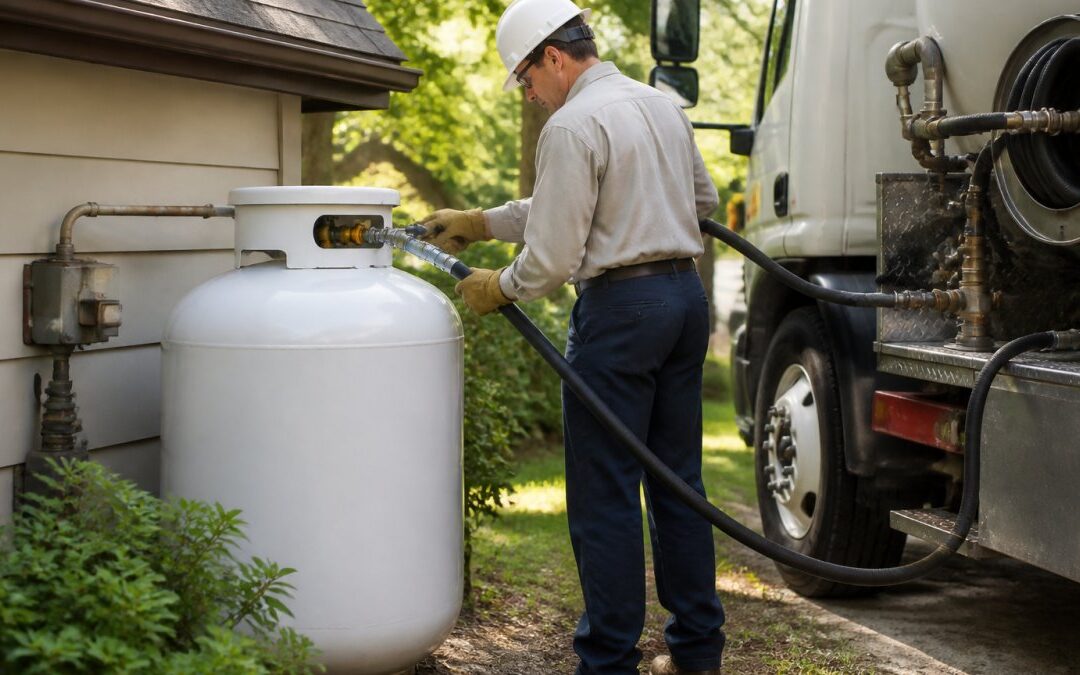
Discount Propane makes finding propane simple with transparent online ordering and real-time pricing visibility. You can check availability and schedule delivery without leaving your home, eliminating the need to hunt down a local station. The platform shows you exact pricing upfront, so there are no surprises when the truck arrives.
Bring your tank’s registration paperwork and ask the attendant to inspect the valve and safety features to ensure it’s safe to refill.
Call ahead before driving to a refill station. Many locations have limited propane supplies during winter months, and you don’t want to make the trip only to find they’re out of stock or closed for the day.
Tank Exchange vs. Refill: What’s the Difference
A tank exchange means trading your empty tank for a pre-filled one owned by the propane company. A refill means your own tank gets filled at the station.
Tank exchange is faster and requires no inspection, you walk away with a full tank in minutes, ideal for occasional users.
When you fill up propane at a station, it takes longer due to inspection requirements, but you keep the same tank and typically pay less over time if you use propane regularly.
Seasonal users benefit from exchange convenience; regular users prefer refills for cost control and scheduled deliveries.
Discount Propane offers flexible scheduling for refill deliveries with transparent pricing locked in advance.
Tank exchange is faster but you lose ownership of your cylinder. Refilling your own tank takes more time but keeps your equipment in your hands and typically costs less over time if you use propane regularly.
Propane Tank Refill Cost and Pricing Factors
Propane tank refill cost varies by market price (which fluctuates daily with crude oil costs) and seasonal demand, with winter months typically higher due to heating demand.
Tank size, delivery distance, and delivery frequency all affect pricing. Larger tanks and regular customers often qualify for better per-unit rates.
Discount Propane provides upfront, real-time pricing so you see exactly what you’ll pay before ordering. No hidden surcharges or surprise fees appear when the truck shows up. You can check prices online anytime and schedule delivery at your convenience without long-term contracts or commitments.
Comparing transparent pricing across providers online often reveals significant savings for regular users.
Avoid propane companies that won’t quote prices over the phone or online. If you can’t see pricing before committing, you risk overpaying. Transparency in pricing is a sign of a trustworthy provider.
How to Transport Propane Tanks Safely
Never transport a propane tank lying on its side or upside down, tanks must remain upright because the internal safety valve functions only in vertical position.
Pre-Trip Safety Checklist
Before loading a propane tank into your vehicle, complete this safety checklist to ensure safe transport:
Tank Inspection:
- Verify the tank’s certification date on the collar is current (not expired)
- Inspect the entire cylinder body for visible dents, cracks, or deep rust
- Check the valve stem for corrosion or damage
- Confirm the valve cap is in place and secure
- Ensure the valve opens and closes smoothly (do not force it)
- Look for any signs of propane leaks (hissing sound or rotten-egg smell)
Vehicle Preparation:
- Plan to transport the tank in an open truck bed or trailer, never inside a car
- Clear the truck bed of sharp objects that could puncture the tank
- Gather rope, bungee cords, or straps rated for the tank’s weight
- Ensure your vehicle has adequate fuel to reach your destination
- Check that your vehicle’s tires are properly inflated
Loading and Securing:
- Position the tank upright in the truck bed, away from the cab
- Secure the tank with at least two straps or rope ties
- Ensure straps are tight but not so tight they deform the tank
- Verify the tank cannot shift, tip, or roll during transport
- Keep the valve cap in place throughout transport
Route Planning:
- Plan the most direct route to your destination
- Avoid highways with heavy traffic or rough road conditions if possible
- Note the location of the nearest fire station in case of emergency
- Inform someone of your route and expected arrival time
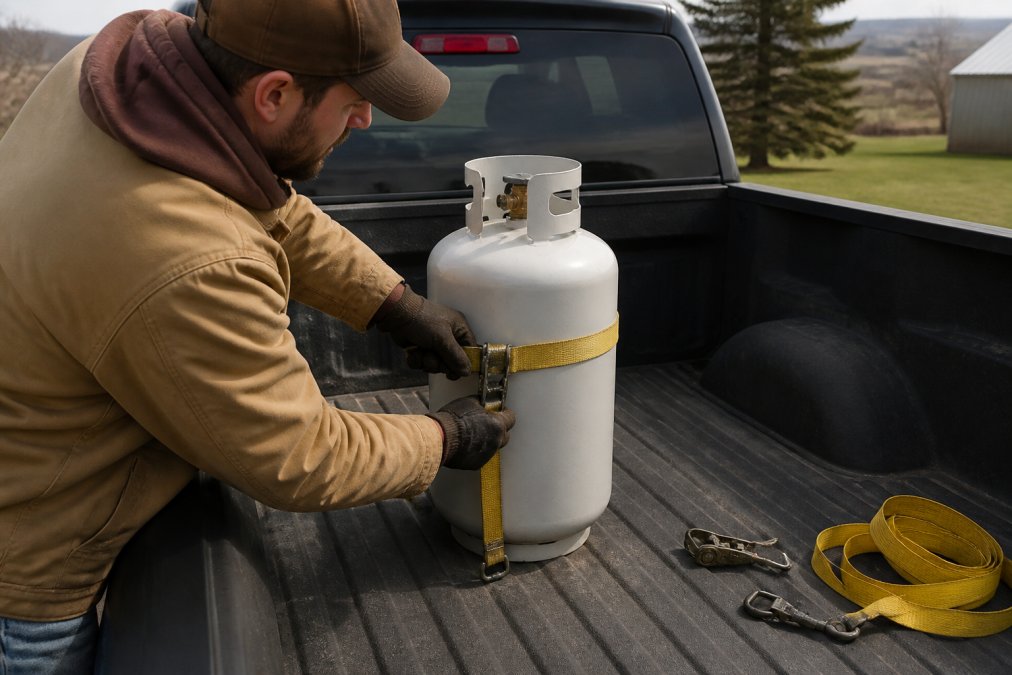
Securing these cylinders properly ensures they remain stable during transit, which is essential when you are preparing to deploy portable heating solutions at your next outdoor event.
During Transport
Drive at moderate speeds with smooth acceleration and braking to keep the tank stable and prevent shifting.
If you detect a rotten-egg smell, pull over immediately in a safe location, turn off your engine, and call emergency services.
Never transport a tank showing visible damage, rust, dents, or expired certification, it’s unsafe and cannot be legally filled.
Secure each tank individually, do not stack tanks on top of each other.
After Arrival
Turn off your engine before unloading. Remove the tank carefully, keeping it upright, and set it on a flat, stable surface.
Position the tank in a shaded, well-ventilated area away from heat sources and ignition points, with the valve cap in place until ready to use.
When to Use Professional Delivery Instead
If you’re moving propane for a construction site, commercial operation, or large quantity, professional delivery service eliminates the need to transport tanks yourself. Professional drivers are trained in hazmat transport, carry proper insurance, and handle all transport requirements safely and legally. Your propane arrives exactly when you need it without the liability or safety risk of DIY transport.
Never transport a propane tank inside a car, SUV, or enclosed vehicle. Propane vapor can accumulate in an enclosed space, creating a serious explosion hazard. Always use an open truck bed or trailer.
If you frequently transport propane tanks, consider investing in a dedicated tank carrier or rack designed for your vehicle type. These secure the tank properly and protect it from damage during transport.
Propane Tank Recertification Requirements
Propane tank recertification is mandatory every ten years under federal Department of Transportation regulations to ensure cylinder safety.
How to Read Your Tank’s Certification Date
Your tank’s certification status is stamped on the collar at the top, showing the month and year it was certified and when it expires.
If the expiration date has passed, the tank is out of compliance and cannot be legally filled.
Why Stations Refuse to Fill Expired Tanks
Refill stations are legally required to refuse expired tanks, it’s a federal compliance requirement, not optional.
The Recertification Process and Cost
A certified inspector examines the tank for corrosion, damage, and valve function. If it passes, a new certification date is stamped on the collar.
Preventing Recertification Issues
Store your tank upright in a dry location away from moisture. A simple cover protects it from rain and direct sunlight.
Set a calendar reminder six months before your tank’s certification expires. This gives you time to locate a recertification facility and schedule an appointment without rushing. Don’t wait until the expiration date arrives to start looking for a certified inspector.
Never attempt to refill an expired tank or ask a station to overlook the expiration date. It’s illegal, and no legitimate propane provider will do it. If your tank has expired, recertification or replacement is your only option.
Safety Guidelines for Handling Propane
Propane is colorless and odorless naturally, so suppliers add a rotten-egg smell to make leaks obvious. If you detect that smell, evacuate and call emergency services.
Never store propane tanks in basements, attics, or enclosed spaces. Always keep them outdoors in open air. An indoor leak in an enclosed space can quickly reach dangerous concentrations with no way to disperse safely.
Why Choose Fast, Transparent Propane Delivery
Fast delivery and transparent pricing eliminate the frustration of hunting for refill stations and worrying about hidden costs.
| Factor | Impact on Service | Best For |
|---|---|---|
| Tank exchange | Fast, no inspection needed | Occasional users, seasonal needs |
| Tank refill | Lower cost over time, ownership retained | Regular users, consistent demand |
| Delivery service | Convenience, no transport required | Contractors, residential heating, industrial |
| Recertification timing | Safety compliance, prevents refusal | All tank owners, every 10 years |
Department of Transportation propane cylinder safety regulations
National Propane Gas Association safety guidelines
OSHA propane handling and storage requirements
Frequently Asked Questions
What’s the difference between propane tank refill and tank exchange?
A refill means your existing tank is filled at a station, you keep the same cylinder. Tank exchange swaps your empty tank for a pre-filled one. Refills typically cost less and let you keep your tank. The choice depends on your convenience needs and how often you use propane.
How much does it cost to fill a propane tank?
Propane tank refill cost depends on tank size, current market rates, and delivery distance. Pricing varies by season and location. For accurate, real-time pricing on your specific tank size and delivery needs, check your propane supplier’s website or request a quote. Transparent suppliers show prices upfront before you commit to an order.
How do I know if my propane tank needs recertification?
Propane tanks require DOT recertification every ten years from the manufacture date. Check the date stamped on the collar of your cylinder. If it’s been ten years or longer, or if the tank shows rust, dents, or damage, it must be recertified before refilling. Many refill stations will inspect your tank and refuse to fill expired cylinders for safety reasons.
Are there safety regulations for transporting propane tanks?
Yes. Propane tanks must be transported upright, secured to prevent rolling, and kept away from heat sources. Never transport propane in a closed vehicle cabin or in a trunk. Keep the valve cap on and ensure the overfill protection device (OPD valve) is intact. Follow DOT hazardous materials transport rules when moving cylinders. Never transport a tank that’s leaking or damaged.