
Table of Contents
- 1. Lock In Your Thermostat Setpoint and Stop Paying for Empty Rooms
- 2. Seal Air Leaks and Weatherstrip Your Way to Lower Propane Heating Bills
- 3. Is Propane Cheaper Than Heating Oil? A Cost-Per-Gallon Breakdown
- 4. Insulate Ducts, Pipes, and Your Thermal Envelope
- 5. The Benefits of Annual Furnace Tune-Ups Go Beyond Efficiency
- 6. Understand Your Average Propane Usage Per Month to Spot Waste
- 7. Upgrade to a Programmable Thermostat and Monitor Your Tank
- Frequently Asked Questions
Last Updated: September 16, 2026
1. Lock In Your Thermostat Setpoint and Stop Paying for Empty Rooms
The fastest way to lower propane heating bills is to stop heating empty rooms. A thermostat set to drop 7 to 10 degrees while you sleep or work cuts propane consumption, because the furnace runs fewer cycles.
This guide covers seven moves that cut fuel use, ranked by return on effort. Most households can stack three or four this weekend without hiring anyone.
Every degree you shave off the setpoint reduces runtime, and runtime is what burns propane.
The 7-to-10 Degree Rule That Cuts Propane Consumption
Set your daytime temperature, then program a setback for the hours the house is empty or everyone is asleep. A common approach is 68°F while you’re home and awake, dropping to 58-61°F overnight.
- Weekday work hours: 8 hours at the lower setpoint
- Overnight: 7-8 hours at the lower setpoint
- Weekend away: same schedule as weekdays
Why This Is the Highest-ROI Move on the List
Thermostat setbacks sit at the top of the hierarchy for one reason: the cost is zero or near zero, and the effect is immediate. You are not buying hardware or hiring labor, you are changing a schedule, and the furnace responds the same day.
Tailor the Setback to Your Climate
Generic advice ignores where you live. In a severe-cold region, a deep overnight setback can force a long recovery run in the morning, and the furnace may burn more catching up than it saved. In a milder climate, a larger setback is safe because recovery is short.
Don’t crank the thermostat above your normal setpoint to “warm up faster.” A propane furnace heats at a fixed rate regardless of how high you set it, so you just overshoot the target and waste fuel.
Pair the Setback With Tank Monitoring
A setback lowers how much propane you burn; a tank monitor lowers what you pay for it. Together they cover both halves of the bill. The monitor shows your level in real time, so you can schedule a fill when prices dip instead of ordering in an emergency cold snap. Most suppliers install one free for delivery customers.
The thermostat setback is the first move because it costs nothing and works immediately. Add a tank monitor to control the price side, and you have addressed both what you burn and what you pay.
2. Seal Air Leaks and Weatherstrip Your Way to Lower Propane Heating Bills
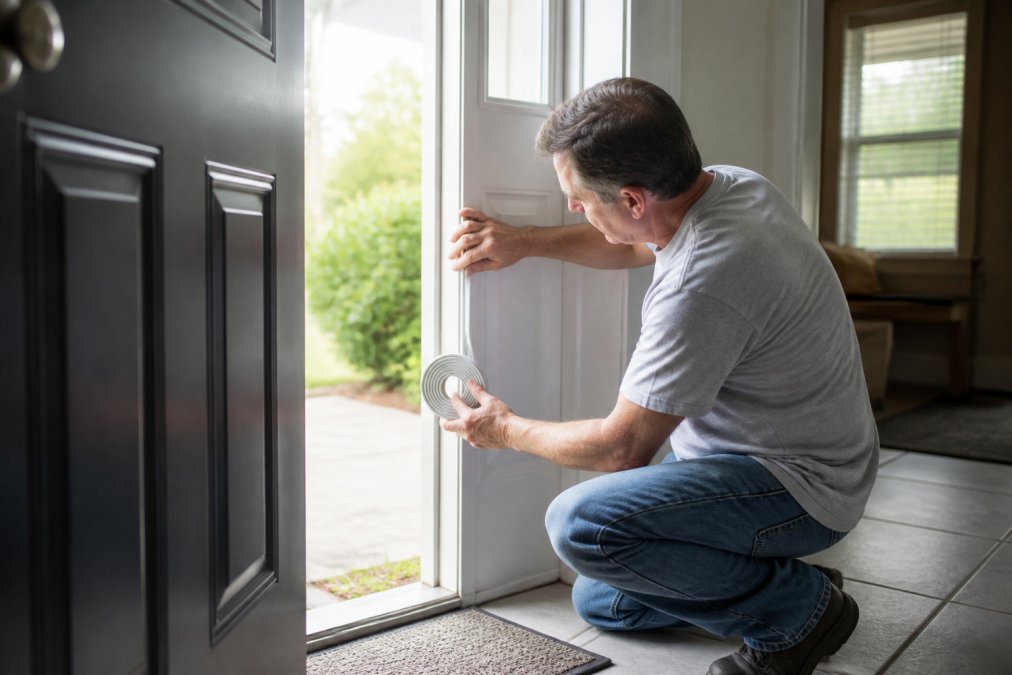
Air sealing is the cheapest high-impact fix here. Cold air entering through gaps around doors, windows, and penetrations forces your furnace to run longer, and the leaks stay invisible until you look.
Where to Look for Hidden Drafts
- Exterior door frames and thresholds
- Window sashes and the gap where the frame meets the wall
- Electrical outlets and switch plates on exterior walls
- Where pipes, cables, and vents pass through the floor or ceiling
- The rim joist in the basement, a classic heat-loss path
- Attic hatch and any pull-down stair
Weatherstripping and foam sealant handle most of these in an afternoon. A U.S. Department of Energy guide to air sealing walks through the priority order if you want to work systematically.
3. Is Propane Cheaper Than Heating Oil? A Cost-Per-Gallon Breakdown
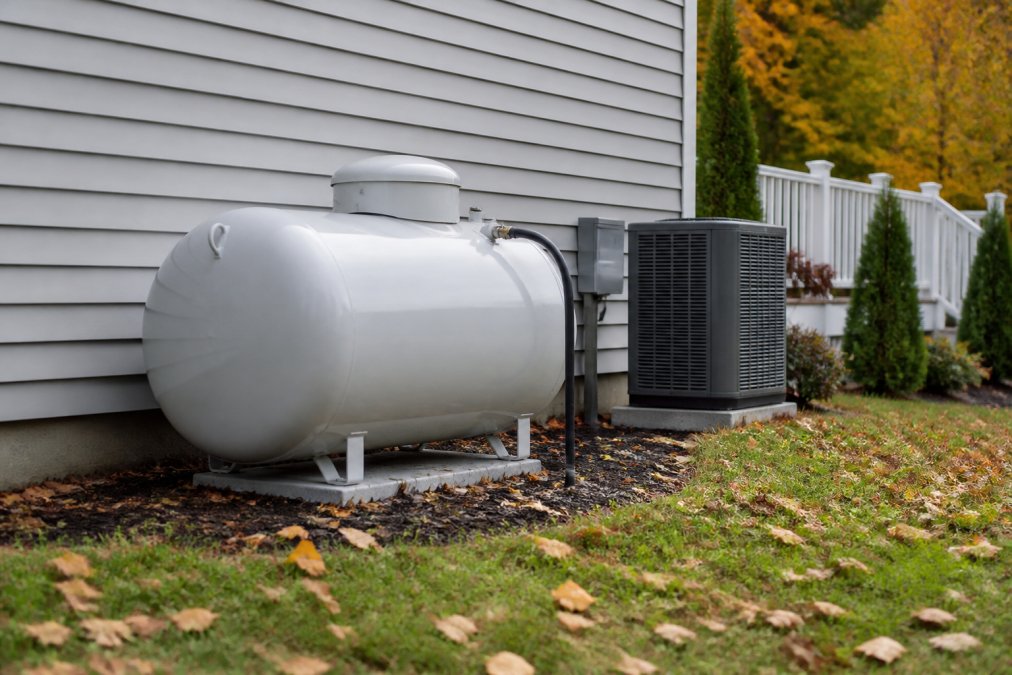
Most guides stop at the furnace and ignore the tank itself. Tank monitoring tells you your fill level in real time so you buy on price instead of in a panic, changing the economics of every gallon you burn.
What Tank Monitoring Actually Does
A monitor mounts on the tank gauge or replaces it and reports the level to a phone app or supplier portal. Most run on a battery that lasts years, and many suppliers install them free for delivery customers, since the data helps them route trucks efficiently.
- Real-time level, so you never guess whether you have a week or a month left
- Low-level alerts, so a fill gets scheduled before you hit the reserve
- Usage history, so you can spot a leak or a furnace problem the same way you would from delivery records
- Price-trigger buying, so you can fill when the market dips rather than when the tank runs dry
The ROI Hierarchy: Which Fixes Pay Back Fastest
Most articles never rank where to spend first. A practical order, fastest payback to slowest:
- Thermostat setbacks and air sealing. Lowest cost, immediate effect on runtime, and no professional labor.
- Duct and pipe insulation. Modest materials cost, meaningful reduction in heat that never reaches a room.
- Tank monitoring. Low or no hardware cost, and it protects you from the worst prices of the year.
- Annual tune-up. Small recurring cost that keeps combustion efficiency at its rated level and prevents breakdowns.
- Attic and envelope insulation. Higher cost, but often the biggest single reduction in an older home.
- High-efficiency furnace. Largest capital outlay, so it only makes sense after the cheap steps are done.
The Safety Check Older Appliances Need
One gap in nearly every competing article: the safety risk of running outdated propane equipment to save money. A furnace or water heater past roughly 15 years old can lose efficiency quietly and develop hidden problems, including a cracked heat exchanger or blocked flue that pushes carbon monoxide into living space. Saving a few hundred dollars is not worth that risk.
A carbon monoxide alarm is not a substitute for an inspection. It is the last line of defense, not the first. If your propane appliance is more than 15 years old, schedule a combustion safety check every year.
4. Insulate Ducts, Pipes, and Your Thermal Envelope
Heat that escapes before reaching a room is fuel you paid for and never felt. Sealing and insulating ductwork in unconditioned spaces, and wrapping hot water pipes, keeps that heat in the system.
5. The Benefits of Annual Furnace Tune-Ups Go Beyond Efficiency
An annual tune-up keeps your furnace at its rated combustion efficiency and catches small problems before they become mid-winter breakdowns. A dirty burner or clogged filter forces the system to work harder for the same heat, and you pay for that in propane.
- Cleaning and inspecting the burners
- Checking and replacing the air filter
- Testing combustion efficiency and adjusting the air-fuel mix
- Inspecting the heat exchanger for cracks
- Verifying the flue and ventilation
Skipping the tune-up on an older propane furnace isn’t just an efficiency question. A cracked heat exchanger or a blocked flue can push carbon monoxide into living space. If your unit is more than 15 years old, have it inspected every year without exception.
6. Understand Your Average Propane Usage Per Month to Spot Waste
You can’t manage what you don’t measure. Tracking your average propane usage per month turns a vague “the bill felt high” into a clear signal that something changed.
Rough usage benchmarks by season:
| Season | Typical Usage Pattern | What a Spike Signals |
|---|---|---|
| Summer | Minimal, water heater only | A leak in the tank or lines |
| Shoulder months | Low, occasional heating | Thermostat running when it shouldn’t |
| Peak winter | Highest, weather-driven | Compare to last year’s same month |
| After a tune-up | Should trend down | If not, the tune-up missed something |
7. Upgrade to a Programmable Thermostat and Monitor Your Tank
A programmable thermostat automates the setbacks from step one, and tank monitoring removes the guesswork from ordering. Together they close the loop on propane management.
| Upgrade | Effort | Ongoing Benefit |
|---|---|---|
| Programmable thermostat | Low, DIY install | Automated setbacks every day |
| Smart thermostat | Low, DIY install | Occupancy-based savings |
| Tank monitor | Low, install once | Buy on price, never run out |
| High-efficiency furnace | High, professional | Lower consumption long term |
The cheapest wins come first: thermostat setbacks, air sealing, and duct tape. The bigger investments, like a new furnace, only pay off after the low-cost steps are done.
Frequently Asked Questions
How can I reduce my propane usage?
Start by lowering your thermostat setpoint by 7 to 10 degrees for eight hours daily, which can cut heating costs by up to 10 percent. Seal air leaks with weatherstripping and spray foam, insulate ducts and pipes, and schedule annual furnace tune-ups. A programmable thermostat automates setbacks so you are not paying to heat empty rooms. These steps together reduce propane consumption without sacrificing comfort.
Is propane cheaper than heating oil?
Propane typically costs less per BTU than heating oil because it burns cleaner and delivers more consistent combustion efficiency. However, the answer depends on your local cost-per-gallon and your furnace’s AFUE rating. A high-efficiency propane furnace can achieve 90 to 98 percent efficiency, while older oil systems often max out around 80 to 85 percent. Check current pricing before assuming one fuel wins.
Does a programmable thermostat actually save money on propane?
Yes. A programmable thermostat removes the guesswork by automatically lowering the temperature when you are asleep or away. The Department of Energy estimates that consistent setbacks of 7 to 10 degrees for eight hours per day can save roughly 10 percent on annual heating costs. For propane users, that translates directly to fewer gallons burned and lower refill frequency.
How often should I schedule propane maintenance to improve efficiency?
Schedule a professional furnace tune-up once per year, ideally in early fall before the heating season begins. An HVAC technician will clean burners, check combustion efficiency, inspect the heat exchanger, and verify that your system runs at its rated BTU output. Annual maintenance catches small issues before they become costly breakdowns and keeps your furnace operating at peak efficiency.
What is the average propane usage per month for a home?
A typical single-family home uses between 100 and 200 gallons of propane per month during winter, depending on square footage, insulation quality, and thermostat habits. Homes in colder climates with less insulation may use 250 gallons or more. Tracking your monthly usage helps you spot spikes that indicate air leaks, failing equipment, or inefficient thermostat settings.