
Table of Contents
- What Nassau County Propane Delivery Actually Covers
- Propane Prices Long Island: What Drives the Cost
- Propane Tank Refill vs Exchange: Which One Makes Sense
- Emergency Propane Delivery NY: When You Can’t Wait
- Propane Safety Checklist for Nassau County Homeowners
- Seasonal Propane Usage Tips for Long Island Homes
- How Discount Propane Handles Nassau County Delivery
- Conclusion
Last Updated: August 8, 2026
What Nassau County Propane Delivery Actually Covers
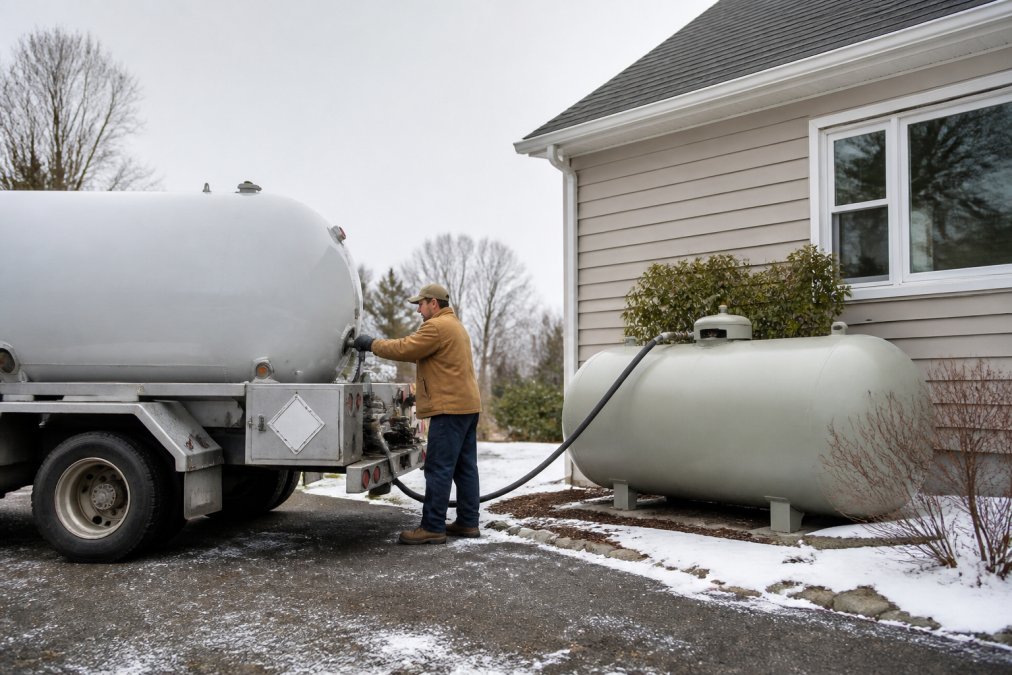
Propane delivery in Nassau County is a full-spectrum fuel service covering residential home heating, water heaters, cooking ranges, pool heaters, backup generators, and commercial job site supply across Long Island’s western half. The service area spans from the Queens border east through Hempstead, Garden City, Levittown, Hicksville, Massapequa, and Great Neck.
Residential Propane Delivery Services
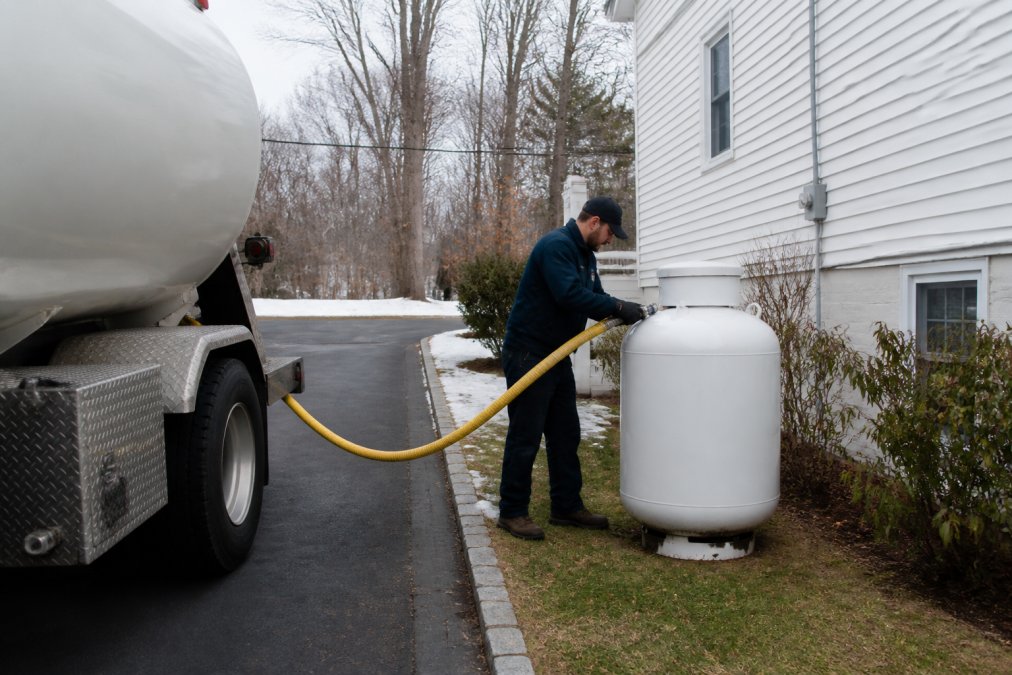
Homeowners choose between will-call delivery, where you order when your tank runs low, and automatic delivery, where your provider schedules refills based on usage history and weather data. Most Long Island homes run on 500-gallon or 1,000-gallon above-ground tanks.
Many Nassau County homes convert from heating oil to propane, which involves replacing the burner, installing a new tank, and running new gas lines. According to the U.S. Energy Information Administration’s propane overview, propane produces significantly fewer greenhouse gas emissions per BTU than fuel oil.
Commercial and Construction Site Propane
Construction sites need consistent propane supply for temporary heaters, roofing equipment, and concrete curing during cold-weather months. The key difference for commercial accounts is scheduling reliability, a contractor with a heated job site cannot wait for a delayed delivery. Forklift cylinder exchange is a separate service from bulk delivery, with exchange logistics mattering as much as pricing.
Propane Prices Long Island: What Drives the Cost
Propane prices on Long Island fluctuate based on wholesale market rates, delivery distance, local supply infrastructure, and seasonal timing. The biggest factor is the wholesale propane market, which tracks closely with crude oil and natural gas prices. Long Island is not connected to a natural gas pipeline grid in many areas, making propane the primary heating fuel for a large share of the population.
According to the U.S. Energy Information Administration weekly propane price data, residential propane prices in the Northeast consistently rank among the highest in the country, driven by regional supply chain constraints. Customers who pre-buy or lock in summer pricing typically pay less than those who order during peak winter demand.
Discount Propane publishes its pricing online in real time, so you can check current rates before placing an order, with no commitment required just to see a number.
Check propane prices in late spring or early summer. Demand drops after heating season ends, and per-gallon rates typically soften. Ordering a top-off before summer ends can reduce your cost heading into fall.
Propane Tank Refill vs Exchange: Which One Makes Sense
Propane tank refill means your existing tank is filled on-site by a delivery truck. Propane tank exchange means you swap an empty cylinder for a pre-filled one, typically at a retail location.
For home heating, large stationary tanks get refilled in place. Exchange programs apply almost exclusively to portable cylinders, such as 20-pound BBQ tanks and forklift cylinders. Exchange cylinders are typically filled to only about 15 pounds rather than the 20-pound capacity, while a direct refill fills the tank to its actual capacity.
Tank Leasing vs Ownership: Cost-Benefit Breakdown
Leasing a tank ties you to the provider who owns it. If their pricing rises or service quality drops, switching suppliers means returning the leased tank and starting over with a new installation. Owning your tank eliminates that lock-in and allows you to shop for propane delivery Nassau County providers on price and service quality.
| Factor | Tank Leasing | Tank Ownership |
|---|---|---|
| Upfront cost | Low or none | Higher (purchase price) |
| Maintenance responsibility | Provider handles it | Owner handles it |
| Supplier flexibility | Locked to leasing provider | Can switch suppliers freely |
| Long-term cost | Ongoing lease fees | Lower over time |
| Best for | New customers, short-term | Long-term homeowners |
For homeowners who plan to stay in their home for five or more years, ownership typically makes financial sense over the full period.
If you lease a tank from a provider and then switch companies, the original provider has the legal right to remove their tank from your property. This can leave you without heat during the transition. Confirm tank ownership status before signing any service agreement.
Emergency Propane Delivery NY: When You Can’t Wait
Emergency propane delivery in New York is a service for customers who have run out of fuel or are critically low with no scheduled delivery imminent. Running out of propane creates a safety situation. When a tank runs completely empty, air and moisture can enter the lines. Before service can be restored, a licensed technician must perform a pressure test and system inspection before relighting pilots and restoring fuel flow, per the National Fire Protection Association NFPA 58 Liquefied Petroleum Gas Code.
The practical implication: don’t let your tank drop below 20%. Most gauges become unreliable below that level, and the buffer gives you time to schedule a normal delivery rather than an emergency one. When evaluating propane delivery Nassau County options, ask specifically about emergency service terms before you need them.
Propane Safety Checklist for Nassau County Homeowners
Propane safety is non-negotiable, and most incidents are preventable with basic routine checks. The U.S. Consumer Product Safety Commission propane safety guidelines recommends that homeowners inspect their propane systems at least annually.
Here’s a practical checklist for Nassau County homeowners:
- Check the tank gauge monthly during heating season. Keep the level above 20% at all times.
- Inspect visible gas lines for cracks, corrosion, or physical damage.
- Test all propane appliance pilots at the start of each heating season.
- Smell-test your regulator area periodically. Propane has a distinct sulfur odor added for leak detection.
- Clear vegetation and debris from around above-ground tanks. Keep at least a 10-foot clearance.
- Verify your emergency shutoff location and make sure every adult in the household knows how to use it.
- Schedule a professional inspection every one to three years, or after any significant system work.
- Check for carbon monoxide detectors near propane appliances.
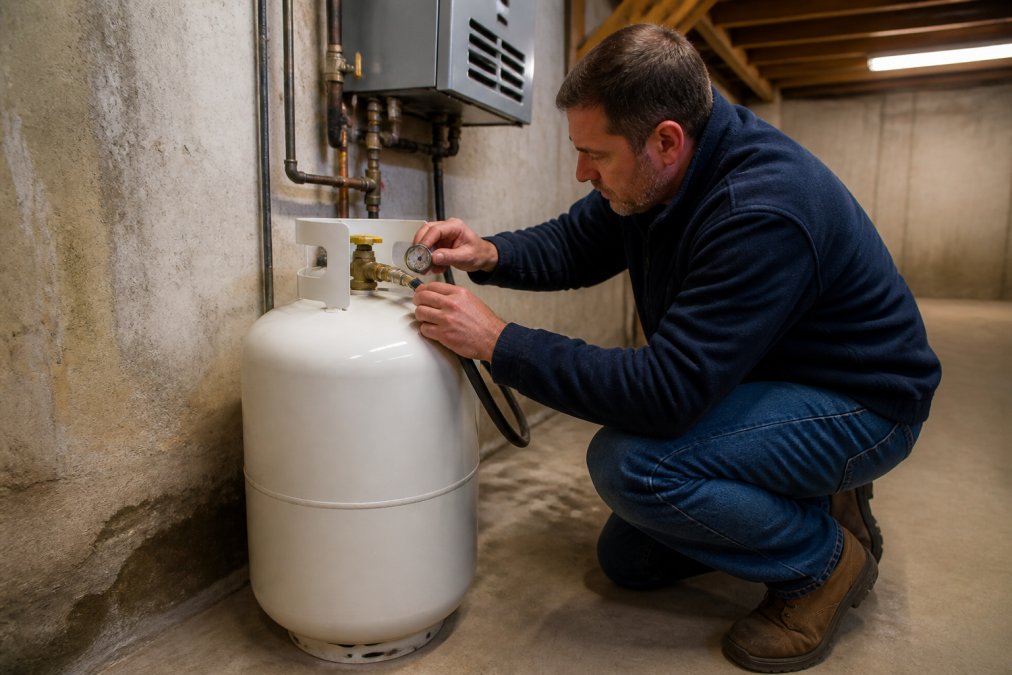
If you ever suspect a leak, leave the building immediately, avoid operating any electrical switches, and call your propane provider and 911 from outside.
The single most preventable propane emergency is running out of fuel. Set a phone reminder to check your tank gauge on the first of every month between October and April. A two-minute check saves you from a costly emergency delivery and a mandatory system inspection.
Seasonal Propane Usage Tips for Long Island Homes
Long Island’s climate creates a predictable propane demand curve: heavy use from November through March, moderate use in shoulder months, and minimal use in summer except for pool heaters and grills.
Fall preparation (September-October): Schedule a tank top-off before the first cold snap. Delivery windows tighten significantly once temperatures drop.
Winter management (November-March): Monitor your gauge weekly during extended cold stretches. A 500-gallon tank serving a 2,000-square-foot home can drop significantly during sustained cold periods.
Spring transition (April-May): This is the best time to evaluate your supplier. You’re not under pressure, prices are typically lower, and you have time to compare propane prices on Long Island.
Summer use (June-August): Pool heaters and outdoor cooking account for most summer propane use. If you have a pool heater, factor that into your summer tank level.
How Discount Propane Handles Nassau County Delivery
Discount Propane is built around a problem that frustrates most Long Island propane customers: you can’t find out what propane costs without calling a provider and waiting for a quote. Discount Propane publishes pricing online in real time, so you can check current per-gallon rates before placing any order, with no commitment required.
Ordering works entirely online. You can schedule a delivery, manage your account, and handle payment from a phone or computer without calling anyone. Payment options include credit card, cash on delivery, and Zelle.
For construction contractors and commercial customers in Nassau County who need consistent scheduled deliveries, the online account system means you’re not dependent on a phone call every time you need a fill.
| Feature | Discount Propane | Typical Other Providers |
|---|---|---|
| Real-time online pricing | Yes, no commitment required | Quote-based, call required |
| Online ordering | Full self-service | Varies; often phone-only |
| Payment options | Credit card, COD, Zelle | Varies |
| Service area | Nassau and Suffolk Counties | Varies by provider |
| Pricing transparency | Published before ordering | Disclosed after inquiry |
Running out of propane on Long Island in January is not a minor inconvenience. It triggers a mandatory system inspection, delays heat restoration, and costs more than a planned delivery. The solution is straightforward: a reliable supplier with transparent pricing, easy online scheduling, and a service area that covers your address. Discount Propane offers real-time pricing you can check before you commit, flexible payment options including credit card and Zelle, and a fully online ordering system that works from your phone or computer. Get your propane price today at Discount Propane and schedule delivery on your terms.
Frequently Asked Questions
How much does propane delivery cost in Nassau County, NY?
Propane delivery pricing in Nassau County depends on several factors: the volume you order, current wholesale fuel prices, your tank size, and whether you use will-call or automatic delivery. Prices fluctuate with the market, so a per-gallon rate quoted today may differ next month. Discount Propane publishes real-time pricing online so you can see the current rate before placing an order, with no commitment required to check. Visit the pricing page for today's figure.
Do propane delivery companies in Nassau County offer emergency service?
Several propane suppliers serving Nassau County provide emergency or same-day delivery for customers who run out of fuel unexpectedly. Availability and response times vary by provider. If you heat your home with propane, keeping track of your tank level and scheduling a refill before you drop below 20 percent is the safest approach. Running completely empty requires a pressure test and line purge before the system can be restarted, which adds time and cost to an already stressful situation.
What is the 80/20 rule for propane tanks?
Propane tanks are filled to a maximum of 80 percent of their total capacity, not 100 percent. The remaining 20 percent is left as vapor space, which allows the liquid propane inside to expand safely as temperature rises. This is a federal safety standard under DOT regulations. So a 500-gallon tank holds roughly 400 gallons of usable propane. When comparing refill quotes, make sure the price per gallon reflects a proper 80 percent fill, not an overfill.
Is it better to refill a propane tank or exchange it at a store?
Refilling your own tank almost always gives you more propane for less money. Exchange programs at hardware stores typically fill tanks to only 15 pounds rather than the full 20-pound capacity, meaning you get about 25 percent less fuel while paying a similar price. A full refill from a propane delivery service or refill station tops the tank to its rated capacity. For home heating tanks, exchange is not an option at all, bulk delivery or a scheduled refill is the only route.
This article was written using GrandRanker